
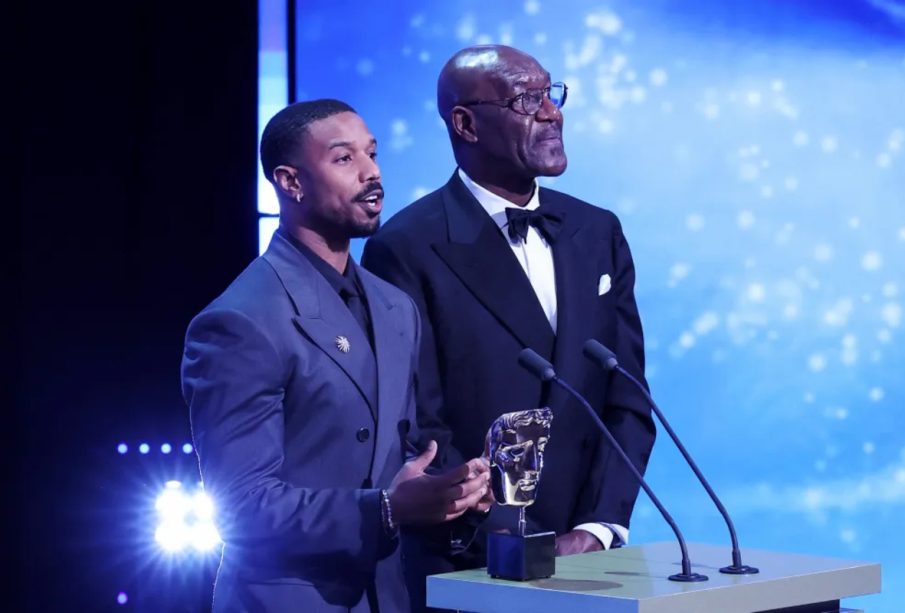
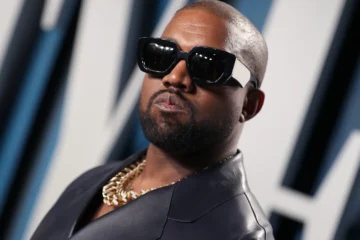
Michael B. Jordan and Delroy Lindo
The Bafta racial slur controversy has drawn widespread attention after the BBC confirmed that a racial slur heard during the 2026 Bafta Film Awards broadcast aired because of what the corporation called a “genuine mistake.”
The broadcaster has now launched an internal review to determine why editors failed to remove the offensive word earlier from the televised version and from its streaming platform, BBC iPlayer.
The incident took place during the ceremony at the Royal Festival Hall in London while actors Michael B. Jordan and Delroy Lindo stood on stage to present one of the awards. Tourette’s campaigner John Davidson, who attended the ceremony in the audience, involuntarily shouted the slur due to his condition. People inside the venue clearly heard the remark, and some viewers watching from home also faintly heard it during the broadcast.
The awards show aired on BBC One with a two-hour delay. Despite that delay, the editing team did not remove the slur from the broadcast. The ceremony also remained available overnight on BBC iPlayer before the BBC removed it the following morning after viewers and journalists raised concerns online.
BBC Director General Tim Davie said the broadcaster “profoundly regrets” the incident and stressed that the production team did not intentionally include the offensive language in the programme. Davie explained that the editors preparing the delayed broadcast did not hear the remark while monitoring the live feed during the event.
In a letter addressed to Caroline Dinenage, Davie said that no member of the on-site broadcast team inside the production truck noticed the slur during the live transmission. Because the team did not detect the remark, they made no editorial decision about removing it before the programme aired.
Davie also disclosed that another racial slur surfaced about ten minutes after the first incident. This second outburst occurred while actress Wunmi Mosaku delivered her speech after winning the award for Best Supporting Actress for the film Sinners. The production team heard this second remark and immediately removed it from the delayed broadcast scheduled to air later that evening.
However, confusion followed shortly afterward. Davie said that after editors removed the slur heard during Mosaku’s speech, they began receiving reports that a racial slur had been shouted during the ceremony. The team believed the reports referred to the incident they had already edited. They therefore assumed they had already resolved the problem.
That misunderstanding allowed the earlier remark to remain in the final programme. The oversight ultimately fueled what has now become widely known as the Bafta racial slur controversy.
Why the broadcast stayed on iPlayer overnight
Viewers also questioned why the awards ceremony stayed available on BBC iPlayer until Monday morning, even as criticism grew on social media. Davie acknowledged that several complaints and online posts highlighted the presence of the slur soon after the programme aired on television.
According to the BBC, the team on site initially believed that viewers could not clearly hear the slur in the broadcast audio. Because staff held that assumption, they did not immediately edit the programme or remove it from the streaming platform.
Davie said discussions about the incident continued throughout the night before the issue reached Kate Phillips, the BBC’s Chief Content Officer. Phillips later authorised the removal of the ceremony from BBC iPlayer shortly before midday on Monday once staff confirmed the problem.
The broadcaster now plans to review the series of decisions that allowed the programme to remain online for several hours. Davie said investigators will examine why staff failed to recognise that two separate incidents occurred during the ceremony and why they did not take faster action to edit the programme.
The BBC had already increased editorial oversight for the Bafta broadcast after criticism linked to a previous live performance during the Glastonbury Festival. Davie noted that additional editorial policy staff worked during the awards ceremony. Despite those safeguards, the system still failed to prevent the error.
He said the corporation will study the incident closely and introduce stronger procedures to prevent similar situations in the future.
The British Academy of Film and Television Arts also addressed the issue shortly after the ceremony. In a statement issued days later, the organisation acknowledged the harm caused by the incident and confirmed that it had started its own comprehensive review.
Bafta issued a direct apology to Michael B. Jordan and Delroy Lindo, who presented the award when the first slur occurred. The organisation also thanked both actors for maintaining professionalism during what it described as a difficult moment.
Bafta further expressed appreciation for John Davidson, whose experience with Tourette syndrome inspired the award winning film I Swear. The organisation said Davidson handled the situation with dignity despite the disruption during what should have been a celebratory evening.
Host Alan Cumming later described the night as emotionally challenging. He added that many people involved in the ceremony felt disappointed by the broadcast decisions that followed the incident.
In an interview after the event, Davidson said the BBC could have taken stronger precautions to prevent his words from reaching viewers. He explained that his Tourette’s symptoms caused him to shout several offensive words throughout the ceremony, although most media reports focused on only one slur.
Reports also indicated that Warner Bros., the studio behind the film Sinners, alerted Bafta almost immediately after the slur occurred and asked officials to remove it from the broadcast.
Actor Delroy Lindo later said he wished Bafta officials had spoken with him and Michael B. Jordan after the ceremony to address the situation directly. However, he noted that the Sinners team appreciated the support they received from colleagues and audiences in the days following the incident.
As the Bafta racial slur controversy continues to attract scrutiny, the BBC’s Executive Complaints Unit has launched a fast tracked investigation into the matter. The corporation says it will publish the findings once the review concludes and will outline any new measures designed to strengthen its broadcast safeguards.

Leave a reply


 It seems that Mr. Bridgerton is not the only one swept up in a romance#bridgerton #bridgertonseason400:23
 Mr and Mrs Bridgerton #bridgerton #penelope #theprimemag00:07
 That classic sibling energy where "I’m sorry" actually means "I’m going to do it again #zendaya00:19
 The groom is here #robertpattinson #thedrama #edwardcullen #moviepremiere #funnymoment00:36
 #rihanna and #asaprocky looking great in #paris #theprimemag00:20
 #ElizabethOlsen and #AnthonyMackie on the red carpet00:09
 #SelenaGomez stepped out for the Rare Beauty Matte Foundation launch on Thursday00:17
 #cardib performance yesterday in #vegas #Valentines2026 #lustremagazine00:11
 #CardiB #WholesomeChaos #ProtectTheCrow #FunnyMoment #CelebrityMoments00:07
 They never told you about this Golden Globes gaffe with #JenniferLopez and #JeremyRenner00:11
 #bridgerton #netflix #trending #viral #misspossy #bridgertonseason401:17
 He definitely got it🤩🔥#onechallenge #thewoahchallenge #tiktok #dancetrends #hiphop #dancers00:18
 Oh No! 😂 #funny #relatable #trending #memes00:08
 #LeBron has made a major impact off the court his commitment to education and his community01:01
 😂😂 #memes #baby #fun #funny #trending00:08
 The only time #Shaq really went one-on-one with #LeBron #shaquilleoneal #lebronjames00:29
 Shaq did this on live tv… 😂 #shaq #insidethenba #charlesbarkley #shaquilleoneal #nba00:17
 You just know Kendrick’s heart dropped before he laughed 😭 #shaq #ShaquilleO’Neal00:10
 #nickiminaj or #cardib . That’s a tough one for #50cent 😂00:13
 #sofiavergara in #ModernFamily: #Sofía #Sitcom #FamilyComedy #funny #TVSeries01:00
 #SofíaVergara when asked about arrest on #TheEllenDeGeneresShow 😂00:20
 #Steve Harvey and #shaq on an episode of Family Feud #funny #theprimemag00:57
 #CillianMurphy fake laugh became the focus of the conversation on Jimmy Kimmel Live #theprimemag00:15
 Moment #KatyPerry surprised Benjamin Glaze with a kiss during his American Idol 2018 audition00:37
 #SelenaGomez and music producer #BennyBlanco00:13


The Prime is a dynamic publication delivering the latest in entertainment, lifestyle, culture, sports and world news, bringing sharp insight, fresh perspectives and stories that matter to a global audience.
