
Burundi Strengthens Resource Sector Through Critical Minerals Partnership
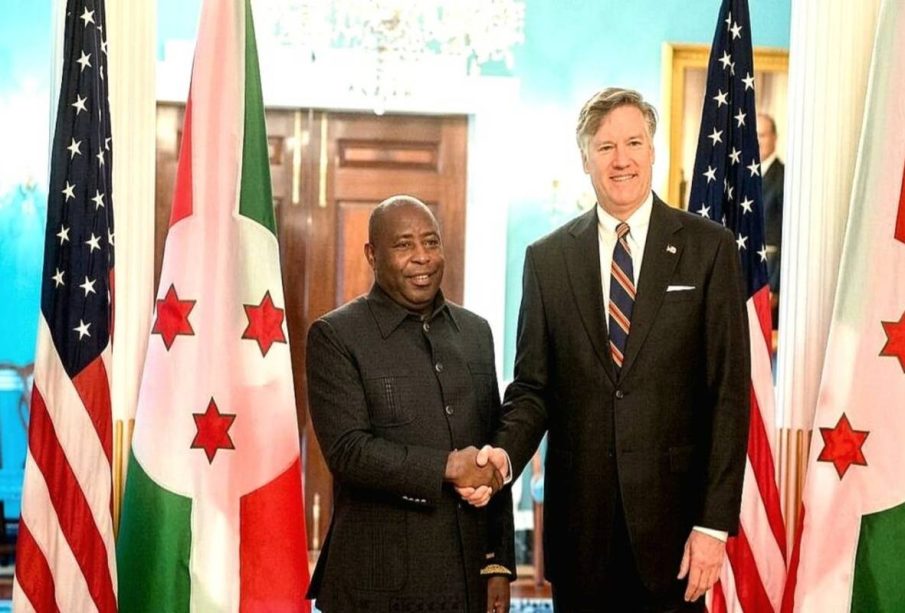
Burundi has taken a major step to boost its resource sector. The country signed a three-year exploration agreement with U.S.-based companies KoBold Metals and Lifezone Metals.
The deal reflects Burundi’s growing focus on technology-driven methods to unlock natural resource value. It also aims to attract global investors searching for materials for the clean energy economy.
The agreement took place in Washington DC and was signed by Burundi’s Minister of Mineral Resources, Energy, Industry, Trade, and Tourism, Hassan Kibeya.
Executives from both companies attended the ceremony. Lifezone Metals chief executive Chris Showalter and representatives from KoBold Metals were present.
KoBold Metals has attracted global attention for its backing by tech investors, including Jeff Bezos and Bill Gates. The company uses advanced computing systems and artificial intelligence to locate minerals essential for electric vehicles, renewable energy systems, and battery storage.
Artificial Intelligence to Analyse Geological Data
The partnership focuses on digitising Burundi’s geological records. KoBold Metals will convert existing mineral data into a digital database for analysis using artificial intelligence.
Officials said the database will be publicly available by July. This access will help researchers and investors review geological information more easily.
Specialists at KoBold Metals will use machine learning to analyse large geoscientific datasets. They will identify potential deposits of lithium, cobalt, copper, and other materials needed for modern energy systems.
Also, the global demand for these resources is rising as countries expand renewable energy and electric mobility.
The initiative may stimulate new exploration by improving transparency and access in Burundi’s mining sector. Public access to geological data will allow other companies and researchers to study the country’s mineral potential.
Government officials expect the partnership to strengthen Burundi’s ties with the American mining industry. They also anticipate new investment opportunities. If exploration uncovers promising deposits, the project could lead to larger mining developments in the future.
The global race for critical minerals has intensified. Governments and companies seek reliable sources of materials for batteries, wind turbines, solar panels, and digital technologies. Africa has emerged as a key player because of its abundant mineral reserves.
KoBold Metals already runs exploration projects in African countries such as the Democratic Republic of the Congo and Zambia. These areas contain significant copper and cobalt resources, essential for modern battery technologies.
Burundi hopes the collaboration will help place the country within the expanding global mineral supply chain. Historically, Burundi relied on agriculture and small-scale mining. Officials now look to modern exploration techniques to better understand underground resources.
The agreement will run for three years and may be renewed if both parties agree. During this period, researchers will analyse geological data and identify areas for further exploration.
Industry analysts predict collaborations like this will become more common. Governments seek technical expertise and financial backing to grow their mining sectors. For Burundi, the project combines innovation with natural resource development.
As demand for critical minerals grows, partnerships that integrate artificial intelligence with geological exploration may transform how countries manage valuable resources. Burundi’s agreement with KoBold Metals and Lifezone Metals shows the potential of technology to reshape mining and attract international investors.



Leave a reply


 It seems that Mr. Bridgerton is not the only one swept up in a romance#bridgerton #bridgertonseason400:23
 Mr and Mrs Bridgerton #bridgerton #penelope #theprimemag00:07
 That classic sibling energy where "I’m sorry" actually means "I’m going to do it again #zendaya00:19
 The groom is here #robertpattinson #thedrama #edwardcullen #moviepremiere #funnymoment00:36
 #rihanna and #asaprocky looking great in #paris #theprimemag00:20
 #ElizabethOlsen and #AnthonyMackie on the red carpet00:09
 #SelenaGomez stepped out for the Rare Beauty Matte Foundation launch on Thursday00:17
 #cardib performance yesterday in #vegas #Valentines2026 #lustremagazine00:11
 #CardiB #WholesomeChaos #ProtectTheCrow #FunnyMoment #CelebrityMoments00:07
 They never told you about this Golden Globes gaffe with #JenniferLopez and #JeremyRenner00:11
 #bridgerton #netflix #trending #viral #misspossy #bridgertonseason401:17
 He definitely got it🤩🔥#onechallenge #thewoahchallenge #tiktok #dancetrends #hiphop #dancers00:18
 Oh No! 😂 #funny #relatable #trending #memes00:08
 #LeBron has made a major impact off the court his commitment to education and his community01:01
 😂😂 #memes #baby #fun #funny #trending00:08
 The only time #Shaq really went one-on-one with #LeBron #shaquilleoneal #lebronjames00:29
 Shaq did this on live tv… 😂 #shaq #insidethenba #charlesbarkley #shaquilleoneal #nba00:17
 You just know Kendrick’s heart dropped before he laughed 😭 #shaq #ShaquilleO’Neal00:10
 #nickiminaj or #cardib . That’s a tough one for #50cent 😂00:13
 #sofiavergara in #ModernFamily: #Sofía #Sitcom #FamilyComedy #funny #TVSeries01:00
 #SofíaVergara when asked about arrest on #TheEllenDeGeneresShow 😂00:20
 #Steve Harvey and #shaq on an episode of Family Feud #funny #theprimemag00:57
 #CillianMurphy fake laugh became the focus of the conversation on Jimmy Kimmel Live #theprimemag00:15
 Moment #KatyPerry surprised Benjamin Glaze with a kiss during his American Idol 2018 audition00:37
 #SelenaGomez and music producer #BennyBlanco00:13


The Prime is a dynamic publication delivering the latest in entertainment, lifestyle, culture, sports and world news, bringing sharp insight, fresh perspectives and stories that matter to a global audience.
