
Cambodia Honours Hero Rat Magawa with Statue for Life Saving Work
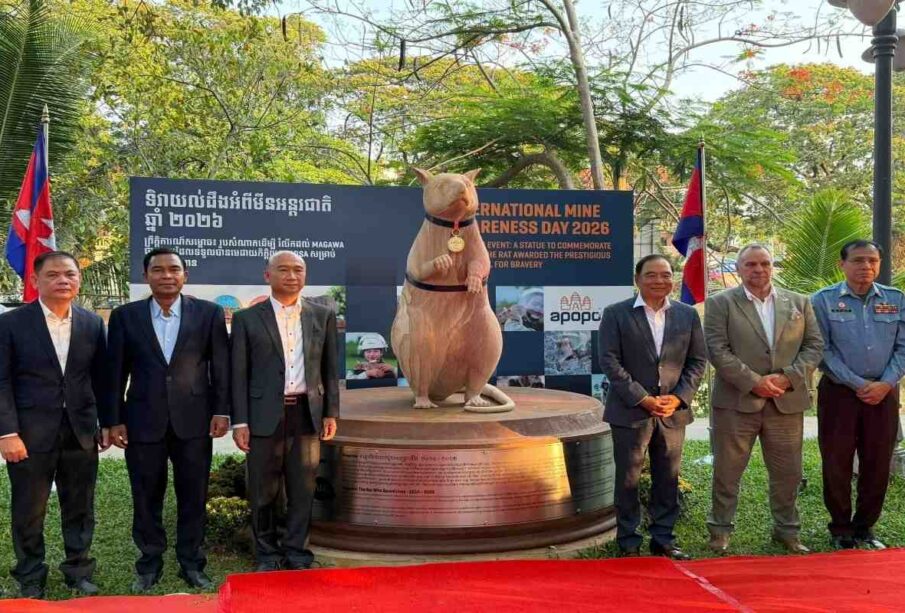
Cambodia has honoured the remarkable work of a famous landmine sniffing rodent with a statue, Hero Rat Magawa. This act marks a historic moment for mine clearance efforts.
The HeroRATS tribute recognises the outstanding achievements of Magawa, the African giant pouched rat. He saved many lives by detecting explosives. His work has also inspired mine-clearing operations around the world.
A Monument to a Life-Saving Rodent
Hero Rat Magawa lived for eight years and built an impressive legacy. He sniffed out over 100 landmines and unexploded devices during a five-year career in Cambodia. He began this work in 2016. The Belgian charity Apopo trained him for the task. His strong sense of smell helped him detect chemicals used in explosives. He then alerted his human handlers to danger.
Over the years, Magawa cleared more than 141,000 square metres of land. This area equals about 20 football pitches. He worked fast and with great accuracy. He could search a space the size of a tennis court in just 20 minutes. His efforts made large areas safe for local communities.
In recognition of his courage and service, Magawa received the PDSA Gold Medal in 2020. People often compare this award to the George Cross for animals.
He became the first rat in the charity’s 77-year history to earn this honour. The award praised his life-saving devotion to duty. After a short retirement due to age, Magawa passed away in 2022. He left behind safer land and hopeful communities.
The new statue now stands in his honour. Cambodian artists carved it from local stone. They unveiled it in Siem Reap before the International Day for Mine Awareness on 4 April. Apopo’s Cambodia Programme Manager, Michael Raine, spoke about its meaning.
He said the monument reminds the world that mine clearance work still continues. He also noted that Cambodia aims to become mine-free by 2030. This goal drives ongoing efforts.
HeroRATS and Their Continuing Mission
The HeroRATS tribute celebrates Magawa, but it also highlights present dangers. Landmines still threaten many lives in Cambodia. According to the United Nations, over a million people live and work on land affected by mines and unexploded devices. This reality shows the need for trained detection animals.
Apopo has trained rodents for mine detection since the 1990s. These rats offer a safer method for searching land. Their small size allows them to move across dangerous areas without setting off explosives. They work closely with human teams and improve safety during operations.
In addition, these trained animals support other tasks. They help detect tuberculosis, a lung disease, much faster than many lab methods. In Tanzania, they have also helped stop illegal wildlife trade. Their skills continue to prove useful in many areas.
The work of these rodents keeps improving. Another trained rat, Ronin, set a world record in 2025. He found 109 landmines and 15 unexploded devices in northern Cambodia’s Preah Vihear province. He carried out this work between 2021 and 2025. His achievement surpassed the record set by Hero Rat Magawa. It also shows the growing impact of the HeroRATS programme on safety and awareness.
Magawa’s story has gained global attention. It shows how creative ideas can improve humanitarian work. The statue presents him with a black harness and a medal around his neck. It stands as a symbol of courage and intelligence. It also reminds people of the lives he saved. Visitors can see the figure in stone and reflect on his work.
While the monument honours past success, it also points to ongoing work. Cambodia continues its effort to remove landmines. The country aims to become mine-free by 2030. Groups like Apopo keep training rodents and sending them to affected areas. Each discovery reduces risk for local communities.
Magawa’s work and the new statue show the value of animal-assisted efforts. They also inspire global support for mine clearance programmes. The HeroRATS tribute ensures that people remember his service. It encourages others to support new solutions to long-standing dangers.
From detecting explosives to earning a gold medal, Magawa showed courage and skill. His story offers hope for a safer and mine free Cambodia in the years ahead.



Leave a reply


 It seems that Mr. Bridgerton is not the only one swept up in a romance#bridgerton #bridgertonseason400:23
 Mr and Mrs Bridgerton #bridgerton #penelope #theprimemag00:07
 That classic sibling energy where "I’m sorry" actually means "I’m going to do it again #zendaya00:19
 The groom is here #robertpattinson #thedrama #edwardcullen #moviepremiere #funnymoment00:36
 #rihanna and #asaprocky looking great in #paris #theprimemag00:20
 #ElizabethOlsen and #AnthonyMackie on the red carpet00:09
 #SelenaGomez stepped out for the Rare Beauty Matte Foundation launch on Thursday00:17
 #cardib performance yesterday in #vegas #Valentines2026 #lustremagazine00:11
 #CardiB #WholesomeChaos #ProtectTheCrow #FunnyMoment #CelebrityMoments00:07
 They never told you about this Golden Globes gaffe with #JenniferLopez and #JeremyRenner00:11
 #bridgerton #netflix #trending #viral #misspossy #bridgertonseason401:17
 He definitely got it🤩🔥#onechallenge #thewoahchallenge #tiktok #dancetrends #hiphop #dancers00:18
 Oh No! 😂 #funny #relatable #trending #memes00:08
 #LeBron has made a major impact off the court his commitment to education and his community01:01
 😂😂 #memes #baby #fun #funny #trending00:08
 The only time #Shaq really went one-on-one with #LeBron #shaquilleoneal #lebronjames00:29
 Shaq did this on live tv… 😂 #shaq #insidethenba #charlesbarkley #shaquilleoneal #nba00:17
 You just know Kendrick’s heart dropped before he laughed 😭 #shaq #ShaquilleO’Neal00:10
 #nickiminaj or #cardib . That’s a tough one for #50cent 😂00:13
 #sofiavergara in #ModernFamily: #Sofía #Sitcom #FamilyComedy #funny #TVSeries01:00
 #SofíaVergara when asked about arrest on #TheEllenDeGeneresShow 😂00:20
 #Steve Harvey and #shaq on an episode of Family Feud #funny #theprimemag00:57
 #CillianMurphy fake laugh became the focus of the conversation on Jimmy Kimmel Live #theprimemag00:15
 Moment #KatyPerry surprised Benjamin Glaze with a kiss during his American Idol 2018 audition00:37
 #SelenaGomez and music producer #BennyBlanco00:13


The Prime is a dynamic publication delivering the latest in entertainment, lifestyle, culture, sports and world news, bringing sharp insight, fresh perspectives and stories that matter to a global audience.


