
China Receives Simandou Iron Ore Shipment from Guinea Project
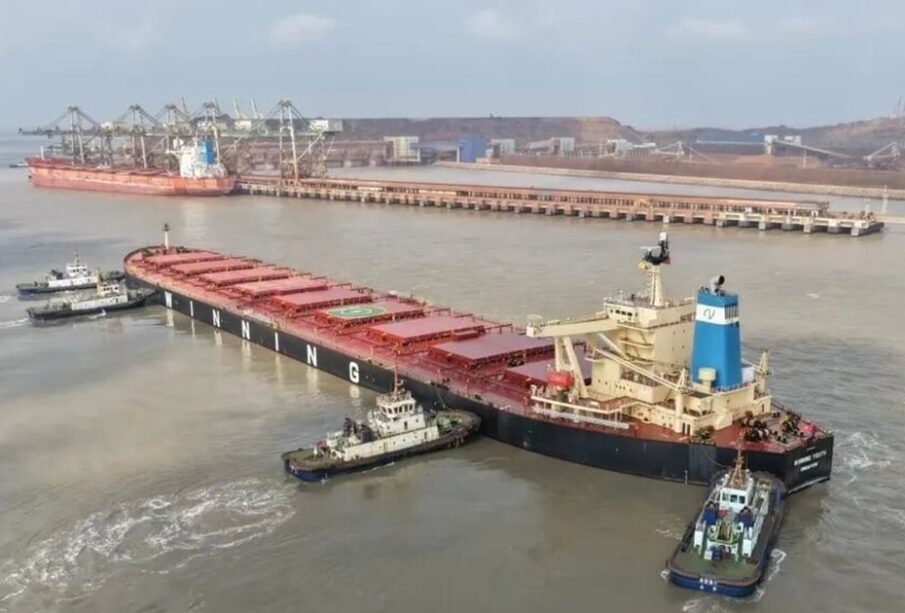
China has received a major cargo of iron ore from Guinea’s long awaited Simandou project, marking a significant moment for global trade and African resource development. The latest Simandou shipment signals a new phase for the mining venture, as more than 200,000 tonnes of high grade ore arrived at the port of Dalian. This delivery shows a more stable and coordinated export process.
The vessel RTM Cartier transported the cargo and docked on March 25, 2026. This shipment represents the first fully integrated delivery from the SimFer operation. The joint venture unites the Guinean government, mining giant Rio Tinto, and Chinese partners. Together, they combine resources and infrastructure to move ore efficiently from the mine to the port.
Unlike earlier attempts, this Simandou shipment followed a complete and seamless supply chain. Previous deliveries relied on mixed cargo and partial logistics. However, this latest export shows that key systems now work in sync.
Rail transport and port handling now operate together without disruption. Upon arrival in China, operators process the ore immediately using a dedicated crushing facility. This approach ensures consistent quality for steel production.
Growing Importance for Trade and Development
For Guinea, the project marks a turning point in its economic outlook. The Simandou mine stands as the largest untapped high grade iron ore deposit in the world. It is expected to generate billions in export earnings over time. In addition, the project will create thousands of jobs and strengthen the country’s position in global mineral markets.
The development carries an estimated value of 23 billion dollars and stands as Africa’s most ambitious mining investment to date. Analysts believe the project could push Guinea into the ranks of the continent’s leading mineral exporters, behind only South Africa.
However, the project has taken decades to reach this stage. Political instability, legal disputes, and shifting ownership structures slowed its progress for years.
Geologists first identified the deposit during the colonial era. Later, studies in the 1990s confirmed the high quality of its iron ore reserves. Despite this discovery, progress remained slow. Multiple delays stalled development until construction of key infrastructure finally advanced.
China’s early access to the ore highlights its deep involvement in the project. Chinese companies funded and built major rail lines and port facilities connected to Simandou. As a result, China has secured its position as a primary destination for the initial exports. This access strengthens its supply chain for steel production.
The Simandou shipment also reflects a broader shift in global commodity flows. China continues to reduce its reliance on traditional suppliers such as Australia and Brazil. At the same time, partnerships in Africa provide a new path to secure long term resources.


Leave a reply


 It seems that Mr. Bridgerton is not the only one swept up in a romance#bridgerton #bridgertonseason400:23
 Mr and Mrs Bridgerton #bridgerton #penelope #theprimemag00:07
 That classic sibling energy where "I’m sorry" actually means "I’m going to do it again #zendaya00:19
 The groom is here #robertpattinson #thedrama #edwardcullen #moviepremiere #funnymoment00:36
 #rihanna and #asaprocky looking great in #paris #theprimemag00:20
 #ElizabethOlsen and #AnthonyMackie on the red carpet00:09
 #SelenaGomez stepped out for the Rare Beauty Matte Foundation launch on Thursday00:17
 #cardib performance yesterday in #vegas #Valentines2026 #lustremagazine00:11
 #CardiB #WholesomeChaos #ProtectTheCrow #FunnyMoment #CelebrityMoments00:07
 They never told you about this Golden Globes gaffe with #JenniferLopez and #JeremyRenner00:11
 #bridgerton #netflix #trending #viral #misspossy #bridgertonseason401:17
 He definitely got it🤩🔥#onechallenge #thewoahchallenge #tiktok #dancetrends #hiphop #dancers00:18
 Oh No! 😂 #funny #relatable #trending #memes00:08
 #LeBron has made a major impact off the court his commitment to education and his community01:01
 😂😂 #memes #baby #fun #funny #trending00:08
 The only time #Shaq really went one-on-one with #LeBron #shaquilleoneal #lebronjames00:29
 Shaq did this on live tv… 😂 #shaq #insidethenba #charlesbarkley #shaquilleoneal #nba00:17
 You just know Kendrick’s heart dropped before he laughed 😭 #shaq #ShaquilleO’Neal00:10
 #nickiminaj or #cardib . That’s a tough one for #50cent 😂00:13
 #sofiavergara in #ModernFamily: #Sofía #Sitcom #FamilyComedy #funny #TVSeries01:00
 #SofíaVergara when asked about arrest on #TheEllenDeGeneresShow 😂00:20
 #Steve Harvey and #shaq on an episode of Family Feud #funny #theprimemag00:57
 #CillianMurphy fake laugh became the focus of the conversation on Jimmy Kimmel Live #theprimemag00:15
 Moment #KatyPerry surprised Benjamin Glaze with a kiss during his American Idol 2018 audition00:37
 #SelenaGomez and music producer #BennyBlanco00:13


The Prime is a dynamic publication delivering the latest in entertainment, lifestyle, culture, sports and world news, bringing sharp insight, fresh perspectives and stories that matter to a global audience.
