
Cuba Blackout Crisis Hits Island as National Outage Dies at 75-Hour Mark
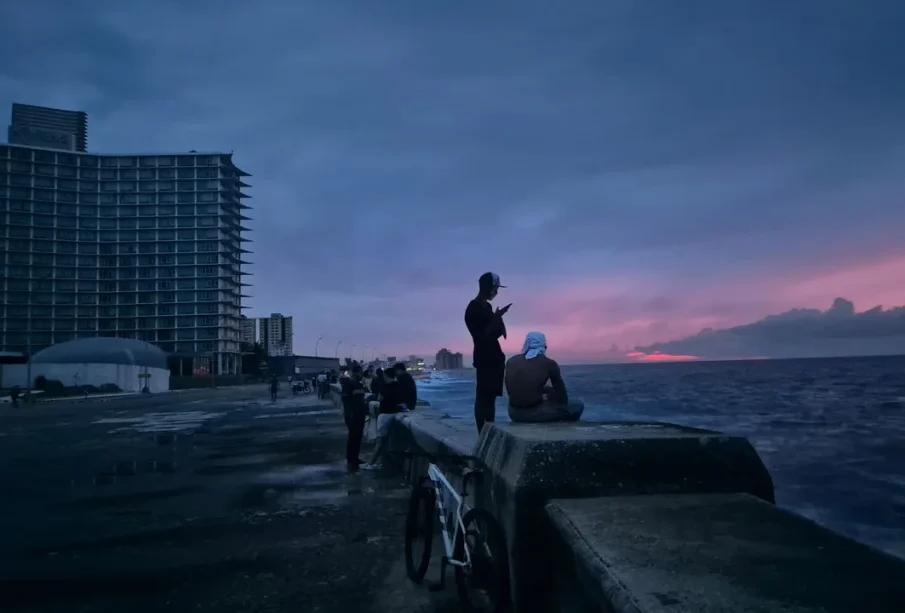
More than 10 million residents and businesses in Cuba lost electricity as the country experienced its second national blackout in a week. Authorities confirmed that the national electrical grid collapsed completely late Saturday, deepening the energy emergency that has gripped the communist-run nation.
The island-wide outage came while officials worked to restore systems after a previous failure earlier in the week. Cuba’s Ministry of Energy announced that the entire National Electrical System had shut down. The country struggled to maintain vital services while engineers implemented emergency protocols to bring power back online.
Under the staggered restoration plan, officials prioritized essential centers such as hospitals, water pumping stations, and key communication networks. Yet millions remained without steady electricity, intensifying hardships for families and businesses. Cuba’s grid operator, Unión Eléctrica (UNE), said recovery efforts were ongoing, but progress remained slow and unpredictable.
Daily Life Darkened by Repeated Grid Failures
This outage marks the third major blackout in March. Earlier power cuts revealed Cuba’s aging electrical infrastructure and chronic fuel shortages. The ongoing crisis stems largely from a tight US fuel embargo that blocked oil imports critical for keeping Cuba’s thermoelectric plants running.
Cuba’s dependence on imported fuel leaves it vulnerable to external pressures. Without steady deliveries, power stations cannot meet demand, causing repeated breakdowns and island-wide shutdowns lasting hours or days. Residents in Havana and other major cities rely on flashlights and generators to cope.
The uncertainty around power has fueled frustration among ordinary Cubans. Some expressed anger and fear as the blackout stretched into its third day. “There’s nowhere to live, nowhere to run to,” one woman told reporters. “Everything has slipped away little by little.”
Social tensions have grown in recent weeks. Rare public dissent appeared in parts of Havana and central Cuba. In Morón, protesters attacked and set fire to a Communist Party building, signaling mounting frustration amid rolling outages and shortages. Unauthorized demonstrations remain illegal in Cuba, and participants risk arrest or imprisonment.
Meanwhile, a coalition of international socialist organizations traveled to Havana to support the Cuban government. They delivered aid shipments of solar panels, food kits, and medical supplies to help residents cope. A convoy from Mexico faced delays due to rough seas but is expected to reach the capital’s port soon.
The blackout crisis has intensified tensions between Cuba and the United States. Since early January, US forces have detained former Venezuelan President Nicolás Maduro, prompting questions about Washington’s stance toward Cuba. Reports indicate that President Trump might consider political concessions, including the removal of Cuban President Miguel Díaz-Canel, to lift the fuel embargo.
Trump even hinted at a potential “friendly takeover” of Cuba, language that drew strong rebukes from Havana. Over the weekend, Díaz-Canel said Cuba was preparing its people to defend against possible US military action. His remarks highlighted the high tensions as the energy crisis deepened.
Despite reported bilateral talks to ease the situation, details remain unclear. Cuban Deputy Foreign Minister Carlos Fernández de Cossío reiterated that the nation’s political system is not negotiable with the United States.
Ongoing Struggles for Citizens
As Cuba works to recover from another grid collapse, ordinary citizens face prolonged uncertainty. Daily life remains disrupted, with no immediate end in sight to the blackout crisis. Families and businesses continue to endure long hours without power, highlighting the vulnerability of a nation dependent on aging infrastructure and foreign fuel.
Cuba’s Ministry of Energy and UNE continue emergency efforts, but the situation underscores broader political and logistical challenges. Meanwhile, residents navigate darkness, frustration, and rising tensions, hoping for a stable electrical supply and a return to normalcy.


Leave a reply


 It seems that Mr. Bridgerton is not the only one swept up in a romance#bridgerton #bridgertonseason400:23
 Mr and Mrs Bridgerton #bridgerton #penelope #theprimemag00:07
 That classic sibling energy where "I’m sorry" actually means "I’m going to do it again #zendaya00:19
 The groom is here #robertpattinson #thedrama #edwardcullen #moviepremiere #funnymoment00:36
 #rihanna and #asaprocky looking great in #paris #theprimemag00:20
 #ElizabethOlsen and #AnthonyMackie on the red carpet00:09
 #SelenaGomez stepped out for the Rare Beauty Matte Foundation launch on Thursday00:17
 #cardib performance yesterday in #vegas #Valentines2026 #lustremagazine00:11
 #CardiB #WholesomeChaos #ProtectTheCrow #FunnyMoment #CelebrityMoments00:07
 They never told you about this Golden Globes gaffe with #JenniferLopez and #JeremyRenner00:11
 #bridgerton #netflix #trending #viral #misspossy #bridgertonseason401:17
 He definitely got it🤩🔥#onechallenge #thewoahchallenge #tiktok #dancetrends #hiphop #dancers00:18
 Oh No! 😂 #funny #relatable #trending #memes00:08
 #LeBron has made a major impact off the court his commitment to education and his community01:01
 😂😂 #memes #baby #fun #funny #trending00:08
 The only time #Shaq really went one-on-one with #LeBron #shaquilleoneal #lebronjames00:29
 Shaq did this on live tv… 😂 #shaq #insidethenba #charlesbarkley #shaquilleoneal #nba00:17
 You just know Kendrick’s heart dropped before he laughed 😭 #shaq #ShaquilleO’Neal00:10
 #nickiminaj or #cardib . That’s a tough one for #50cent 😂00:13
 #sofiavergara in #ModernFamily: #Sofía #Sitcom #FamilyComedy #funny #TVSeries01:00
 #SofíaVergara when asked about arrest on #TheEllenDeGeneresShow 😂00:20
 #Steve Harvey and #shaq on an episode of Family Feud #funny #theprimemag00:57
 #CillianMurphy fake laugh became the focus of the conversation on Jimmy Kimmel Live #theprimemag00:15
 Moment #KatyPerry surprised Benjamin Glaze with a kiss during his American Idol 2018 audition00:37
 #SelenaGomez and music producer #BennyBlanco00:13


The Prime is a dynamic publication delivering the latest in entertainment, lifestyle, culture, sports and world news, bringing sharp insight, fresh perspectives and stories that matter to a global audience.
