
Cuba Protests Escalate as Demonstrators Ransack Communist Party Office
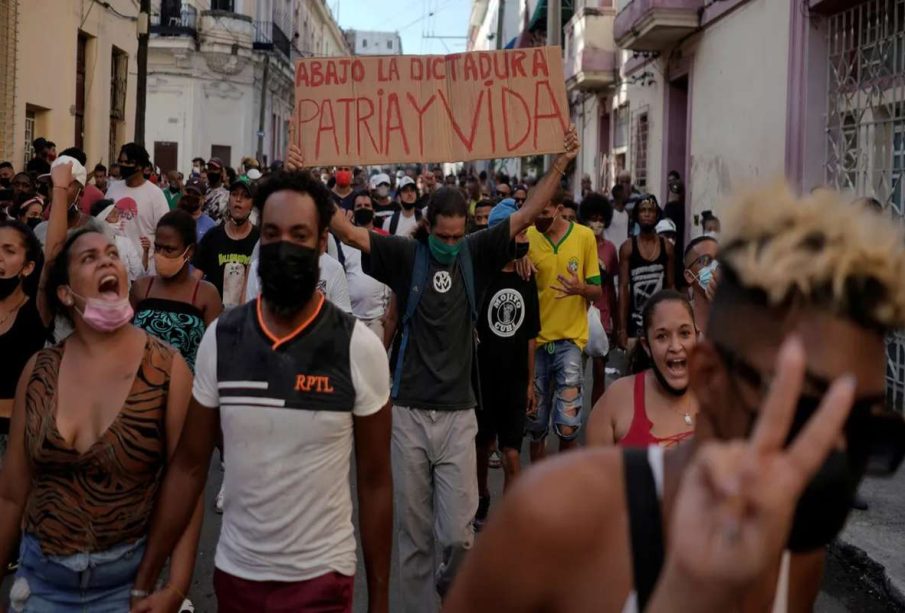
Public anger over rising living costs and prolonged electricity shortages has sparked fresh Cuba protests, after demonstrators vandalised a Communist Party office in the central city of Morón.
Authorities arrested five people after the incident, which occurred overnight into Saturday. The protest began as a rally against soaring food prices and constant power outages. The situation later turned violent when a small group of participants attacked the government building. They damaged property and set fires in nearby streets.
Officials from Cuba’s Interior Ministry confirmed that specialised forces have opened an investigation into the vandalism. The episode represents one of the most visible displays of public dissent on the island in recent months.
Protest Turns Violent in Morón
Local reports say the demonstration started peacefully but escalated quickly. According to state media, several protesters threw stones at the entrance of the Communist Party building. Some entered the reception area and removed furniture.
The group dragged the furniture outside and burned it in the street. The flames spread across the road as tensions rose.
Demonstrators also targeted nearby state-run facilities during the unrest. A pharmacy and a government-operated market reportedly suffered damage as people vented their frustration over worsening living conditions.
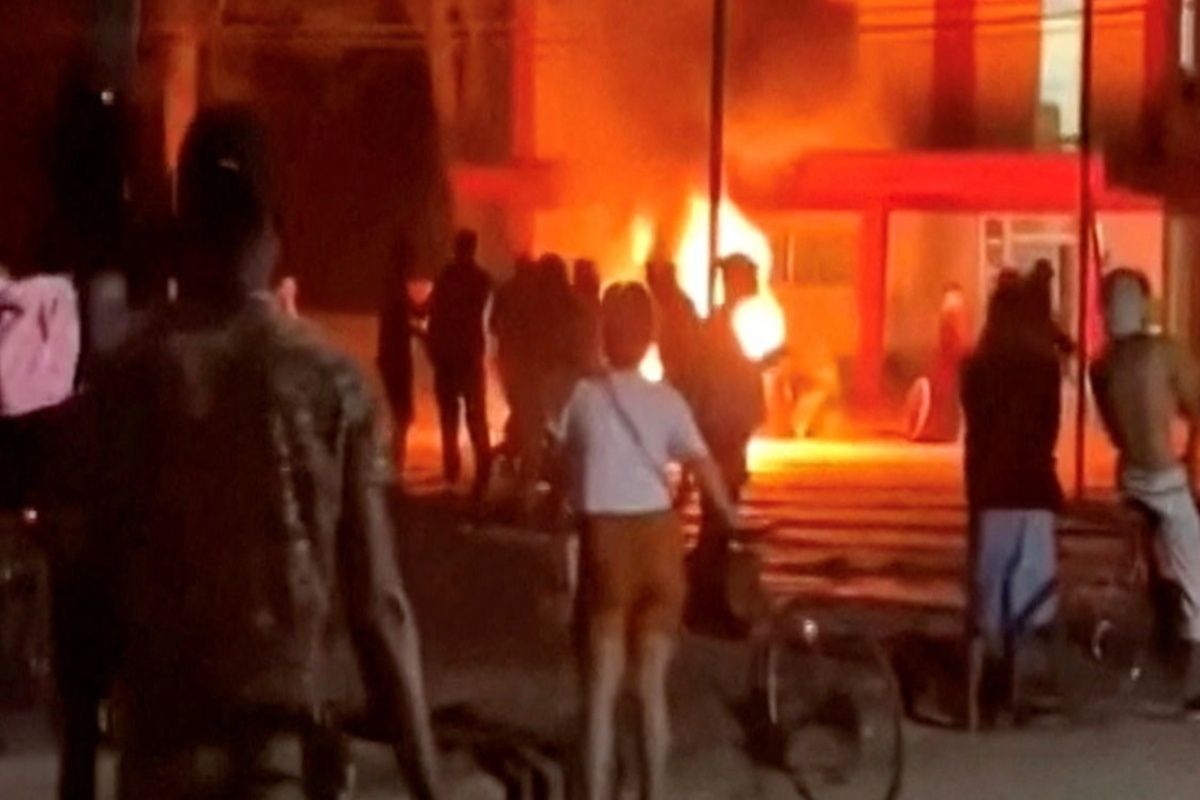
Videos circulating on social media appeared to capture the chaos. Some protesters shouted “liberty” while others hurled rocks through windows. A large fire burned in the middle of the street as people gathered around it.
The rare outbreak of violence reflects growing frustration among many Cubans. Residents across the island continue to struggle with frequent blackouts, fuel shortages, and limited access to essential goods such as food and medicine.
Cuba has experienced rolling power outages for months. In several areas, electricity cuts last for more than half the day.
In the capital city of Havana, residents have endured electricity cuts lasting up to fifteen hours each day. Many people respond with nightly protests, banging pots and pans from their homes to express anger over the continuing power crisis.
Energy Crisis Fuels Public Discontent
The worsening energy shortage has become the main driver behind the latest Cuba protests. Cuban President Miguel Díaz-Canel recently revealed that the country has not received any oil shipments for three months.
He blamed the situation on what he described as a United States oil blockade.
Cuba depends heavily on imported fuel to generate electricity. Without steady oil supplies, the country’s fragile power grid struggles to meet demand.
The shortage has pushed the energy system to its limits. As a result, essential services across the island now face repeated disruptions.
The power crisis has also reshaped daily life. Waste collection services now operate more slowly. Emergency hospital wards struggle to function normally during long outages.
Public transportation schedules face repeated interruptions. Schools also experience disruptions when electricity cuts affect classrooms and online learning.
Government officials acknowledge the severity of the crisis. Some leaders describe the situation as one of the most difficult economic periods the country has faced in recent years.
Tensions Rise Amid U.S.-Cuba Dispute
The unrest comes at a time of rising tension between Cuba and United States.
U.S. President Donald Trump has repeatedly criticised the Cuban government and called for political change on the island.
Washington has also increased pressure on Havana by restricting oil shipments from Venezuela, which previously supplied about half of Cuba’s fuel imports.
The United States also maintains a long-standing trade embargo against Cuba. The policy has limited the country’s access to global markets for decades.
Despite the ongoing tensions, the Cuban government confirmed that talks with the United States continue. Officials say both sides are attempting to address key disagreements through dialogue.
Meanwhile, signs of public frustration continue to appear across the country.
In recent weeks, student groups gathered at the University of Havana to protest disruptions to their studies caused by the ongoing electricity crisis.
Large-scale demonstrations remain relatively uncommon in Cuba. Still, the latest Cuba protests reveal rising pressure on the government. Economic hardship continues to deepen, and basic services remain unreliable across much of the island.


Leave a reply


 It seems that Mr. Bridgerton is not the only one swept up in a romance#bridgerton #bridgertonseason400:23
 Mr and Mrs Bridgerton #bridgerton #penelope #theprimemag00:07
 That classic sibling energy where "I’m sorry" actually means "I’m going to do it again #zendaya00:19
 The groom is here #robertpattinson #thedrama #edwardcullen #moviepremiere #funnymoment00:36
 #rihanna and #asaprocky looking great in #paris #theprimemag00:20
 #ElizabethOlsen and #AnthonyMackie on the red carpet00:09
 #SelenaGomez stepped out for the Rare Beauty Matte Foundation launch on Thursday00:17
 #cardib performance yesterday in #vegas #Valentines2026 #lustremagazine00:11
 #CardiB #WholesomeChaos #ProtectTheCrow #FunnyMoment #CelebrityMoments00:07
 They never told you about this Golden Globes gaffe with #JenniferLopez and #JeremyRenner00:11
 #bridgerton #netflix #trending #viral #misspossy #bridgertonseason401:17
 He definitely got it🤩🔥#onechallenge #thewoahchallenge #tiktok #dancetrends #hiphop #dancers00:18
 Oh No! 😂 #funny #relatable #trending #memes00:08
 #LeBron has made a major impact off the court his commitment to education and his community01:01
 😂😂 #memes #baby #fun #funny #trending00:08
 The only time #Shaq really went one-on-one with #LeBron #shaquilleoneal #lebronjames00:29
 Shaq did this on live tv… 😂 #shaq #insidethenba #charlesbarkley #shaquilleoneal #nba00:17
 You just know Kendrick’s heart dropped before he laughed 😭 #shaq #ShaquilleO’Neal00:10
 #nickiminaj or #cardib . That’s a tough one for #50cent 😂00:13
 #sofiavergara in #ModernFamily: #Sofía #Sitcom #FamilyComedy #funny #TVSeries01:00
 #SofíaVergara when asked about arrest on #TheEllenDeGeneresShow 😂00:20
 #Steve Harvey and #shaq on an episode of Family Feud #funny #theprimemag00:57
 #CillianMurphy fake laugh became the focus of the conversation on Jimmy Kimmel Live #theprimemag00:15
 Moment #KatyPerry surprised Benjamin Glaze with a kiss during his American Idol 2018 audition00:37
 #SelenaGomez and music producer #BennyBlanco00:13


The Prime is a dynamic publication delivering the latest in entertainment, lifestyle, culture, sports and world news, bringing sharp insight, fresh perspectives and stories that matter to a global audience.
