
Dame Jenni Murray Woman’s Hour Dies at 75 After Decades on Air
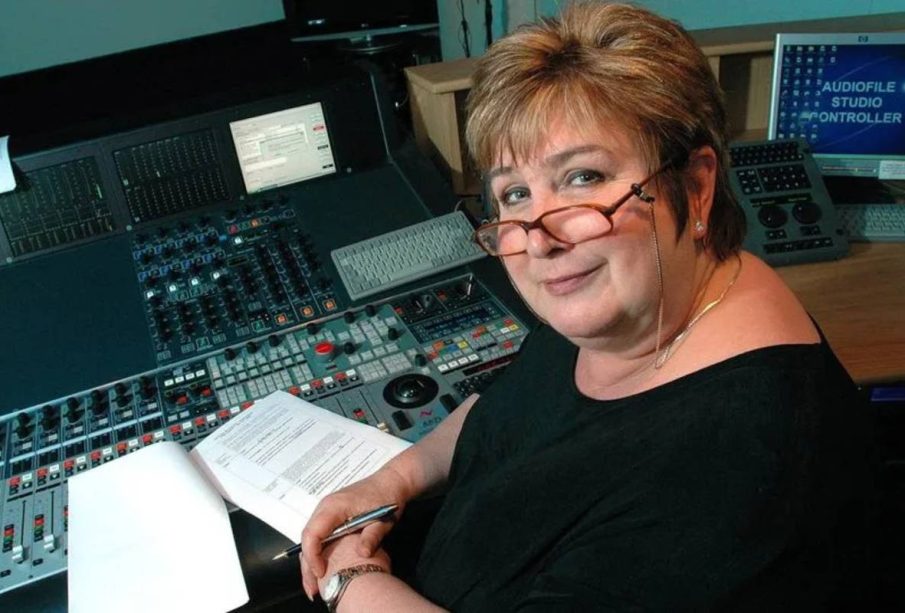
Broadcaster Dame Jenni Murray
Broadcaster Dame Jenni Murray, a trailblazer in women’s media, has died at 75 and leaves a lasting mark on radio and journalism. Audiences knew her for her remarkable career on BBC Radio 4’s Woman’s Hour, where she shaped conversations around women’s issues for more than three decades.
She brought warmth, intelligence, and courage to the airwaves. As a result, listeners and colleagues respected and admired her voice. Dame Jenni joined Woman’s Hour in 1987 and became its longest serving presenter until she stepped down in 2020. During her 33 year tenure, she interviewed a wide range of influential women.
She spoke with political leaders such as Margaret Thatcher and Hillary Clinton, as well as cultural figures like Bette Davis and Margaret Atwood. BBC director general Tim Davie described her as a broadcasting icon, while Radio 4 controller Mohit Bakaya praised her as warm, fearless, and deeply loved by listeners.
Throughout her time on the programme, she shaped public conversations with clarity and purpose. She created space for complex discussions and made them accessible to a wide audience. At the same time, she built a personal connection with listeners, which strengthened the programme’s impact.
She also spoke openly about her own experiences. She discussed her breast cancer diagnosis, weight loss surgery, and menopause with honesty. In doing so, she gave audiences insight into issues many women face.
Dame Jenni began her career in local radio in Bristol in 1973. She later moved to present BBC TV’s South Today. After that, she worked on BBC Two’s Newsnight and Radio 4’s Today programme.
She studied at a grammar school in Barnsley, South Yorkshire, before attending the University of Hull, where she read French and drama. Early in her life, she recognized the challenges women faced in society. This awareness shaped her approach to broadcasting.
During her career, she created many memorable moments. She challenged political figures on sensitive topics with confidence. For instance, she pressed Margaret Thatcher on childcare policies and questioned Edwina Currie about her personal life. At the same time, she interviewed entertainers with ease and charm.
She once described her meeting with singer Joan Baez as the highlight of her career. Even after leaving the programme, she continued to influence public discussion. She wrote for publications such as the Daily Express and Daily Mail. In addition, she authored books like Memoirs of a Not So Dutiful Daughter and Is It Me Or Is It Hot In Here?, which focused on menopause.
Her final episode in 2020 included tributes from notable voices. Novelist Jackie Kay said she held up a mirror to the real world, while MP Harriet Harman praised her tremendous legacy. The programme ended with Helen Reddy’s anthem I Am Woman. This closing moment reflected her lifelong commitment to amplifying women’s voices.
Over the years, Dame Jenni received many honours. She earned a damehood in 2011 for her contributions to broadcasting. She also won two Sony Awards and gained induction into the Radio Academy Hall of Fame. In addition, she appeared on television, including a cameo on the BBC satire W1A. Her work shaped women’s media during her time and continues to inspire new generations.
Following her passing, tributes have poured in from colleagues and fans. Many remember her fearless approach, sharp intellect, and compassion.
As the broadcasting community reflects on her life, her influence remains clear. Dame Jenni Murray built a legacy grounded in meaningful conversation and honest storytelling. Therefore, her impact will continue to resonate for years to come.

Leave a reply


 It seems that Mr. Bridgerton is not the only one swept up in a romance#bridgerton #bridgertonseason400:23
 Mr and Mrs Bridgerton #bridgerton #penelope #theprimemag00:07
 That classic sibling energy where "I’m sorry" actually means "I’m going to do it again #zendaya00:19
 The groom is here #robertpattinson #thedrama #edwardcullen #moviepremiere #funnymoment00:36
 #rihanna and #asaprocky looking great in #paris #theprimemag00:20
 #ElizabethOlsen and #AnthonyMackie on the red carpet00:09
 #SelenaGomez stepped out for the Rare Beauty Matte Foundation launch on Thursday00:17
 #cardib performance yesterday in #vegas #Valentines2026 #lustremagazine00:11
 #CardiB #WholesomeChaos #ProtectTheCrow #FunnyMoment #CelebrityMoments00:07
 They never told you about this Golden Globes gaffe with #JenniferLopez and #JeremyRenner00:11
 #bridgerton #netflix #trending #viral #misspossy #bridgertonseason401:17
 He definitely got it🤩🔥#onechallenge #thewoahchallenge #tiktok #dancetrends #hiphop #dancers00:18
 Oh No! 😂 #funny #relatable #trending #memes00:08
 #LeBron has made a major impact off the court his commitment to education and his community01:01
 😂😂 #memes #baby #fun #funny #trending00:08
 The only time #Shaq really went one-on-one with #LeBron #shaquilleoneal #lebronjames00:29
 Shaq did this on live tv… 😂 #shaq #insidethenba #charlesbarkley #shaquilleoneal #nba00:17
 You just know Kendrick’s heart dropped before he laughed 😭 #shaq #ShaquilleO’Neal00:10
 #nickiminaj or #cardib . That’s a tough one for #50cent 😂00:13
 #sofiavergara in #ModernFamily: #Sofía #Sitcom #FamilyComedy #funny #TVSeries01:00
 #SofíaVergara when asked about arrest on #TheEllenDeGeneresShow 😂00:20
 #Steve Harvey and #shaq on an episode of Family Feud #funny #theprimemag00:57
 #CillianMurphy fake laugh became the focus of the conversation on Jimmy Kimmel Live #theprimemag00:15
 Moment #KatyPerry surprised Benjamin Glaze with a kiss during his American Idol 2018 audition00:37
 #SelenaGomez and music producer #BennyBlanco00:13


The Prime is a dynamic publication delivering the latest in entertainment, lifestyle, culture, sports and world news, bringing sharp insight, fresh perspectives and stories that matter to a global audience.
