
Democratic Republic of Congo to Receive Migrants Under New US Agreement
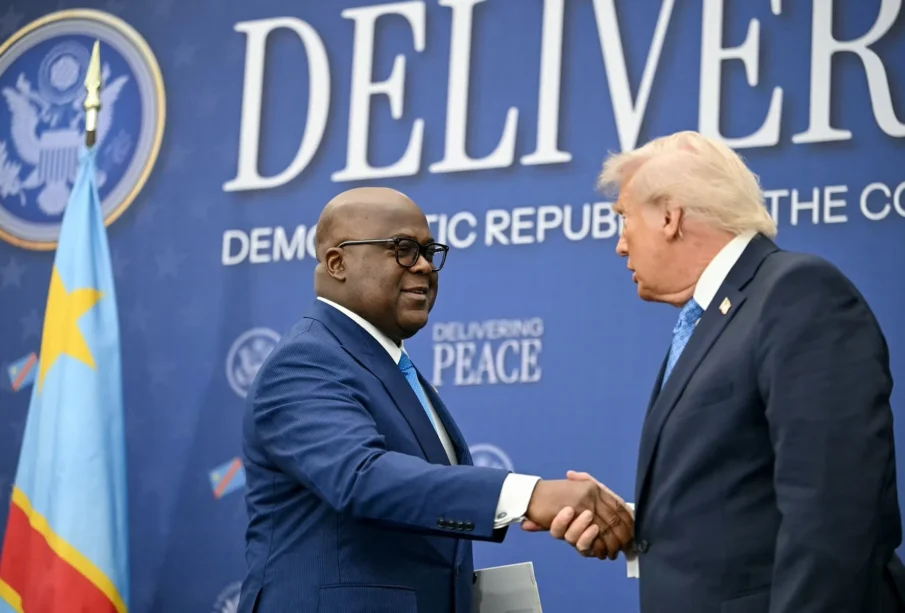
The deportees deal between the Democratic Republic of Congo and the United States is starting to take effect. Officials confirmed that migrants removed from the US will now arrive in Kinshasa under the new arrangement.
The deal, which began this month, allows the Central African nation to accept people who are not originally from Congo. This marks a new phase in migration policies.
Authorities in Kinshasa said they are preparing for arrivals. They are creating a temporary reception system and identifying places for accommodation in the capital.
The Ministry of Communication stated that the US will provide technical and logistical support. This ensures that the Congolese government will not carry the financial burden.
While officials did not disclose the number of people expected, they emphasized that the deal is limited. They clarified that it will not become a long-term resettlement effort or replace broader immigration policies.
Concerns and Wider Migration Efforts
The agreement comes as the Trump administration continues to implement strict immigration measures. These measures have included sending migrants to third countries instead of returning them directly to their countries of origin. In this context, DR Congo joins several nations participating in similar arrangements.
Officials in Kinshasa addressed safety concerns for deported migrants. They noted worries that individuals could be sent to countries where they may face harm. However, authorities assured that no such transfers are planned. They also stressed that the deal respects human dignity and supports international cooperation.
Human rights groups have questioned the policy. They asked about its legal basis and the conditions for relocating deportees. Critics argued that sending migrants to countries with which they have no connection may create new risks and uncertainties.
The US has already deported people to other African nations, including Uganda, where a group of migrants from different countries arrived recently. Other countries such as Ghana, Eswatini, and South Sudan have also participated in similar efforts.
Reports from the US Senate’s foreign relations committee show that the operations have cost more than $40m by early 2026. The funds covered third-country deportations. The US has also given direct financial support to some participating nations, though the total cost of the programme is not clear.
Beyond migration, the US and DR Congo maintain economic and diplomatic relations. Talks continue about access to Congo’s mineral resources, including cobalt, lithium, and copper. These materials are important to various industries. At the same time, the US has taken part in peace efforts between DR Congo and Rwanda, though results have been mixed.
As the deportees deal proceeds, observers are closely watching its effects. The impact on migrants and the participating countries will shape discussions on future agreements. Officials in both Kinshasa and Washington stress cooperation, support, and the need to protect human rights throughout the process.



Leave a reply


 It seems that Mr. Bridgerton is not the only one swept up in a romance#bridgerton #bridgertonseason400:23
 Mr and Mrs Bridgerton #bridgerton #penelope #theprimemag00:07
 That classic sibling energy where "I’m sorry" actually means "I’m going to do it again #zendaya00:19
 The groom is here #robertpattinson #thedrama #edwardcullen #moviepremiere #funnymoment00:36
 #rihanna and #asaprocky looking great in #paris #theprimemag00:20
 #ElizabethOlsen and #AnthonyMackie on the red carpet00:09
 #SelenaGomez stepped out for the Rare Beauty Matte Foundation launch on Thursday00:17
 #cardib performance yesterday in #vegas #Valentines2026 #lustremagazine00:11
 #CardiB #WholesomeChaos #ProtectTheCrow #FunnyMoment #CelebrityMoments00:07
 They never told you about this Golden Globes gaffe with #JenniferLopez and #JeremyRenner00:11
 #bridgerton #netflix #trending #viral #misspossy #bridgertonseason401:17
 He definitely got it🤩🔥#onechallenge #thewoahchallenge #tiktok #dancetrends #hiphop #dancers00:18
 Oh No! 😂 #funny #relatable #trending #memes00:08
 #LeBron has made a major impact off the court his commitment to education and his community01:01
 😂😂 #memes #baby #fun #funny #trending00:08
 The only time #Shaq really went one-on-one with #LeBron #shaquilleoneal #lebronjames00:29
 Shaq did this on live tv… 😂 #shaq #insidethenba #charlesbarkley #shaquilleoneal #nba00:17
 You just know Kendrick’s heart dropped before he laughed 😭 #shaq #ShaquilleO’Neal00:10
 #nickiminaj or #cardib . That’s a tough one for #50cent 😂00:13
 #sofiavergara in #ModernFamily: #Sofía #Sitcom #FamilyComedy #funny #TVSeries01:00
 #SofíaVergara when asked about arrest on #TheEllenDeGeneresShow 😂00:20
 #Steve Harvey and #shaq on an episode of Family Feud #funny #theprimemag00:57
 #CillianMurphy fake laugh became the focus of the conversation on Jimmy Kimmel Live #theprimemag00:15
 Moment #KatyPerry surprised Benjamin Glaze with a kiss during his American Idol 2018 audition00:37
 #SelenaGomez and music producer #BennyBlanco00:13


The Prime is a dynamic publication delivering the latest in entertainment, lifestyle, culture, sports and world news, bringing sharp insight, fresh perspectives and stories that matter to a global audience.