
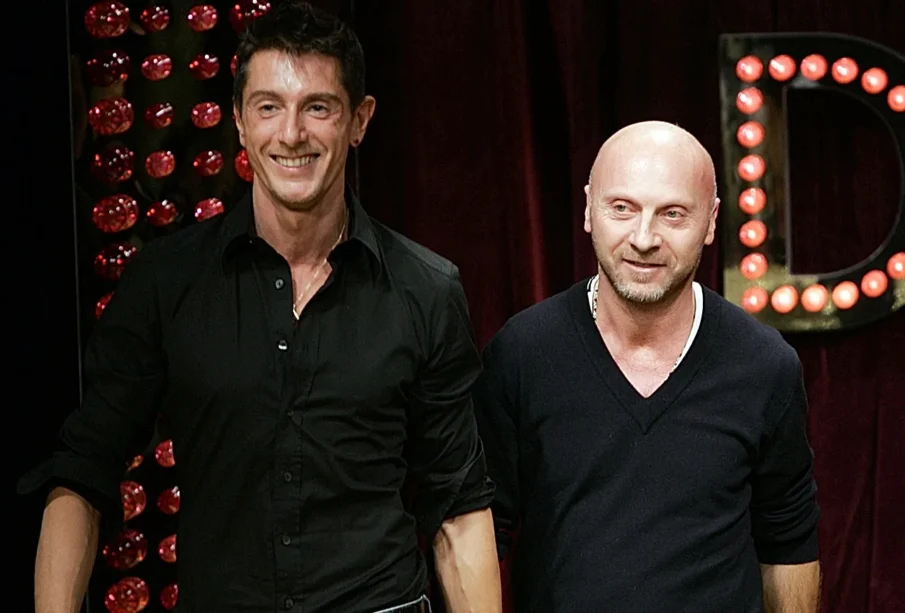
The Dolce and Gabbana fashion house has changed its leadership structure as co founder Stefano Gabbana steps down as chair. The company faces growing financial challenges and rising debt. The brand continues to adjust its management while it responds to changes in the luxury market.
Gabbana, who co founded the brand in 1985 with Domenico Dolce, will continue to guide creative work. He will remain involved in designing collections and preserving the identity that built the label. His move away from the chair role marks a change in company management during a difficult period.
The company manages about €450m in debt as luxury spending slows in key markets, especially China. Reports earlier this year show that the business has spoken with financial advisers and creditors to improve stability. The company confirms that discussions with banks continue.
Leadership has now moved to Alfonso Dolce, the chief executive and brother of Domenico Dolce, who officially took the chair role at the start of the year. The company describes the change as part of wider restructuring aimed at improving governance and adapting to current challenges.
Despite the financial strain, the fashion house continues to expand into new areas beyond clothing. Recent efforts include ventures into hospitality and home décor, with high end items like luxury furniture and designer home accessories forming part of its latest collections. These moves suggest an attempt to diversify revenue streams while maintaining the brand’s bold and recognisable image.
Industry analysts note that the issue lies less with design and more with business operations. The brand remains known for its signature style, often associated with black lace, strong silhouettes, and a distinct Mediterranean influence. Its appeal has endured even as consumer preferences move towards more understated luxury trends.
However, public perception has not always been smooth. The brand has faced criticism over the years, including backlash over casting choices at recent shows. High profile reactions from figures like Bella Hadid have kept the company in the spotlight, though it has maintained a loyal customer base.
Dolce and Gabbana first rose to global fame in the 1990s, helped by strong celebrity connections. A defining moment came when Madonna collaborated with the designers, wearing their pieces and commissioning outfits for her 1993 tour. That partnership helped establish the brand’s bold and expressive identity, which continues to shape its image today.
As the company navigates its current financial challenges, the leadership change marks an important moment in its evolution. While creative direction remains steady, attention is now turning to how the business will regain balance and adapt to a more demanding luxury market.
Market observers and investors continue to watch the company closely as it works through its financial restructuring. Retail performance in key boutiques remains uneven as customer spending patterns change. Some regions still show strong demand for signature pieces, while others record slower sales.
The brand continues to rely on its strong identity and long standing customer loyalty to support revenue. Management also focuses on cost control and improved operational efficiency to strengthen long term stability.
The leadership change marks a clear point in the company’s journey as it responds to financial challenges and evolving consumer tastes. The fashion house keeps its focus on design excellence while it rebuilds financial balance through careful management decisions.


Leave a reply


 It seems that Mr. Bridgerton is not the only one swept up in a romance#bridgerton #bridgertonseason400:23
 Mr and Mrs Bridgerton #bridgerton #penelope #theprimemag00:07
 That classic sibling energy where "I’m sorry" actually means "I’m going to do it again #zendaya00:19
 The groom is here #robertpattinson #thedrama #edwardcullen #moviepremiere #funnymoment00:36
 #rihanna and #asaprocky looking great in #paris #theprimemag00:20
 #ElizabethOlsen and #AnthonyMackie on the red carpet00:09
 #SelenaGomez stepped out for the Rare Beauty Matte Foundation launch on Thursday00:17
 #cardib performance yesterday in #vegas #Valentines2026 #lustremagazine00:11
 #CardiB #WholesomeChaos #ProtectTheCrow #FunnyMoment #CelebrityMoments00:07
 They never told you about this Golden Globes gaffe with #JenniferLopez and #JeremyRenner00:11
 #bridgerton #netflix #trending #viral #misspossy #bridgertonseason401:17
 He definitely got it🤩🔥#onechallenge #thewoahchallenge #tiktok #dancetrends #hiphop #dancers00:18
 Oh No! 😂 #funny #relatable #trending #memes00:08
 #LeBron has made a major impact off the court his commitment to education and his community01:01
 😂😂 #memes #baby #fun #funny #trending00:08
 The only time #Shaq really went one-on-one with #LeBron #shaquilleoneal #lebronjames00:29
 Shaq did this on live tv… 😂 #shaq #insidethenba #charlesbarkley #shaquilleoneal #nba00:17
 You just know Kendrick’s heart dropped before he laughed 😭 #shaq #ShaquilleO’Neal00:10
 #nickiminaj or #cardib . That’s a tough one for #50cent 😂00:13
 #sofiavergara in #ModernFamily: #Sofía #Sitcom #FamilyComedy #funny #TVSeries01:00
 #SofíaVergara when asked about arrest on #TheEllenDeGeneresShow 😂00:20
 #Steve Harvey and #shaq on an episode of Family Feud #funny #theprimemag00:57
 #CillianMurphy fake laugh became the focus of the conversation on Jimmy Kimmel Live #theprimemag00:15
 Moment #KatyPerry surprised Benjamin Glaze with a kiss during his American Idol 2018 audition00:37
 #SelenaGomez and music producer #BennyBlanco00:13


The Prime is a dynamic publication delivering the latest in entertainment, lifestyle, culture, sports and world news, bringing sharp insight, fresh perspectives and stories that matter to a global audience.