
DR Congo Ends 52 Year Wait With Historic World Cup Qualification
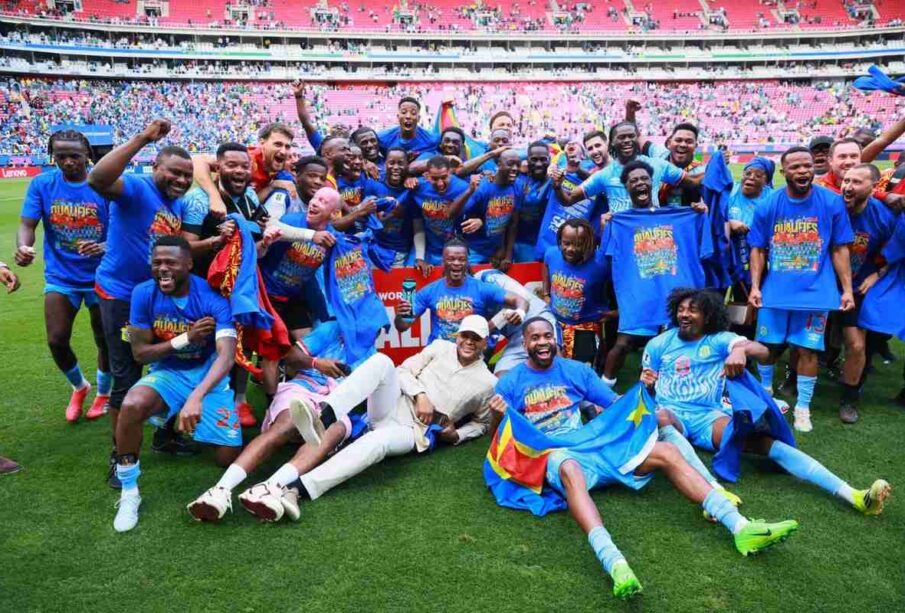
Democratic Republic of the Congo Football Team
The Democratic Republic of the Congo celebrates a long-awaited football milestone as the nation secures a place on the global stage, ending a 52 year absence. The victory sparks nationwide excitement. This led the government to declare a public holiday to honour what many call a defining World Cup moment in the country’s history.
A Goal That United a Nation
The breakthrough arrives on Tuesday night when Axel Tuanzebe scores a decisive extra-time goal to seal a 1 0 win against Jamaica in the playoff match. The tense game stretches into the 100th minute before he finally breaks the deadlock, sending fans into celebration across the capital, Kinshasa.
By early Wednesday morning, supporters fill the streets with cheers and music. Many express relief and pride despite the country’s ongoing struggles. One fan shares that even in difficult times marked by conflict and uncertainty, the victory brings a deep sense of joy and unity. The moment lifts spirits and creates a shared feeling of hope.
In response, the ministry of labour announces that Wednesday will be observed as a public holiday. Officials encourage citizens to celebrate together with pride and excitement. While many businesses, including banks and shops, close their doors in recognition of the announcement, some workplaces continue operations due to the short notice. The decision reflects how deeply the victory resonates across the nation.
This achievement marks only the second time the country qualifies for the tournament, having previously appeared in 1974 when it was known as Zaire. For many citizens, this renewed presence at the World Cup means more than football. It represents resilience, identity, and belief in a brighter future. The qualification reminds people of what unity can achieve.
The victory also comes against a backdrop of ongoing conflict in the eastern region of the country, where fighting intensifies following advances by the M23 rebel group. Despite these tensions, even neighbouring Rwanda extends congratulations, highlighting the unifying power of sport across borders. The moment shows how football can rise above political and regional divisions.
Meanwhile, celebrations grow especially lively in areas like Kingabwa, where fans dance, chant, and wave flags in excitement. Supporters look ahead with anticipation as the team prepares to face global stars. Some fans even mention Cristiano Ronaldo, whose national team Portugal stands as one of DR Congo’s opponents in the group stage. The two teams will meet in Houston on 17 June, a match that already generates strong interest among football followers.
The team will also face Colombia and Uzbekistan as part of the tournament’s expanded format. It will be jointly hosted by the United States, Mexico, and Canada. DR Congo now joins nine other African nations in the competition. Now reflecting the continent’s growing presence and strength on the global stage. This development highlights Africa’s rising influence in international football.
For Tuanzebe, who was born in Bunia, a region affected by conflict, the winning goal carries deep personal meaning. He describes it as the most important moment of his career. He also acknowledges the happiness it brings to millions back home. His journey mirrors the resilience of the nation itself.
As celebrations continue across cities and communities, the country’s World Cup qualification stands as a rare moment of shared pride. It offers citizens a chance to come together, reflect on progress, and look ahead with renewed optimism.

Leave a reply


 It seems that Mr. Bridgerton is not the only one swept up in a romance#bridgerton #bridgertonseason400:23
 Mr and Mrs Bridgerton #bridgerton #penelope #theprimemag00:07
 That classic sibling energy where "I’m sorry" actually means "I’m going to do it again #zendaya00:19
 The groom is here #robertpattinson #thedrama #edwardcullen #moviepremiere #funnymoment00:36
 #rihanna and #asaprocky looking great in #paris #theprimemag00:20
 #ElizabethOlsen and #AnthonyMackie on the red carpet00:09
 #SelenaGomez stepped out for the Rare Beauty Matte Foundation launch on Thursday00:17
 #cardib performance yesterday in #vegas #Valentines2026 #lustremagazine00:11
 #CardiB #WholesomeChaos #ProtectTheCrow #FunnyMoment #CelebrityMoments00:07
 They never told you about this Golden Globes gaffe with #JenniferLopez and #JeremyRenner00:11
 #bridgerton #netflix #trending #viral #misspossy #bridgertonseason401:17
 He definitely got it🤩🔥#onechallenge #thewoahchallenge #tiktok #dancetrends #hiphop #dancers00:18
 Oh No! 😂 #funny #relatable #trending #memes00:08
 #LeBron has made a major impact off the court his commitment to education and his community01:01
 😂😂 #memes #baby #fun #funny #trending00:08
 The only time #Shaq really went one-on-one with #LeBron #shaquilleoneal #lebronjames00:29
 Shaq did this on live tv… 😂 #shaq #insidethenba #charlesbarkley #shaquilleoneal #nba00:17
 You just know Kendrick’s heart dropped before he laughed 😭 #shaq #ShaquilleO’Neal00:10
 #nickiminaj or #cardib . That’s a tough one for #50cent 😂00:13
 #sofiavergara in #ModernFamily: #Sofía #Sitcom #FamilyComedy #funny #TVSeries01:00
 #SofíaVergara when asked about arrest on #TheEllenDeGeneresShow 😂00:20
 #Steve Harvey and #shaq on an episode of Family Feud #funny #theprimemag00:57
 #CillianMurphy fake laugh became the focus of the conversation on Jimmy Kimmel Live #theprimemag00:15
 Moment #KatyPerry surprised Benjamin Glaze with a kiss during his American Idol 2018 audition00:37
 #SelenaGomez and music producer #BennyBlanco00:13


The Prime is a dynamic publication delivering the latest in entertainment, lifestyle, culture, sports and world news, bringing sharp insight, fresh perspectives and stories that matter to a global audience.


