
Global Spotlight Brightens Around KPop Demon Hunters After Historic Oscar Night
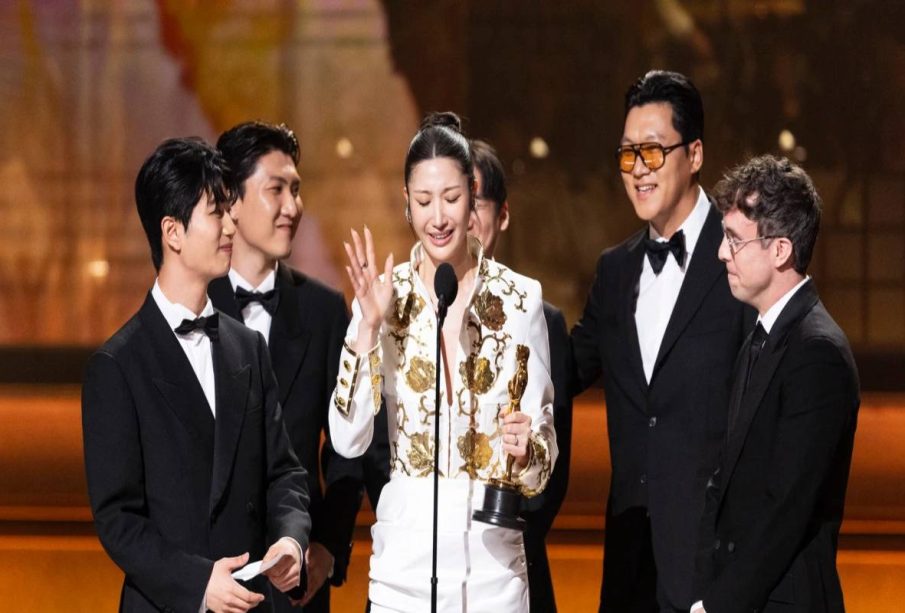
KPop Demon Hunters at the Academy Awards
Global attention turned toward South Korea after the animated fantasy KPop Demon Hunters captured two major prizes at the Academy Awards, creating a surge of national pride and fresh conversations about the country’s expanding cultural influence.
News outlets across the nation quickly described the victory as a “miracle moment” for Korean creativity. Commentators emphasized how the film blended local traditions with global storytelling and reached audiences across continents. As a result, many observers viewed the achievement as another sign of Korea’s growing cultural power.
The film won awards for Best Animated Feature and Best Original Song during Sunday’s ceremony in Los Angeles. The victory added another milestone to the expanding global recognition for Korean entertainment.
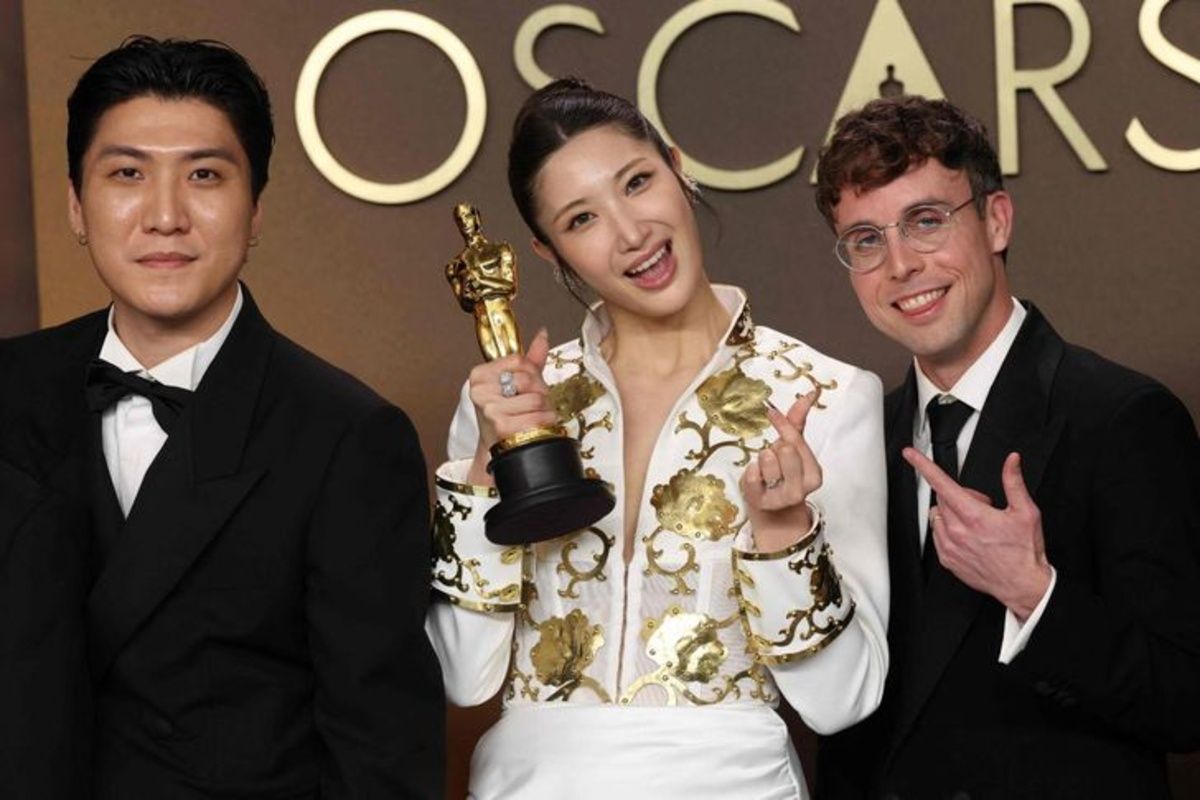
Over the past decade, Korean music, television, and cinema have steadily captured international attention. Therefore, many cultural analysts see this success as part of a much larger movement.
Although American studios produced the film, the creative direction reflected strong Korean influence. Korean Canadian filmmaker Maggie Kang co directed the project and helped shape its storytelling approach. In addition, several Korean and Korean American voice actors contributed to the cast.
The visual style, themes, and musical elements drew deeply from Korean culture. Because of this creative direction, the film stood out in a crowded global animation market.
The production also achieved remarkable commercial success. Streaming giant Netflix reported that the movie surpassed 500 million global views.
This figure makes it the most watched film ever released on the platform. Industry analysts believe the film reached a broad audience because it blended fantasy storytelling with pop music and Korean cultural imagery. Consequently, the movie appealed to viewers far beyond traditional animation fans.
A Cultural Moment on Hollywood’s Biggest Stage
One of the most memorable moments of the evening came from the live performance of the film’s anthem “Golden.” The song later won the Oscar for Best Original Song. Performers Rei Ami, Ejae, and Audrey Nuna delivered the performance alongside twenty-four dancers. The production combined K pop choreography with elements from traditional Korean art.
The stage performance also incorporated pansori inspired vocals and rhythmic drumming. This mixture created a powerful fusion of modern and traditional sound. Inside the Dolby Theatre, many well known figures responded enthusiastically.
Actors such as Leonardo DiCaprio, Steven Spielberg, and Emma Stone waved K pop light sticks while the crowd cheered. As the performance continued, the atmosphere grew even more energetic.
For viewers in South Korea, however, the moment represented more than entertainment. Film critics quickly pointed out that the performance placed Korean culture directly in front of one of the world’s most influential entertainment audiences. Because the ceremony attracts global media attention, the exposure carried enormous symbolic value.
Film critic Lee Dong jin later commented on the significance of the event in local newspapers. He explained that even if the South Korean government had tried to arrange such a showcase, it would have struggled to secure a stage of similar scale and visibility. His remarks reflected how many observers viewed the performance as a powerful cultural milestone.
Nevertheless, the celebration did not unfold without controversy. During the Best Original Song acceptance speech, singer-songwriter Ejae began addressing the audience.
However, the orchestra quickly started playing and interrupted the remarks. As a result, the co-writers of the winning track could not finish their speech. Some commentators argued that the moment deserved greater recognition.
Television host Ahn Hyun mo raised the issue during live coverage of the ceremony. She noted that earlier winners received more time to speak on stage. Consequently, many viewers questioned the uneven handling of acceptance speeches during the broadcast.
Even with that brief controversy, the film’s influence appears to stretch beyond entertainment. Tourism officials recently reported that South Korea welcomed 18.9 million foreign visitors in 2025. This number marks the highest total ever recorded. Officials believe that global interest in Korean culture contributed to the increase.
In particular, some travelers expressed curiosity about locations and cultural elements featured in KPop Demon Hunters. As international audiences engage more deeply with Korean stories, tourism leaders expect the trend to continue.
Ultimately, the film’s Oscar victory reflects a broader cultural shift. Korean music, cinema, and storytelling continue to gain worldwide recognition. Therefore, many observers believe this historic night may represent another important turning point in South Korea’s global cultural journey.

Leave a reply


 It seems that Mr. Bridgerton is not the only one swept up in a romance#bridgerton #bridgertonseason400:23
 Mr and Mrs Bridgerton #bridgerton #penelope #theprimemag00:07
 That classic sibling energy where "I’m sorry" actually means "I’m going to do it again #zendaya00:19
 The groom is here #robertpattinson #thedrama #edwardcullen #moviepremiere #funnymoment00:36
 #rihanna and #asaprocky looking great in #paris #theprimemag00:20
 #ElizabethOlsen and #AnthonyMackie on the red carpet00:09
 #SelenaGomez stepped out for the Rare Beauty Matte Foundation launch on Thursday00:17
 #cardib performance yesterday in #vegas #Valentines2026 #lustremagazine00:11
 #CardiB #WholesomeChaos #ProtectTheCrow #FunnyMoment #CelebrityMoments00:07
 They never told you about this Golden Globes gaffe with #JenniferLopez and #JeremyRenner00:11
 #bridgerton #netflix #trending #viral #misspossy #bridgertonseason401:17
 He definitely got it🤩🔥#onechallenge #thewoahchallenge #tiktok #dancetrends #hiphop #dancers00:18
 Oh No! 😂 #funny #relatable #trending #memes00:08
 #LeBron has made a major impact off the court his commitment to education and his community01:01
 😂😂 #memes #baby #fun #funny #trending00:08
 The only time #Shaq really went one-on-one with #LeBron #shaquilleoneal #lebronjames00:29
 Shaq did this on live tv… 😂 #shaq #insidethenba #charlesbarkley #shaquilleoneal #nba00:17
 You just know Kendrick’s heart dropped before he laughed 😭 #shaq #ShaquilleO’Neal00:10
 #nickiminaj or #cardib . That’s a tough one for #50cent 😂00:13
 #sofiavergara in #ModernFamily: #Sofía #Sitcom #FamilyComedy #funny #TVSeries01:00
 #SofíaVergara when asked about arrest on #TheEllenDeGeneresShow 😂00:20
 #Steve Harvey and #shaq on an episode of Family Feud #funny #theprimemag00:57
 #CillianMurphy fake laugh became the focus of the conversation on Jimmy Kimmel Live #theprimemag00:15
 Moment #KatyPerry surprised Benjamin Glaze with a kiss during his American Idol 2018 audition00:37
 #SelenaGomez and music producer #BennyBlanco00:13


The Prime is a dynamic publication delivering the latest in entertainment, lifestyle, culture, sports and world news, bringing sharp insight, fresh perspectives and stories that matter to a global audience.
