
Iran Regime Faces Setbacks but Remains Standing, US Intelligence Officials Say
US Lawmakers
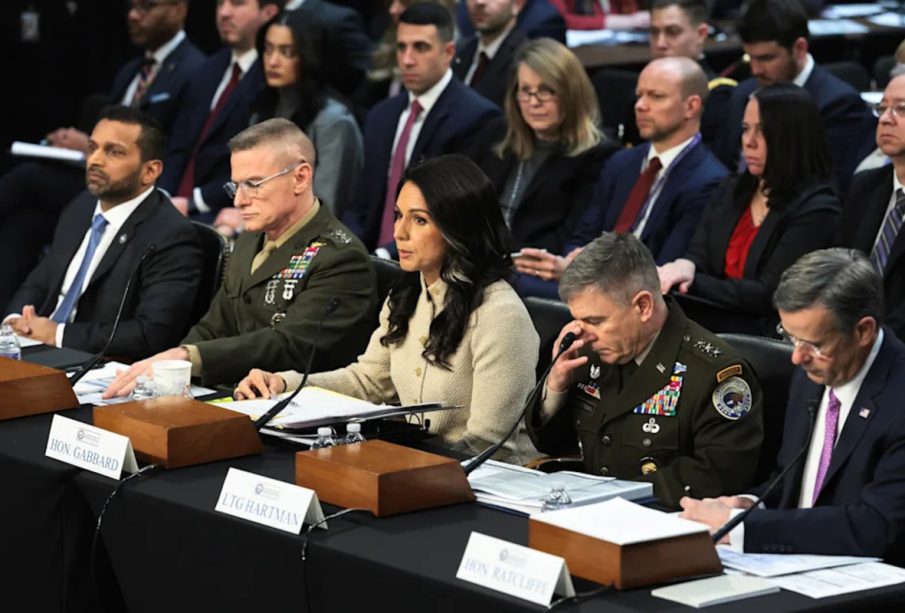
The Iran regime continues despite significant damage to its leadership and military structure, Tulsi Gabbard told US lawmakers. Speaking at a congressional hearing, she explained that the government has not collapsed but has weakened after recent military actions in the Middle East.
The hearing lasted over two hours and included top officials from the Central Intelligence Agency, Federal Bureau of Investigation, and National Security Agency. It marked the first public intelligence briefing since the conflict involving Iran escalated in late February.
Gabbard said intelligence reports show the regime suffered damage from targeted strikes on both leadership and military infrastructure. She emphasized that the system still functions, though it operates under strain.
Questions Over Threat Assessment
Lawmakers pressed officials on whether Iran posed an immediate threat to the United States before the strikes. Gabbard avoided a direct answer when Jon Ossoff asked, noting that the president ultimately decides what qualifies as an imminent threat.
Her remarks came amid debate in Washington over the justification for the strikes. Donald Trump argued the action was necessary because Iran advanced toward nuclear weapons capability, posing risks to the United States and Israel.
However, some officials disagreed. Joe Kent, who recently resigned as director of the National Counterterrorism Center, stated that Iran did not pose an immediate danger at the time. His resignation intensified scrutiny over the decision to engage militarily.
In contrast, John Ratcliffe defended the administration’s position. He told lawmakers that Iran has consistently posed a threat and that intelligence justified concern. He said officials monitored Iran’s activities for years and regarded them as potentially dangerous.
Impact of Military Operations
Gabbard said joint military operations by the US and Israel significantly weakened Iran’s capabilities. She noted that key elements of the country’s military power suffered damage, making it harder for the regime to operate at full strength.
The strikes lasted 12 days in June 2025 and targeted Iran’s nuclear infrastructure and strategic assets. Gabbard had previously written that these operations dismantled Iran’s nuclear enrichment program but did not repeat that claim during her testimony. When Mark Warner asked about the omission, she said time constraints required her to shorten her remarks.
Iran’s nuclear ambitions remain central to the discussion. Intelligence officials said Iran’s capabilities are reduced, but the country is attempting to recover. They also noted that Iran resists compliance with international nuclear agreements.
READ MORE: Air Strike Kills Iran Intelligence Minister, Esmail Khatib
Strategic Concerns in the Region
Another concern focused on the Strait of Hormuz, a vital route for global oil shipments. Gabbard said US intelligence had long expected potential disruptions during a conflict with Iran.
Lawmakers asked whether the administration prepared adequately. Angus King inquired if intelligence officials warned the president that Iran might target the shipping route.
Ratcliffe said the president receives regular briefings and defense planners already implemented measures to protect US interests, especially energy infrastructure. He added that precautionary actions anticipated possible retaliation.
Gabbard supported this view, noting that the intelligence community expected Iran to try to control or disrupt activity in the Strait if tensions rose. She confirmed that preemptive planning addressed this risk.
As discussions continue, policymakers focus on the condition of the Iran regime. While weakened, it still retains power. This raises questions about the conflict’s long-term impact and the next steps for US foreign policy in the region.


Leave a reply


 It seems that Mr. Bridgerton is not the only one swept up in a romance#bridgerton #bridgertonseason400:23
 Mr and Mrs Bridgerton #bridgerton #penelope #theprimemag00:07
 That classic sibling energy where "I’m sorry" actually means "I’m going to do it again #zendaya00:19
 The groom is here #robertpattinson #thedrama #edwardcullen #moviepremiere #funnymoment00:36
 #rihanna and #asaprocky looking great in #paris #theprimemag00:20
 #ElizabethOlsen and #AnthonyMackie on the red carpet00:09
 #SelenaGomez stepped out for the Rare Beauty Matte Foundation launch on Thursday00:17
 #cardib performance yesterday in #vegas #Valentines2026 #lustremagazine00:11
 #CardiB #WholesomeChaos #ProtectTheCrow #FunnyMoment #CelebrityMoments00:07
 They never told you about this Golden Globes gaffe with #JenniferLopez and #JeremyRenner00:11
 #bridgerton #netflix #trending #viral #misspossy #bridgertonseason401:17
 He definitely got it🤩🔥#onechallenge #thewoahchallenge #tiktok #dancetrends #hiphop #dancers00:18
 Oh No! 😂 #funny #relatable #trending #memes00:08
 #LeBron has made a major impact off the court his commitment to education and his community01:01
 😂😂 #memes #baby #fun #funny #trending00:08
 The only time #Shaq really went one-on-one with #LeBron #shaquilleoneal #lebronjames00:29
 Shaq did this on live tv… 😂 #shaq #insidethenba #charlesbarkley #shaquilleoneal #nba00:17
 You just know Kendrick’s heart dropped before he laughed 😭 #shaq #ShaquilleO’Neal00:10
 #nickiminaj or #cardib . That’s a tough one for #50cent 😂00:13
 #sofiavergara in #ModernFamily: #Sofía #Sitcom #FamilyComedy #funny #TVSeries01:00
 #SofíaVergara when asked about arrest on #TheEllenDeGeneresShow 😂00:20
 #Steve Harvey and #shaq on an episode of Family Feud #funny #theprimemag00:57
 #CillianMurphy fake laugh became the focus of the conversation on Jimmy Kimmel Live #theprimemag00:15
 Moment #KatyPerry surprised Benjamin Glaze with a kiss during his American Idol 2018 audition00:37
 #SelenaGomez and music producer #BennyBlanco00:13


The Prime is a dynamic publication delivering the latest in entertainment, lifestyle, culture, sports and world news, bringing sharp insight, fresh perspectives and stories that matter to a global audience.
