
Japan’s Most Spectacular Bloom Festivals
Japan’s bloom festivals offer a quiet kind of beauty that stays with you long after the season ends. Beyond the famous cherry blossoms, there is a wider world of color and calm waiting to be seen. From soft pink plum gardens in Tokyo to cascading purple tunnels in Fukuoka, these bloom festivals reveal a deeper side of Japanese culture rooted in patience, timing, and respect for nature.
For travelers seeking something refined and less crowded, these bloom festivals provide a more intimate and meaningful experience that goes beyond the usual spring highlights.
Japan’s relationship with seasonal flowers is not casual. It is part of daily life, art, and tradition. Each bloom carries meaning. Plum blossoms signal endurance and renewal. Cherry blossoms reflect the beauty of short moments.
Wisteria represents grace and longevity. Visiting bloom festivals across Japan allows you to see how these meanings come to life in real places, shaped by history and local identity. Below are the top 5 bloom festivals in Japan:
1. Setagaya Plum Blossom Festival in Tokyo
In a calm residential area of Tokyo, the Setagaya Plum Blossom Festival takes place at Hanegi Park. Known locally as Ume Matsuri, this event usually runs from mid February to early March, making it one of the earliest flower events of the year.
Plum blossoms bloom before cherry blossoms, and they bring a quieter kind of beauty. The trees at Hanegi Park produce flowers in shades of white, pale pink, and deep rose. The scent is light but noticeable, adding another layer to the experience. Visitors walk slowly along the paths, often stopping to admire individual trees rather than rushing through the park.
The festival itself is simple but charming. Local groups sometimes perform traditional music, and small stalls sell snacks and handmade goods. It feels more like a neighborhood gathering than a large tourist event. This makes it ideal for those who want to enjoy bloom festivals without large crowds.
There is also a sense of reflection tied to plum blossoms. Because they bloom in late winter, they are seen as a sign of strength and quiet resilience. Standing under these trees, many visitors take a moment to pause and appreciate the change of seasons. It sets a calm tone for the rest of the spring.
2. Kawazu Cherry Blossom Festival in Shizuoka
In the town of Kawazu, the Kawazu Cherry Blossom Festival offers a vibrant and early start to cherry blossom season. Held from early February to early March, it features Kawazu zakura, a type of cherry blossom known for its bright pink color and longer blooming period.
The main attraction is the line of cherry trees along the Kawazu River. The blossoms stretch for several kilometers, creating a continuous ribbon of color. Unlike the pale pink of more common cherry blossoms, Kawazu zakura have a richer tone that stands out against the sky and water.
The festival has a lively atmosphere. Food stalls serve local dishes, sweets, and warm drinks. There are also evening light displays, where lanterns illuminate the blossoms and reflect on the river. This creates a calm but slightly festive mood that appeals to both locals and visitors.
Despite its popularity, Kawazu still feels manageable compared to larger cities during peak cherry blossom season. It is a good choice for travelers who want a balance between energy and comfort. Among bloom festivals, it stands out for its timing and color, offering something different from the usual cherry blossom experience.
3. Ashikaga Flower Park Wisteria Festival
In Ashikaga, the Wisteria Festival at Ashikaga Flower Park is one of the most visually memorable bloom festivals in Japan. It takes place from mid April to mid May, when wisteria flowers reach full bloom.
Wisteria flowers hang in long clusters from overhead trellises and trees. The park features several large wisteria trees, including one that is over a century old. These trees spread wide and create natural canopies of purple, white, and pink flowers. Walking beneath them feels calm and immersive.
One of the most striking features of the park is its evening lighting. After sunset, soft lights highlight the colors of the flowers, creating reflections in nearby ponds. The result is a scene that feels peaceful and almost still, even with visitors present.
The layout of the park allows for a smooth flow of movement. Paths are clearly marked, and there are spaces to sit and take in the view. This careful design helps maintain a relaxed atmosphere even during busy periods. It is one of the bloom festivals that shows how planning and nature can work together to create a balanced experience.
Read About the 10 Things All Visitors to Japan Should Know
4. Fuji Shibazakura Festival near Mount Fuji
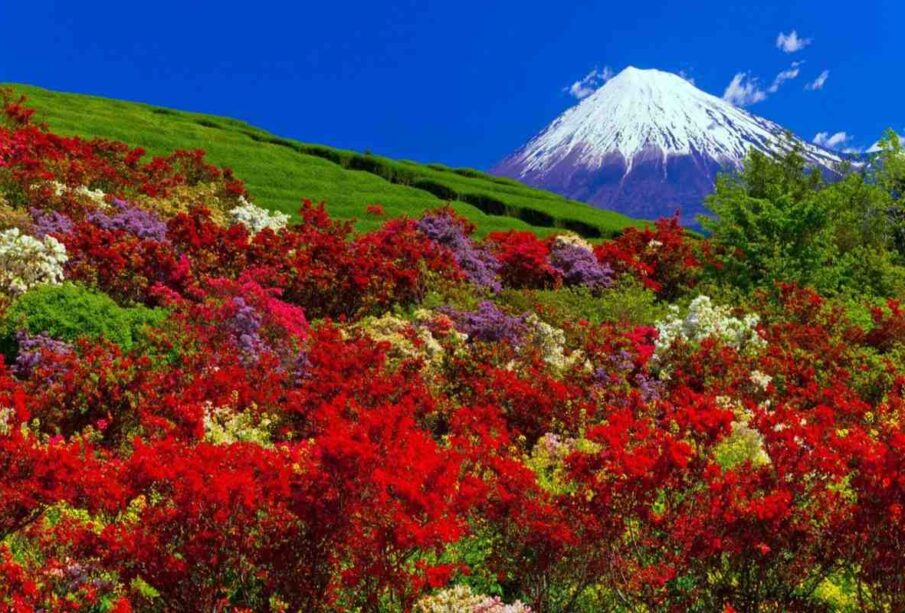
At the base of Mount Fuji, the Fuji Shibazakura Festival offers a bold and colorful landscape that feels very different from tree based blossom events. Held from mid April to late May, it features fields of moss phlox, known as shibazakura.
These flowers grow low to the ground and spread out in dense patches. The result is a carpet of color in shades of pink, purple, and white. The patterns are carefully arranged, creating waves and shapes that guide the eye across the field.
What makes this festival especially unique is the presence of Mount Fuji in the background. The contrast between the soft flowers and the strong shape of the mountain creates a balanced and striking view. It is a scene that feels both natural and composed.
Visitors can walk along designated paths that wind through the fields. These paths allow for close views without damaging the plants. There are also viewing platforms that provide a wider perspective of the entire area.
This festival is one of the most photographed bloom festivals in Japan. It attracts visitors from around the world, yet the open space helps prevent it from feeling too crowded. It offers a sense of freedom and openness that is different from garden based events.
5. Kawachi Wisteria Garden in Fukuoka
In Kitakyushu, the Kawachi Wisteria Garden is known for its famous tunnels of wisteria flowers. The garden opens to visitors during peak bloom, usually from late April to early May.
The tunnels are formed by metal frames covered in wisteria vines. As the flowers bloom, they hang down in layers, creating a ceiling of color above the walkway. Shades of purple, pink, and white blend together, with light passing through the petals.
Walking through these tunnels feels calm and immersive. The space is narrow enough to feel enclosed, but open enough to allow movement and light. It creates a quiet moment where visitors can focus on the details of the flowers.
Because of its popularity, access to the garden is controlled during peak season. Visitors often need to buy tickets in advance or arrive early. This system helps manage crowd size and protect the flowers.
Among bloom festivals in Japan, this garden stands out for its design. It is not just about the flowers themselves, but how they are arranged to create a full experience.
A Deeper Connection to Seasonal Beauty
Bloom festivals in Japan are closely tied to the idea of seasonal awareness. Each flower has a short life, and its beauty is linked to that brief moment. This creates a sense of appreciation that is both simple and profound.
Visitors are encouraged to slow down and take in their surroundings. This might mean sitting under a tree, walking quietly along a path, or simply observing the way light falls on the petals. These small moments add depth to the experience.
There is also a strong connection between these festivals and local communities. Many events are organized with care, reflecting regional traditions and values. This adds a layer of authenticity that makes each festival feel unique.
Responsible Ways to Enjoy Bloom Festivals
Respect plays an important role in how bloom festivals are experienced in Japan. Visitors are expected to follow simple guidelines that help protect both the flowers and the environment.
Stay on marked paths to avoid damaging plants. Do not pick flowers or touch delicate branches. Take photos with care, making sure not to block walkways or disturb others.
It is also important to manage waste properly. Carry your trash until you find a suitable place to dispose of it. Many parks provide clear instructions, and following them helps keep the area clean for everyone.
Visiting early in the day or on weekdays can reduce pressure on popular sites. Choosing less crowded bloom festivals can create a more relaxed experience and support smaller communities.
Timing is key when visiting bloom festivals in Japan. Each flower has its own season, and the exact bloom period can change depending on weather conditions. Checking local updates before traveling can help ensure the best experience.
Transport is usually well organized, especially near major festival sites. Trains and buses often run more frequently during peak seasons. However, planning ahead is still important, as popular routes can become busy.
Accommodation should also be booked in advance, especially in areas close to major festivals. Staying nearby allows for early visits and a more relaxed schedule.
Bringing simple essentials can improve your visit. Comfortable shoes, light layers, and a small bag for personal items are usually enough. Keeping things simple allows you to focus on the experience rather than logistics.
A Season That Stays With You
Japan’s bloom festivals offer more than visual beauty. They provide a chance to slow down and connect with nature in a meaningful way. Each location tells its own story through color, scent, and setting.
From the quiet plum blossoms of Tokyo to the dramatic wisteria tunnels of Fukuoka, these bloom festivals show the range and depth of Japan’s seasonal culture. They invite visitors to appreciate small details and find calm in simple moments.
This experience often stays with people long after they leave. It changes the way they see seasons, time, and even daily life. That is the quiet power of these festivals.
Save this guide for your next trip or share it with a friend who dreams of seeing Japan in full bloom.


Leave a reply


 It seems that Mr. Bridgerton is not the only one swept up in a romance#bridgerton #bridgertonseason400:23
 Mr and Mrs Bridgerton #bridgerton #penelope #theprimemag00:07
 That classic sibling energy where "I’m sorry" actually means "I’m going to do it again #zendaya00:19
 The groom is here #robertpattinson #thedrama #edwardcullen #moviepremiere #funnymoment00:36
 #rihanna and #asaprocky looking great in #paris #theprimemag00:20
 #ElizabethOlsen and #AnthonyMackie on the red carpet00:09
 #SelenaGomez stepped out for the Rare Beauty Matte Foundation launch on Thursday00:17
 #cardib performance yesterday in #vegas #Valentines2026 #lustremagazine00:11
 #CardiB #WholesomeChaos #ProtectTheCrow #FunnyMoment #CelebrityMoments00:07
 They never told you about this Golden Globes gaffe with #JenniferLopez and #JeremyRenner00:11
 #bridgerton #netflix #trending #viral #misspossy #bridgertonseason401:17
 He definitely got it🤩🔥#onechallenge #thewoahchallenge #tiktok #dancetrends #hiphop #dancers00:18
 Oh No! 😂 #funny #relatable #trending #memes00:08
 #LeBron has made a major impact off the court his commitment to education and his community01:01
 😂😂 #memes #baby #fun #funny #trending00:08
 The only time #Shaq really went one-on-one with #LeBron #shaquilleoneal #lebronjames00:29
 Shaq did this on live tv… 😂 #shaq #insidethenba #charlesbarkley #shaquilleoneal #nba00:17
 You just know Kendrick’s heart dropped before he laughed 😭 #shaq #ShaquilleO’Neal00:10
 #nickiminaj or #cardib . That’s a tough one for #50cent 😂00:13
 #sofiavergara in #ModernFamily: #Sofía #Sitcom #FamilyComedy #funny #TVSeries01:00
 #SofíaVergara when asked about arrest on #TheEllenDeGeneresShow 😂00:20
 #Steve Harvey and #shaq on an episode of Family Feud #funny #theprimemag00:57
 #CillianMurphy fake laugh became the focus of the conversation on Jimmy Kimmel Live #theprimemag00:15
 Moment #KatyPerry surprised Benjamin Glaze with a kiss during his American Idol 2018 audition00:37
 #SelenaGomez and music producer #BennyBlanco00:13


The Prime is a dynamic publication delivering the latest in entertainment, lifestyle, culture, sports and world news, bringing sharp insight, fresh perspectives and stories that matter to a global audience.