JD Vance to Lead US Delegation in Iran Talks in Pakistan
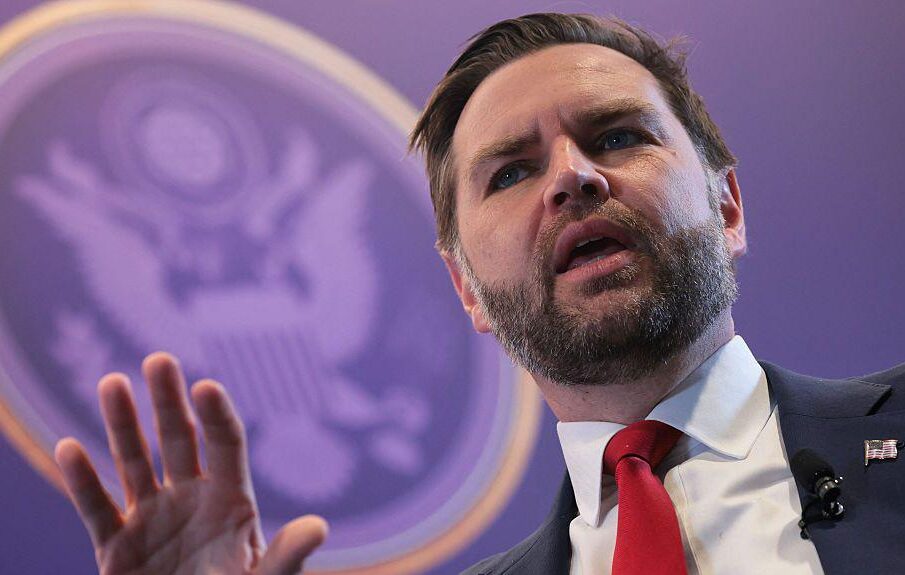
A new phase of Iran talks begins as JD Vance prepares to lead a United States delegation to Pakistan to negotiate with Iranian officials. The discussions start on 11 April, following a ceasefire that officials say could create more stable relations in the region.
According to Karoline Leavitt, the recent pause in hostilities gives both sides an opportunity for dialogue. However, many details about the Iran talks remain unclear. The US delegation includes special envoy Steve Witkoff and Jared Kushner, who will meet Iranian representatives in Islamabad.
Unclear Terms and Rising Tensions
While officials express cautious optimism, uncertainty surrounds the proposals to be discussed. Reports of a detailed Iranian approach have been dismissed by the White House. Leavitt says Tehran’s earlier suggestions were inadequate before presenting a revised version.
At the same time, tensions remain high around the Strait of Hormuz, a key route for oil shipments. Iranian forces warn vessels not to pass without approval, raising concerns about safety at sea. Yet, US officials insist Iran’s public statements may not match private assurances in back-channel talks.
Leavitt confirms that Iran agreed to reopen the waterway. The US expects this to happen quickly and without disruption. She also stresses that Washington will hold Iran accountable if commitments are not met.
The ceasefire followed strong warnings from Donald Trump, who had threatened severe consequences if an agreement failed. His remarks drew criticism from observers and raised concerns about the humanitarian impact of further escalation. Still, the administration defends his approach, arguing that firm words helped bring about the pause in conflict.
Leavitt calls recent developments a significant achievement. Key military objectives had been met during the operation. These include targeting Iran’s naval capabilities and its drone and missile systems.
Tensions with Allies
As the Iran talks approach, attention turns to international relations. President Trump plans to meet Mark Rutte as tensions rise between the US and its allies. Disagreements grow over handling the Iran situation, with Trump criticizing NATO members for what he calls a lack of support.
The US president also raises the possibility of reassessing America’s role in the alliance. No formal decision has been announced yet. These issues add another layer of difficulty to the Pakistan negotiations. Partners around the world watch closely as the situation develops.
For now, the focus is whether the upcoming talks can turn the ceasefire into a lasting agreement. Both sides show willingness to engage, even as uncertainty shapes the path forward.
Observers note that success in Islamabad depends on clear communication and adherence to commitments. Officials say trust-building measures, including reopening the Strait of Hormuz safely, will signal progress.
The upcoming discussions also test US diplomatic strategy. While the ceasefire provides a window, officials warn that failure to act could reverse the gains achieved so far.
Leavitt concludes that the talks present an important moment for the region. She emphasizes that the US will monitor developments closely and respond if Iran fails to meet expectations. Meanwhile, Vance and the delegation prepare for critical meetings that could influence stability in the area.


Leave a reply


 It seems that Mr. Bridgerton is not the only one swept up in a romance#bridgerton #bridgertonseason400:23
 Mr and Mrs Bridgerton #bridgerton #penelope #theprimemag00:07
 That classic sibling energy where "I’m sorry" actually means "I’m going to do it again #zendaya00:19
 The groom is here #robertpattinson #thedrama #edwardcullen #moviepremiere #funnymoment00:36
 #rihanna and #asaprocky looking great in #paris #theprimemag00:20
 #ElizabethOlsen and #AnthonyMackie on the red carpet00:09
 #SelenaGomez stepped out for the Rare Beauty Matte Foundation launch on Thursday00:17
 #cardib performance yesterday in #vegas #Valentines2026 #lustremagazine00:11
 #CardiB #WholesomeChaos #ProtectTheCrow #FunnyMoment #CelebrityMoments00:07
 They never told you about this Golden Globes gaffe with #JenniferLopez and #JeremyRenner00:11
 #bridgerton #netflix #trending #viral #misspossy #bridgertonseason401:17
 He definitely got it🤩🔥#onechallenge #thewoahchallenge #tiktok #dancetrends #hiphop #dancers00:18
 Oh No! 😂 #funny #relatable #trending #memes00:08
 #LeBron has made a major impact off the court his commitment to education and his community01:01
 😂😂 #memes #baby #fun #funny #trending00:08
 The only time #Shaq really went one-on-one with #LeBron #shaquilleoneal #lebronjames00:29
 Shaq did this on live tv… 😂 #shaq #insidethenba #charlesbarkley #shaquilleoneal #nba00:17
 You just know Kendrick’s heart dropped before he laughed 😭 #shaq #ShaquilleO’Neal00:10
 #nickiminaj or #cardib . That’s a tough one for #50cent 😂00:13
 #sofiavergara in #ModernFamily: #Sofía #Sitcom #FamilyComedy #funny #TVSeries01:00
 #SofíaVergara when asked about arrest on #TheEllenDeGeneresShow 😂00:20
 #Steve Harvey and #shaq on an episode of Family Feud #funny #theprimemag00:57
 #CillianMurphy fake laugh became the focus of the conversation on Jimmy Kimmel Live #theprimemag00:15
 Moment #KatyPerry surprised Benjamin Glaze with a kiss during his American Idol 2018 audition00:37
 #SelenaGomez and music producer #BennyBlanco00:13


The Prime is a dynamic publication delivering the latest in entertainment, lifestyle, culture, sports and world news, bringing sharp insight, fresh perspectives and stories that matter to a global audience.