
Meningitis Cases Rise in University Towns, Prompting Urgent Health Measures
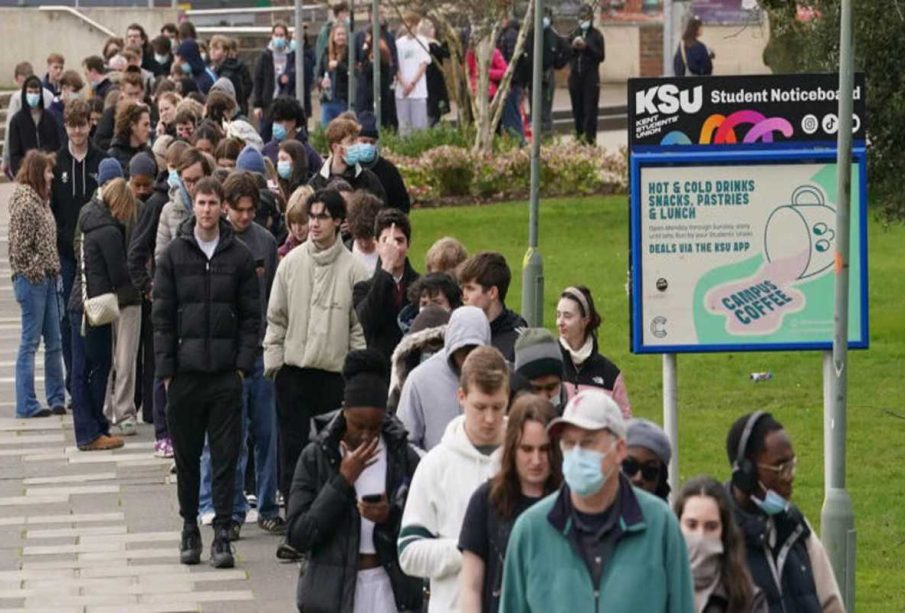
An urgent public health alert has been issued as meningitis cases rise across Kent. Students and residents must take precautions amid concerns over a fast-spreading outbreak. Health officials in England are monitoring the situation closely while launching vaccinations and distributing antibiotics to those at risk.
The UK Health Security Agency (UKHSA) confirmed that around 5,000 students at the University of Kent are receiving jabs after a cluster of infections linked to a local nightclub in Canterbury. Tragically, the outbreak claimed the lives of a 21-year-old university student and a sixth-former at Queen Elizabeth’s Grammar School in Faversham. So far, authorities have reported 20 confirmed and suspected cases.
Susan Hopkins, chief executive of UKHSA, told the BBC that the infection’s rapid spread remains under investigation. She added that government vaccines will mainly go to NHS patients, including students in Kent, while some doses could be supplied to pharmacies if necessary.
A case also appeared at Canterbury Christ Church University, where 20-year-old student Tyra Skinner fell ill after visiting Club Chemistry nightclub. Skinner is receiving treatment at William Harvey Hospital in Ashford and is stable. Her mother, Candice Skinner, said the illness first appeared like flu but escalated quickly.
“The weekend started with a red eye, which we thought was pink eye, then by Monday she was very ill and slumped over,” Candice said. “We rushed her to hospital as soon as we realized the severity.”
UKHSA has administered around 2,500 doses of antibiotics across Kent and urges general practitioners to prescribe them to anyone who attended the nightclub between March 5 and 7, along with University of Kent students. Officials stress that antibiotics remain the most effective treatment for meningitis and describe the outbreak’s speed as explosive and unprecedented.
Health authorities suspect a super-spreader event occurred, with the infection continuing to circulate in university halls of residence. Although the initial source remains unconfirmed, rapid transmission has prompted swift action.
Targeted Vaccinations Underway
Students at the University of Kent receive vaccinations in the campus sports hall, in scenes reminiscent of Covid-19 immunisation efforts. Health staff operate 15 tables, wearing aprons and masks, administering vaccines and precautionary antibiotics. The programme began Wednesday afternoon and continues in morning sessions to ensure all students receive the first dose, followed by arrangements for the second dose on campus.
Some students report altered campus life due to the outbreak. Economics student Mohammed Olayinka describes the campus as “a bit of a ghost town,” noting that many peers stay isolated or leave the city. Architecture student Sophie explains that most friends have gone home, leaving her and a housemate as the only residents. Meanwhile, postgraduate law student Oliver Contreras was among the first to receive the vaccine, reflecting growing caution among students.
Vice-Chancellor of Canterbury Christ Church University, Professor Rama Thirunamachandran, confirmed the case involving Tyra Skinner. He emphasized that the university continues to support affected individuals. Core teaching, learning, and research activities remain operational even as the health response continues.
Several schools across Kent report confirmed or suspected cases, highlighting the need for vigilance beyond university campuses. Pharmacies including Boots and Superdrug implement queuing and waiting lists to manage the rising demand for vaccines. Meanwhile, a patient admitted to a hospital in France after returning from England remains stable.
Health Secretary Wes Streeting describes the outbreak as unprecedented in pace and extent. While concentrated in Kent, similar meningitis cases occur nationwide. He emphasizes proactive measures, distributing antibiotics and administering vaccinations to control the spread. Prime Minister Sir Keir Starmer offers condolences to affected families and confirms that health experts trace close contacts and provide medical interventions.
Authorities urge students, nightclub attendees, and the wider community to seek medical advice if they develop fever, headache, stiff neck, or flu-like symptoms that could indicate meningitis. Swift action, early treatment, and vaccination remain critical to limiting the outbreak’s impact.

Leave a reply


 It seems that Mr. Bridgerton is not the only one swept up in a romance#bridgerton #bridgertonseason400:23
 Mr and Mrs Bridgerton #bridgerton #penelope #theprimemag00:07
 That classic sibling energy where "I’m sorry" actually means "I’m going to do it again #zendaya00:19
 The groom is here #robertpattinson #thedrama #edwardcullen #moviepremiere #funnymoment00:36
 #rihanna and #asaprocky looking great in #paris #theprimemag00:20
 #ElizabethOlsen and #AnthonyMackie on the red carpet00:09
 #SelenaGomez stepped out for the Rare Beauty Matte Foundation launch on Thursday00:17
 #cardib performance yesterday in #vegas #Valentines2026 #lustremagazine00:11
 #CardiB #WholesomeChaos #ProtectTheCrow #FunnyMoment #CelebrityMoments00:07
 They never told you about this Golden Globes gaffe with #JenniferLopez and #JeremyRenner00:11
 #bridgerton #netflix #trending #viral #misspossy #bridgertonseason401:17
 He definitely got it🤩🔥#onechallenge #thewoahchallenge #tiktok #dancetrends #hiphop #dancers00:18
 Oh No! 😂 #funny #relatable #trending #memes00:08
 #LeBron has made a major impact off the court his commitment to education and his community01:01
 😂😂 #memes #baby #fun #funny #trending00:08
 The only time #Shaq really went one-on-one with #LeBron #shaquilleoneal #lebronjames00:29
 Shaq did this on live tv… 😂 #shaq #insidethenba #charlesbarkley #shaquilleoneal #nba00:17
 You just know Kendrick’s heart dropped before he laughed 😭 #shaq #ShaquilleO’Neal00:10
 #nickiminaj or #cardib . That’s a tough one for #50cent 😂00:13
 #sofiavergara in #ModernFamily: #Sofía #Sitcom #FamilyComedy #funny #TVSeries01:00
 #SofíaVergara when asked about arrest on #TheEllenDeGeneresShow 😂00:20
 #Steve Harvey and #shaq on an episode of Family Feud #funny #theprimemag00:57
 #CillianMurphy fake laugh became the focus of the conversation on Jimmy Kimmel Live #theprimemag00:15
 Moment #KatyPerry surprised Benjamin Glaze with a kiss during his American Idol 2018 audition00:37
 #SelenaGomez and music producer #BennyBlanco00:13


The Prime is a dynamic publication delivering the latest in entertainment, lifestyle, culture, sports and world news, bringing sharp insight, fresh perspectives and stories that matter to a global audience.
