
Mojtaba Khamenei Succeeds Ali Khamenei as Iran’s Leader
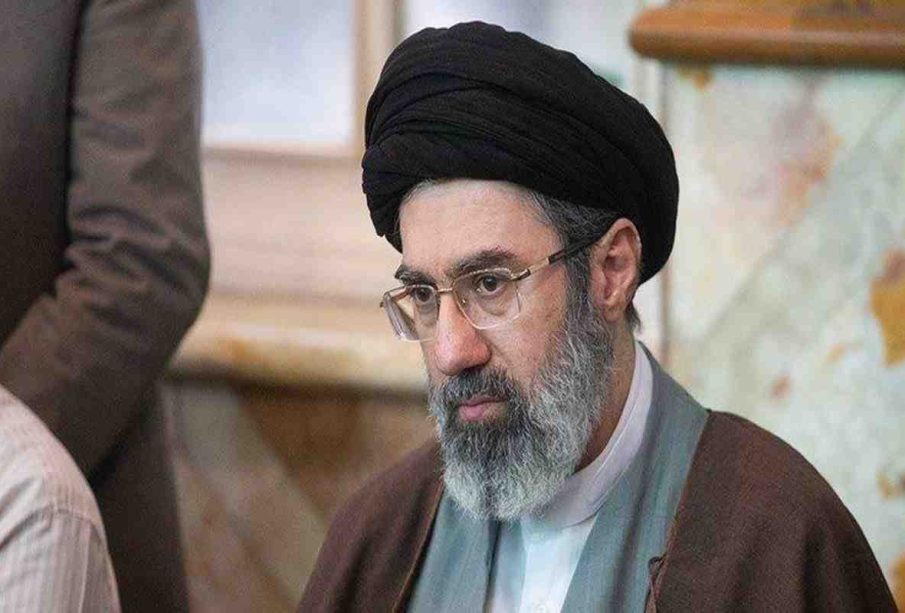
Mojtaba Khamenei
In a dramatic development amid escalating conflict, Iran’s leadership has shifted following the death of Ali Khamenei. Reports indicate that Mojtaba Khamenei has been chosen as the country’s new supreme leader after U.S. and Israeli air strikes killed his father. The appointment comes as the war intensifies, placing Iran in one of its most volatile political moments in recent history.
Iranian state media reported that the Assembly of Experts, an 88-member council responsible for selecting the supreme leader, made the decision. The council described the vote as decisive and urged citizens to unite and pledge loyalty to the new leader.
Ali Khamenei ruled Iran for more than three decades after becoming the supreme leader in 1989. He died on February 28 during a strike on his Tehran compound.
Several family members, including his wife, one of his daughters, and Mojtaba Khamenei’s mother, also perished. Mojtaba Khamenei survived, as he was not at the compound during the attack.
A Controversial Rise
Mojtaba Khamenei has never held elected office but wielded significant power within Iran’s political establishment. Analysts have long viewed him as a potential successor because of his ties to Iran’s security institutions, particularly the Islamic Revolutionary Guard Corps.
He steadily expanded his influence while keeping a low public profile. Unlike many senior clerics, he rarely delivered speeches, sermons, or political addresses. As a result, most Iranians have never heard him speak despite his prominence behind the scenes.
Critics accuse Mojtaba Khamenei of suppressing dissent, especially during protests after the disputed 2009 presidential election. That election secured Mahmoud Ahmadinejad’s controversial re-election and triggered the Green Movement protests.
Security forces, including the Basij militia linked to the Revolutionary Guard, cracked down on demonstrators. Later nationwide protests faced similar suppression, drawing criticism from international observers and the United Nations.
Mojtaba Khamenei also served in the Iran-Iraq War with a Revolutionary Guard-affiliated unit. Many of his former colleagues later rose to senior positions in Iran’s security and intelligence networks.
Reports from Western media link him to financial networks operating through associates and institutions, including ties to figures connected to the now-defunct Bank Ayandeh.
His appointment signals that hardline factions retain strong influence within Iran’s leadership. Analysts warn this may reduce the chances of immediate negotiations or diplomatic concessions as tensions with the United States and Israel escalate.
Meanwhile, Iran has restricted internet access across the country as bombardment continues. Communication remains limited, and uncertainty grows over how the new leadership will navigate the ongoing war and the political transition.
Mojtaba Khamenei now faces the task of consolidating power during one of Iran’s most critical periods. His rise demonstrates the resilience of hardline forces and highlights the challenges ahead. As the conflict unfolds, both domestic and international observers watch closely to see how Iran’s new leader will shape the nation’s future amid war, political upheaval, and global scrutiny.


Leave a reply


 It seems that Mr. Bridgerton is not the only one swept up in a romance#bridgerton #bridgertonseason400:23
 Mr and Mrs Bridgerton #bridgerton #penelope #theprimemag00:07
 That classic sibling energy where "I’m sorry" actually means "I’m going to do it again #zendaya00:19
 The groom is here #robertpattinson #thedrama #edwardcullen #moviepremiere #funnymoment00:36
 #rihanna and #asaprocky looking great in #paris #theprimemag00:20
 #ElizabethOlsen and #AnthonyMackie on the red carpet00:09
 #SelenaGomez stepped out for the Rare Beauty Matte Foundation launch on Thursday00:17
 #cardib performance yesterday in #vegas #Valentines2026 #lustremagazine00:11
 #CardiB #WholesomeChaos #ProtectTheCrow #FunnyMoment #CelebrityMoments00:07
 They never told you about this Golden Globes gaffe with #JenniferLopez and #JeremyRenner00:11
 #bridgerton #netflix #trending #viral #misspossy #bridgertonseason401:17
 He definitely got it🤩🔥#onechallenge #thewoahchallenge #tiktok #dancetrends #hiphop #dancers00:18
 Oh No! 😂 #funny #relatable #trending #memes00:08
 #LeBron has made a major impact off the court his commitment to education and his community01:01
 😂😂 #memes #baby #fun #funny #trending00:08
 The only time #Shaq really went one-on-one with #LeBron #shaquilleoneal #lebronjames00:29
 Shaq did this on live tv… 😂 #shaq #insidethenba #charlesbarkley #shaquilleoneal #nba00:17
 You just know Kendrick’s heart dropped before he laughed 😭 #shaq #ShaquilleO’Neal00:10
 #nickiminaj or #cardib . That’s a tough one for #50cent 😂00:13
 #sofiavergara in #ModernFamily: #Sofía #Sitcom #FamilyComedy #funny #TVSeries01:00
 #SofíaVergara when asked about arrest on #TheEllenDeGeneresShow 😂00:20
 #Steve Harvey and #shaq on an episode of Family Feud #funny #theprimemag00:57
 #CillianMurphy fake laugh became the focus of the conversation on Jimmy Kimmel Live #theprimemag00:15
 Moment #KatyPerry surprised Benjamin Glaze with a kiss during his American Idol 2018 audition00:37
 #SelenaGomez and music producer #BennyBlanco00:13


The Prime is a dynamic publication delivering the latest in entertainment, lifestyle, culture, sports and world news, bringing sharp insight, fresh perspectives and stories that matter to a global audience.
