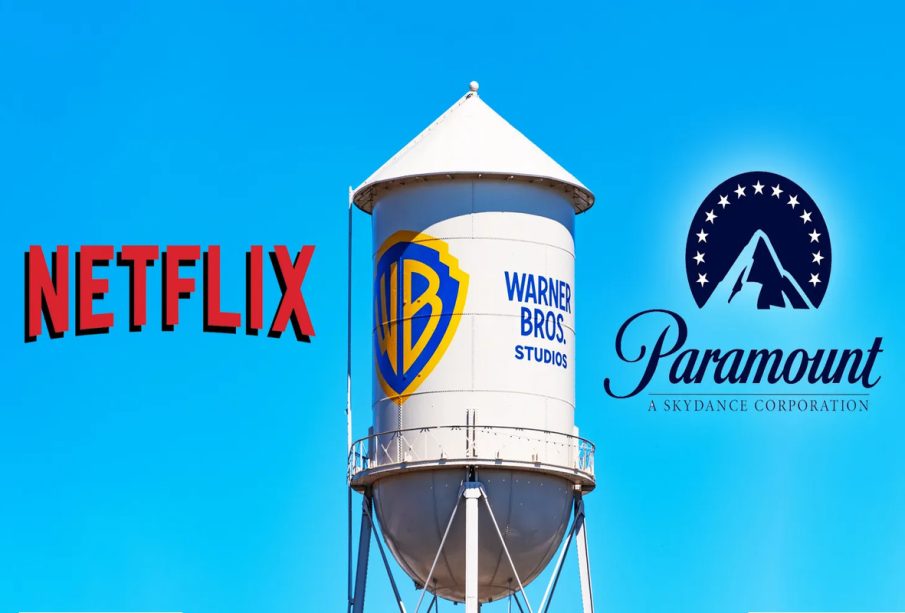
The Netflix Warner Bros deal has ended after Netflix officially stepped away from its plan to acquire major assets from Warner Bros. Discovery. Rival bidder Paramount Skydance has now secured control of the media company.
Rather than completing the acquisition, Netflix will receive a $2.8 billion breakup payment. The company says the payout strengthens its financial position moving forward.
Netflix Chief Financial Officer Spence Neumann addressed the outcome at the Morgan Stanley Technology, Media & Telecom Conference. He explained that Netflix withdrew from the bidding process after the final offer price climbed beyond what the company considered financially reasonable.
Neumann said Netflix initially saw strong strategic value in the Warner Bros. assets. However, the company never intended to pay any price simply to win the deal. Leadership only viewed the opportunity as attractive if the financial terms supported Netflix’s long term business strategy.
He added that the rising bids eventually pushed the transaction beyond a sensible valuation. Once the economics no longer aligned with Netflix’s expectations, the company decided to step aside instead of stretching its investment limits.
The end of the Netflix Warner Bros deal came shortly after Paramount Skydance increased its hostile takeover offer for Warner Bros. Discovery. The competing bidder raised its proposal to $31 per share for the entire company.
That move secured Paramount Skydance a winning position in the takeover battle. Warner Bros. Discovery then terminated its earlier agreement with Netflix.The termination triggered a contractual breakup payment worth $2.8 billion. Neumann described the payout as a surprising financial advantage for the streaming giant.
“Now we move forward with $2.8 billion in our pocket that we did not have just a few weeks ago,” he told investors and analysts during the conference.
Netflix Maintains Discipline as Streaming Competition Intensifies
Netflix executives say the decision to abandon the acquisition reflects financial discipline rather than a change in strategy. Neumann explained that Netflix entered negotiations with a clear valuation model for the Warner Bros. assets. Those assets included the company’s film studios and streaming operations. Netflix believed they could strengthen its content ecosystem.
However, the company only planned to proceed if the purchase price matched realistic revenue potential. When the bidding exceeded that valuation, leadership decided to withdraw. The company refused to chase the acquisition aggressively at an inflated price.
Neumann also said Netflix believed it could manage the Warner Bros. assets successfully if the deal had gone through. The company felt confident it could guide the business responsibly while maintaining its creative and commercial strength. He added that Netflix also believed it had a credible path toward securing regulatory approval for the merger.
Despite that confidence, leadership continued to prioritize financial discipline.“At the end of the day we had to stay disciplined about the price we were willing to pay,” Neumann told conference attendees.
Netflix’s decision also echoes comments from co-CEO Ted Sarandos. He previously described the potential acquisition as beneficial but not essential to the company’s future. Instead of depending on major acquisitions, Netflix continues to focus on organic growth. The company plans to expand through global content production and platform development.
Executives confirmed that Netflix expects to invest heavily in entertainment production this year. The company plans to spend about $20 billion on content in 2026. That figure represents roughly a 10 percent increase compared to the previous year.
The increase aligns with Netflix’s revenue projections. The company expects annual revenue between $50.7 billion and $51.7 billion in 2026.Those projections would represent growth of about 12 to 14 percent compared to the previous year. Profitability remains another priority for the company. Netflix expects to achieve an operating margin of approximately 31.5 percent in 2026.
The projection reflects improved efficiency as the company continues to scale its global operations. Subscriber growth has also remained strong. Netflix ended 2025 with more than 325 million global subscribers.
That number represents a significant jump from the 301.2 million subscribers the company reported a year earlier.Industry analysts say the collapse of the Netflix Warner Bros deal highlights the growing competition across the global media industry.
Major companies increasingly compete for content libraries, intellectual property, and streaming dominance.Large scale media mergers have become more common as companies attempt to combine production studios, distribution platforms, and global audiences into single entertainment ecosystems.
However, Netflix continues to insist that its long term strategy does not rely on acquiring traditional Hollywood studios. Instead, the company wants to remain the primary destination for professionally produced entertainment created by filmmakers, producers, and storytellers worldwide.
Neumann reinforced this vision during his remarks at the conference.He explained that Netflix has not changed its overall approach to content investment. According to him, the company aims to remain both the starting point and the final destination for high quality global storytelling.
With billions of dollars now added back to its balance sheet, Netflix appears ready to pursue new opportunities. The company intends to support its long term vision while maintaining strict financial discipline.




 It seems that Mr. Bridgerton is not the only one swept up in a romance#bridgerton #bridgertonseason400:23
 Mr and Mrs Bridgerton #bridgerton #penelope #theprimemag00:07
 That classic sibling energy where "I’m sorry" actually means "I’m going to do it again #zendaya00:19
 The groom is here #robertpattinson #thedrama #edwardcullen #moviepremiere #funnymoment00:36
 #rihanna and #asaprocky looking great in #paris #theprimemag00:20
 #ElizabethOlsen and #AnthonyMackie on the red carpet00:09
 #SelenaGomez stepped out for the Rare Beauty Matte Foundation launch on Thursday00:17
 #cardib performance yesterday in #vegas #Valentines2026 #lustremagazine00:11
 #CardiB #WholesomeChaos #ProtectTheCrow #FunnyMoment #CelebrityMoments00:07
 They never told you about this Golden Globes gaffe with #JenniferLopez and #JeremyRenner00:11
 #bridgerton #netflix #trending #viral #misspossy #bridgertonseason401:17
 He definitely got it🤩🔥#onechallenge #thewoahchallenge #tiktok #dancetrends #hiphop #dancers00:18
 Oh No! 😂 #funny #relatable #trending #memes00:08
 #LeBron has made a major impact off the court his commitment to education and his community01:01
 😂😂 #memes #baby #fun #funny #trending00:08
 The only time #Shaq really went one-on-one with #LeBron #shaquilleoneal #lebronjames00:29
 Shaq did this on live tv… 😂 #shaq #insidethenba #charlesbarkley #shaquilleoneal #nba00:17
 You just know Kendrick’s heart dropped before he laughed 😭 #shaq #ShaquilleO’Neal00:10
 #nickiminaj or #cardib . That’s a tough one for #50cent 😂00:13
 #sofiavergara in #ModernFamily: #Sofía #Sitcom #FamilyComedy #funny #TVSeries01:00
 #SofíaVergara when asked about arrest on #TheEllenDeGeneresShow 😂00:20
 #Steve Harvey and #shaq on an episode of Family Feud #funny #theprimemag00:57
 #CillianMurphy fake laugh became the focus of the conversation on Jimmy Kimmel Live #theprimemag00:15
 Moment #KatyPerry surprised Benjamin Glaze with a kiss during his American Idol 2018 audition00:37
 #SelenaGomez and music producer #BennyBlanco00:13