
Oil Prices Surge as Global Tensions Threaten Supply
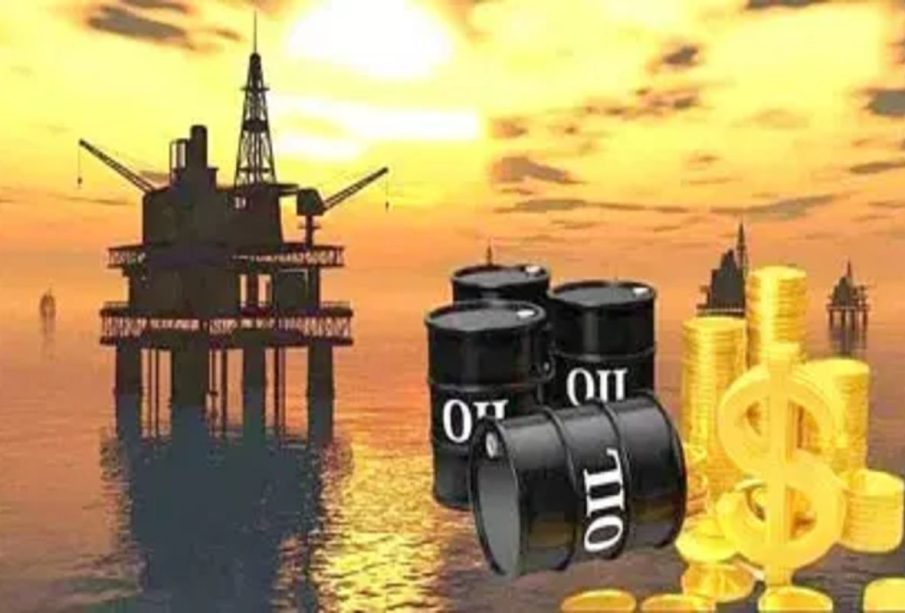
Oil prices surged sharply this week, surpassing $100 a barrel, despite a historic release of reserves aimed at stabilizing global markets. The rise followed new attacks on shipping in the Gulf, stoking fears over long-term energy supply security.
Three cargo vessels came under attack, raising concerns about the Strait of Hormuz, a crucial route for oil and liquefied natural gas shipments. The International Energy Agency (IEA) had released a record 400 million barrels from member nations to counter price spikes and ease economic fallout from the US-Israel conflict with Iran. Yet investors remain unsettled.
An Islamic Revolutionary Guard Corps spokesperson warned that vessels tied to the US, Israel, or their allies remain at risk. “You will not be able to artificially lower the price of oil. Expect oil at $200 per barrel,” the spokesperson said, highlighting that regional insecurity fuels market volatility.
Strained Markets and Rising Costs
Global stock markets reacted negatively. London’s FTSE 100 fell 0.4%, while Germany’s DAX, France’s CAC, and Spain’s IBEX all declined. Japan’s Nikkei closed 1% lower. Analysts argue that the conflict has caused the largest disruption in oil supply that the market has ever seen. Countries including Iraq, Qatar, Kuwait, the UAE, and Saudi Arabia cut production by at least 10 million barrels per day. Restoring full output could take weeks or months.
Bill Farren-Price, senior research fellow at the Oxford Institute for Energy Studies, said the IEA’s reserve release offers only temporary relief. “We’re losing about 20 million barrels a day from the Gulf. In a global market consuming over 100 million barrels daily, 400 million is a drop in the ocean,” he explained.
Martin Ma from the Singapore Institute of Technology added that oil prices will likely remain high as long as supply risks persist. Brent crude, which hit nearly $120 per barrel earlier this week, traded at $73 per barrel before the conflict began.
Rising energy costs are producing tangible effects worldwide. In Asia, nations dependent on Middle Eastern oil face fuel shortages, long queues at petrol stations, and energy rationing. Thailand urged most government employees to work from home to save power. The Philippines introduced a four-day government workweek to curb energy demand.
The surge also influences monetary policy. In the UK, the Bank of England had considered cutting interest rates later this year. Higher energy costs may delay or even reverse those plans. Maike Currie, head of personal finance at Pensionbee, warned that the rate outlook is uncertain, with potential increases now possible.
Investors, businesses, and consumers brace for ongoing volatility. Oil markets remain highly sensitive to geopolitical developments. With regional tensions unresolved, the global economy faces dual challenges: high energy prices and uncertain supply. These factors complicate recovery efforts from recent disruptions.
The attacks on shipping underscore how fragile global supply chains have become. Insurance costs for tankers are rising, and shipping companies face higher operational risks. Analysts warn that further escalations could push prices even higher.
Even with massive reserve releases, markets react to perceived threats rather than available stockpiles. Traders respond immediately to news from the Gulf, reflecting the thin margin for error in global energy security.
For countries reliant on Middle Eastern oil, the impact is immediate. Industries face higher input costs, transport prices rise, and inflationary pressures increase. Governments struggle to balance economic growth with energy conservation measures.
In the long term, experts expect sustained volatility until regional tensions ease. Oil prices may remain elevated for months, forcing economies to adapt. Energy policy, fiscal planning, and international diplomacy now intersect more directly than ever.
The current situation highlights a stark reality: global energy markets cannot separate politics from supply. Every attack, every announcement, and every policy move ripples through economies worldwide. With uncertainty persisting, stakeholders must prepare for a landscape defined by high prices, disruption, and risk.

Leave a reply


 It seems that Mr. Bridgerton is not the only one swept up in a romance#bridgerton #bridgertonseason400:23
 Mr and Mrs Bridgerton #bridgerton #penelope #theprimemag00:07
 That classic sibling energy where "I’m sorry" actually means "I’m going to do it again #zendaya00:19
 The groom is here #robertpattinson #thedrama #edwardcullen #moviepremiere #funnymoment00:36
 #rihanna and #asaprocky looking great in #paris #theprimemag00:20
 #ElizabethOlsen and #AnthonyMackie on the red carpet00:09
 #SelenaGomez stepped out for the Rare Beauty Matte Foundation launch on Thursday00:17
 #cardib performance yesterday in #vegas #Valentines2026 #lustremagazine00:11
 #CardiB #WholesomeChaos #ProtectTheCrow #FunnyMoment #CelebrityMoments00:07
 They never told you about this Golden Globes gaffe with #JenniferLopez and #JeremyRenner00:11
 #bridgerton #netflix #trending #viral #misspossy #bridgertonseason401:17
 He definitely got it🤩🔥#onechallenge #thewoahchallenge #tiktok #dancetrends #hiphop #dancers00:18
 Oh No! 😂 #funny #relatable #trending #memes00:08
 #LeBron has made a major impact off the court his commitment to education and his community01:01
 😂😂 #memes #baby #fun #funny #trending00:08
 The only time #Shaq really went one-on-one with #LeBron #shaquilleoneal #lebronjames00:29
 Shaq did this on live tv… 😂 #shaq #insidethenba #charlesbarkley #shaquilleoneal #nba00:17
 You just know Kendrick’s heart dropped before he laughed 😭 #shaq #ShaquilleO’Neal00:10
 #nickiminaj or #cardib . That’s a tough one for #50cent 😂00:13
 #sofiavergara in #ModernFamily: #Sofía #Sitcom #FamilyComedy #funny #TVSeries01:00
 #SofíaVergara when asked about arrest on #TheEllenDeGeneresShow 😂00:20
 #Steve Harvey and #shaq on an episode of Family Feud #funny #theprimemag00:57
 #CillianMurphy fake laugh became the focus of the conversation on Jimmy Kimmel Live #theprimemag00:15
 Moment #KatyPerry surprised Benjamin Glaze with a kiss during his American Idol 2018 audition00:37
 #SelenaGomez and music producer #BennyBlanco00:13


The Prime is a dynamic publication delivering the latest in entertainment, lifestyle, culture, sports and world news, bringing sharp insight, fresh perspectives and stories that matter to a global audience.
