
Robotaxi Malfunction Disrupts Traffic in Wuhan as Driverless Cars Stall on Roads
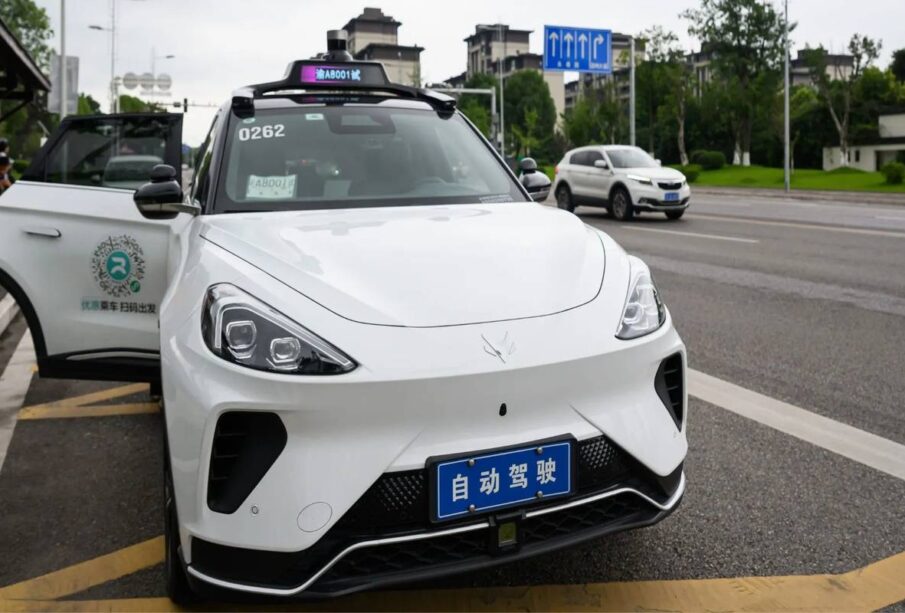
A widespread robotaxi malfunction in the Chinese city of Wuhan brought traffic to a standstill after more than a hundred self driving vehicles stopped suddenly in the middle of busy roads.
The incident raised fresh concerns about the reliability of autonomous transport systems and how these systems respond to unexpected failures. As a result, both authorities and the public have started to question how prepared such technology is for real-world conditions.
Authorities confirmed that the disruption occurred on Tuesday. Early findings point to a system issue that forced multiple vehicles to halt at the same time. Local police reported that a few stranded cars got involved in minor incidents. However, no injuries occurred, and passengers exited the vehicles safely. In addition, emergency responders quickly moved to control traffic and prevent further complications.
The affected vehicles belong to the Apollo Go service operated by Baidu. The company runs driverless taxi services across several cities, mainly within China. However, Baidu has not released a detailed public statement about the incident. Meanwhile, investigators continue to examine the exact cause of the system failure.
Concerns Grow Over Autonomous Systems
Videos shared online showed long lines of inactive robotaxis blocking major routes across Wuhan. Some clips appeared to capture a collision linked to the disruption. As expected, these images spread quickly across social media platforms. Consequently, the footage drew widespread attention to the risks tied to large scale automation in public transport systems.
Experts argue that incidents like this reveal a different category of risk compared to traditional driving. Jack Stilgoe, a professor at University College London, explained that autonomous vehicles may reduce certain human errors. However, they can also introduce new challenges that are harder to predict. Therefore, he emphasized the need to understand these risks before expanding the technology further.
The robotaxi malfunction in Wuhan does not stand alone. In December 2025, a major power outage in San Francisco caused autonomous taxis operated by Waymo to stop working. That incident created heavy traffic congestion across the city. Earlier, in August 2025, an Apollo Go vehicle in Chongqing reportedly fell into a construction pit while carrying a passenger. As a result, these events have continued to raise serious safety concerns about the technology.
Despite these challenges, companies continue to push forward with development. Baidu has expanded its driverless services and recently formed partnerships with global ride hailing firms like Uber and Lyft. These partnerships aim to introduce Apollo Go vehicles into the United Kingdom. Test runs are expected to begin in 2026, pending regulatory approval.
However, the Wuhan incident may influence how regulators and the public assess these expansion plans. Safety remains a central concern as driverless technology becomes more integrated into everyday life. In particular, regulators may demand stricter testing and stronger safeguards before approving large scale deployment.
For now, officials continue to investigate the root cause of the robotaxi malfunction. They also aim to identify measures that can prevent similar disruptions in the future. As investigations progress, the event highlights an important reality. While automation offers convenience and innovation, it also demands strong safeguards to maintain public trust and ensure safety.




Leave a reply


 It seems that Mr. Bridgerton is not the only one swept up in a romance#bridgerton #bridgertonseason400:23
 Mr and Mrs Bridgerton #bridgerton #penelope #theprimemag00:07
 That classic sibling energy where "I’m sorry" actually means "I’m going to do it again #zendaya00:19
 The groom is here #robertpattinson #thedrama #edwardcullen #moviepremiere #funnymoment00:36
 #rihanna and #asaprocky looking great in #paris #theprimemag00:20
 #ElizabethOlsen and #AnthonyMackie on the red carpet00:09
 #SelenaGomez stepped out for the Rare Beauty Matte Foundation launch on Thursday00:17
 #cardib performance yesterday in #vegas #Valentines2026 #lustremagazine00:11
 #CardiB #WholesomeChaos #ProtectTheCrow #FunnyMoment #CelebrityMoments00:07
 They never told you about this Golden Globes gaffe with #JenniferLopez and #JeremyRenner00:11
 #bridgerton #netflix #trending #viral #misspossy #bridgertonseason401:17
 He definitely got it🤩🔥#onechallenge #thewoahchallenge #tiktok #dancetrends #hiphop #dancers00:18
 Oh No! 😂 #funny #relatable #trending #memes00:08
 #LeBron has made a major impact off the court his commitment to education and his community01:01
 😂😂 #memes #baby #fun #funny #trending00:08
 The only time #Shaq really went one-on-one with #LeBron #shaquilleoneal #lebronjames00:29
 Shaq did this on live tv… 😂 #shaq #insidethenba #charlesbarkley #shaquilleoneal #nba00:17
 You just know Kendrick’s heart dropped before he laughed 😭 #shaq #ShaquilleO’Neal00:10
 #nickiminaj or #cardib . That’s a tough one for #50cent 😂00:13
 #sofiavergara in #ModernFamily: #Sofía #Sitcom #FamilyComedy #funny #TVSeries01:00
 #SofíaVergara when asked about arrest on #TheEllenDeGeneresShow 😂00:20
 #Steve Harvey and #shaq on an episode of Family Feud #funny #theprimemag00:57
 #CillianMurphy fake laugh became the focus of the conversation on Jimmy Kimmel Live #theprimemag00:15
 Moment #KatyPerry surprised Benjamin Glaze with a kiss during his American Idol 2018 audition00:37
 #SelenaGomez and music producer #BennyBlanco00:13


The Prime is a dynamic publication delivering the latest in entertainment, lifestyle, culture, sports and world news, bringing sharp insight, fresh perspectives and stories that matter to a global audience.
