Tech Giants Rally as Anthropic Faces Government Pushback
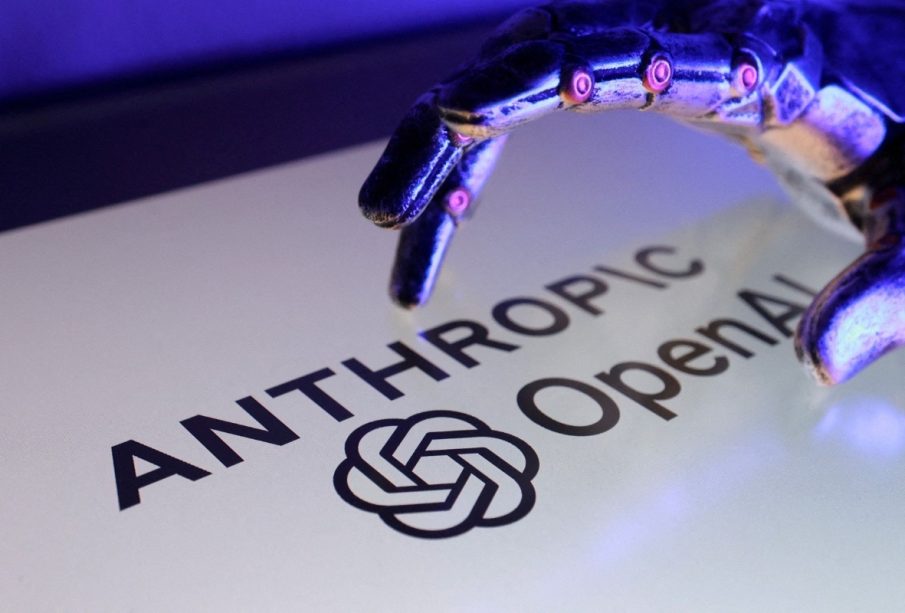
In a striking display of solidarity, several of America’s largest technology companies have rallied behind Anthropic as it fights claims of government retaliation. Google, Amazon, Apple, and Microsoft have publicly supported the artificial intelligence company in its legal battle against the Trump Administration.
The dispute centers on a controversial decision by Defense Secretary Pete Hegseth, who labeled Anthropic a “supply chain risk.” The move shocked many across the technology industry and triggered a wave of support for the AI developer.
Legal filings show that major tech leaders worry the government is punishing Anthropic for refusing to allow its AI tools to support mass surveillance or autonomous weapons. Microsoft, which maintains deep partnerships with the Department of Defense, warned that the government’s action could create widespread consequences for the technology sector.
“AI tools should not be deployed to conduct domestic mass surveillance or place the nation in a position where autonomous machines could independently initiate conflict,” Microsoft stated in its filing. The company stressed that developers must maintain strict ethical guardrails as artificial intelligence continues to expand across industries.
Backing Free Speech and Industry Principles
Microsoft also warned that retaliatory government actions could discourage responsible companies from speaking openly about the ethical use of advanced technology. If companies fear punishment, they may hesitate to enforce safeguards designed to protect the public.
Support for Anthropic extends beyond the largest technology firms. Advocacy organizations have also stepped into the legal fight. The Chamber of Progress, which represents companies such as Google, Apple, Amazon, and Nvidia, filed a supporting brief emphasizing that government retaliation over public statements threatens First Amendment protections.
The group described its membership as “ideologically diverse.” Despite differing viewpoints, members share one principle. They oppose attempts by government officials to pressure companies into silence or restrict access to lawful speech.
Notably, Meta, the parent company of Facebook, did not participate in the filing. The company left the Chamber of Progress in 2025 and has remained absent from the current coalition supporting Anthropic.
Anthropic’s lawsuit argues that the government violated its free speech rights. The company claims officials retaliated after Defense Secretary Hegseth, former President Donald Trump, and others publicly criticized Anthropic as “woke” or politically oppositional. The company’s legal team argues that the supply chain risk designation could devastate its business.
The joint amicus brief filed on Anthropic’s behalf described the government’s move as “a potentially ruinous sanction.” According to the filing, such actions create a climate of coercion where companies fear speaking out. Businesses may remain silent rather than risk losing federal contracts or government support.
Support for Anthropic also emerged from inside the technology and defense communities. Nearly forty employees from OpenAI and Google signed a separate amicus brief supporting the company. Two dozen former high-ranking military officials also joined the filing.
These former officials warned that the government’s actions could undermine trust between private technology companies and national security institutions. If companies fear retaliation, they may hesitate to collaborate with defense agencies in the future.
Gary Ellis, CEO of Remesh AI and a former political advisor, said the situation has captured the attention of executives across Silicon Valley. Speaking to the BBC, he explained that government blacklisting sends a powerful message.
“When the government starts blacklisting a company with high-quality technology, executives realize the seriousness of the situation,” Ellis said. “They understand it could quickly affect them as well.”
The conflict began during negotiations over Anthropic’s government contracts. According to court filings, officials pushed the company to remove language that prohibited the use of its AI systems for mass surveillance or autonomous weapons. Anthropic refused to change the terms. The company insisted that the restrictions remain part of its technology policies.
Tensions escalated soon after. Former President Donald Trump announced plans to remove Anthropic’s AI tools, including the Claude system, from all government agencies. Shortly afterward, Defense Secretary Hegseth formally labeled the company a supply chain risk. The decision marked the first time the U.S. government had applied the designation to an American technology firm.
During a court hearing in San Francisco, Anthropic’s lawyer claimed the Department of Defense contacted several of the company’s clients. Officials allegedly urged those clients to cut business ties with the AI developer. Lawyers for the Department of Justice did not dispute the claim in court. They also declined to promise that similar actions would stop.
Civil liberties advocates have also joined the legal fight. John Coleman, legislative counsel at the Foundation for Individual Rights and Expression, said the case highlights a growing conflict between corporate speech rights and national security claims.
“We hope other tech companies follow Anthropic’s lead,” Coleman said. “Companies must stand firm in their principles and resist federal pressure. A free society requires nothing less.”
As the case moves forward, the outcome could shape the future relationship between artificial intelligence companies and the U.S. government. The dispute raises critical questions about ethics, innovation, and corporate freedom. With major technology firms and advocacy groups now united behind Anthropic, the legal battle may establish a defining precedent for how developers balance AI responsibility with government oversight.


Leave a reply


 It seems that Mr. Bridgerton is not the only one swept up in a romance#bridgerton #bridgertonseason400:23
 Mr and Mrs Bridgerton #bridgerton #penelope #theprimemag00:07
 That classic sibling energy where "I’m sorry" actually means "I’m going to do it again #zendaya00:19
 The groom is here #robertpattinson #thedrama #edwardcullen #moviepremiere #funnymoment00:36
 #rihanna and #asaprocky looking great in #paris #theprimemag00:20
 #ElizabethOlsen and #AnthonyMackie on the red carpet00:09
 #SelenaGomez stepped out for the Rare Beauty Matte Foundation launch on Thursday00:17
 #cardib performance yesterday in #vegas #Valentines2026 #lustremagazine00:11
 #CardiB #WholesomeChaos #ProtectTheCrow #FunnyMoment #CelebrityMoments00:07
 They never told you about this Golden Globes gaffe with #JenniferLopez and #JeremyRenner00:11
 #bridgerton #netflix #trending #viral #misspossy #bridgertonseason401:17
 He definitely got it🤩🔥#onechallenge #thewoahchallenge #tiktok #dancetrends #hiphop #dancers00:18
 Oh No! 😂 #funny #relatable #trending #memes00:08
 #LeBron has made a major impact off the court his commitment to education and his community01:01
 😂😂 #memes #baby #fun #funny #trending00:08
 The only time #Shaq really went one-on-one with #LeBron #shaquilleoneal #lebronjames00:29
 Shaq did this on live tv… 😂 #shaq #insidethenba #charlesbarkley #shaquilleoneal #nba00:17
 You just know Kendrick’s heart dropped before he laughed 😭 #shaq #ShaquilleO’Neal00:10
 #nickiminaj or #cardib . That’s a tough one for #50cent 😂00:13
 #sofiavergara in #ModernFamily: #Sofía #Sitcom #FamilyComedy #funny #TVSeries01:00
 #SofíaVergara when asked about arrest on #TheEllenDeGeneresShow 😂00:20
 #Steve Harvey and #shaq on an episode of Family Feud #funny #theprimemag00:57
 #CillianMurphy fake laugh became the focus of the conversation on Jimmy Kimmel Live #theprimemag00:15
 Moment #KatyPerry surprised Benjamin Glaze with a kiss during his American Idol 2018 audition00:37
 #SelenaGomez and music producer #BennyBlanco00:13


The Prime is a dynamic publication delivering the latest in entertainment, lifestyle, culture, sports and world news, bringing sharp insight, fresh perspectives and stories that matter to a global audience.
