
Trump Refuses to Sign New Laws Until Congress Passes US Voter ID Bill
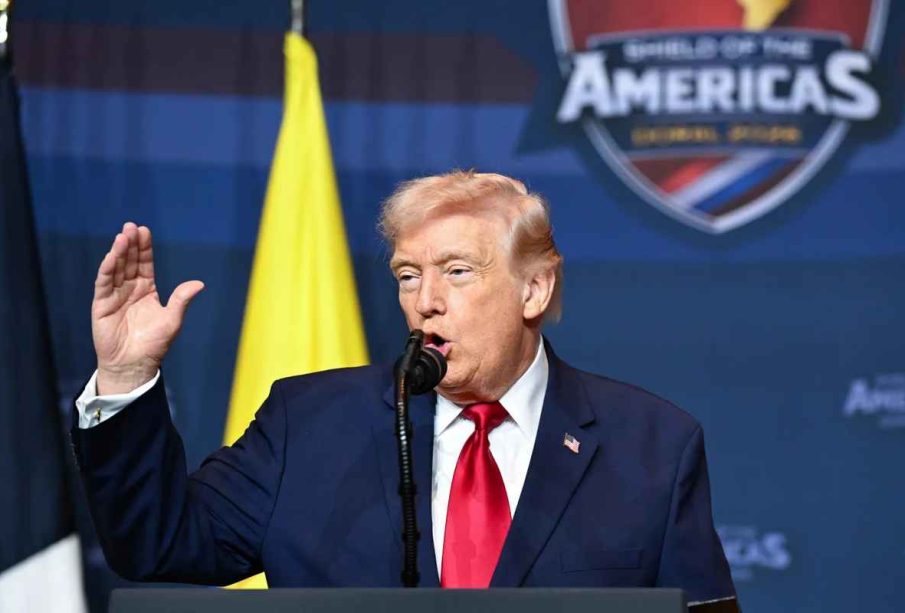
United States President Donald Trump
United States President Donald Trump declared that he will not approve any new legislation unless Congress passes a US voter ID bill. He announced on Sunday via his Truth Social account that voting rules must be tightened before he signs any other policy measures. The move is already intensifying debate in Washington ahead of the upcoming midterm elections.
Trump’s statement comes amid a tense political landscape, shaped by international conflicts and domestic pressure. By tying other legislation to the passage of the voter ID bill, he has raised concerns about a potential legislative deadlock in Congress.
The proposed measure, called the SAVE America Act, cleared the House of Representatives in February. If enacted, it would increase identification requirements for voter registration and Election Day ballots. The bill would require stronger proof of citizenship at registration and stricter ID checks at the polls.
It also imposes penalties on election officials who register individuals without proper documentation. States would need to cross-check voter databases against federal records to identify any non-citizens who might be registered.
Debate Over Voting Access and Election Integrity
Trump argues that tighter voting rules are necessary to prevent election fraud. He has maintained for years that elections remain vulnerable to manipulation, despite multiple investigations and court rulings that found very few fraud cases nationwide.
Supporters of the voter ID bill say stronger verification would boost public confidence and ensure only eligible citizens vote. They note that identification checks already apply in many everyday activities and should similarly apply to elections.
Voting rights organizations oppose the measure strongly. Critics warn that stricter documentation could prevent millions of Americans from voting, especially those without certain forms of ID. They point out that passports or other official citizenship documents may be hard to obtain for many citizens.
Advocates argue the restrictions could disproportionately affect low-income communities, elderly voters, and minority groups. Political opposition also appears in Congress. Senate Minority Leader Chuck Schumer criticized the proposal, calling it a modern effort to restrict voting access. He warned that Trump’s refusal to sign other bills until this measure passes could trigger a severe legislative stalemate.
The US Senate remains closely divided, with Republicans holding 53 seats and Democrats and allied independents holding 47. Most major legislation requires at least 60 votes to advance. Democrats have pledged to block the bill if it reaches the Senate floor.
The standoff occurs months before the November midterms, which will determine whether Republicans retain control of Congress. Historically, the president’s party often loses seats during midterms, heightening the stakes for Trump’s agenda.
Recent election administration developments have sparked controversy. The Department of Justice requested several states’ voter registration lists, a move some state officials are challenging in court. Critics argue that the demand exceeds federal authority and could interfere with state-managed election systems.
Earlier this year, federal investigators seized voting records and ballots from a Fulton County, Georgia, election facility. The action reignited disputes over the 2020 election, which Trump repeatedly claimed was unfairly decided. Courts nationwide dismissed those claims due to a lack of evidence.
Trump has suggested he might impose voter ID requirements via executive order if Congress fails to act. Legal experts say such a move would likely face immediate court challenges, as states primarily manage election procedures under the US Constitution.
With midterms approaching, the battle over voting rules will remain central to American politics. Whether the voter ID bill advances or stalls in Congress could shape the legislative agenda and influence the broader political climate in the months ahead.


Leave a reply


 It seems that Mr. Bridgerton is not the only one swept up in a romance#bridgerton #bridgertonseason400:23
 Mr and Mrs Bridgerton #bridgerton #penelope #theprimemag00:07
 That classic sibling energy where "I’m sorry" actually means "I’m going to do it again #zendaya00:19
 The groom is here #robertpattinson #thedrama #edwardcullen #moviepremiere #funnymoment00:36
 #rihanna and #asaprocky looking great in #paris #theprimemag00:20
 #ElizabethOlsen and #AnthonyMackie on the red carpet00:09
 #SelenaGomez stepped out for the Rare Beauty Matte Foundation launch on Thursday00:17
 #cardib performance yesterday in #vegas #Valentines2026 #lustremagazine00:11
 #CardiB #WholesomeChaos #ProtectTheCrow #FunnyMoment #CelebrityMoments00:07
 They never told you about this Golden Globes gaffe with #JenniferLopez and #JeremyRenner00:11
 #bridgerton #netflix #trending #viral #misspossy #bridgertonseason401:17
 He definitely got it🤩🔥#onechallenge #thewoahchallenge #tiktok #dancetrends #hiphop #dancers00:18
 Oh No! 😂 #funny #relatable #trending #memes00:08
 #LeBron has made a major impact off the court his commitment to education and his community01:01
 😂😂 #memes #baby #fun #funny #trending00:08
 The only time #Shaq really went one-on-one with #LeBron #shaquilleoneal #lebronjames00:29
 Shaq did this on live tv… 😂 #shaq #insidethenba #charlesbarkley #shaquilleoneal #nba00:17
 You just know Kendrick’s heart dropped before he laughed 😭 #shaq #ShaquilleO’Neal00:10
 #nickiminaj or #cardib . That’s a tough one for #50cent 😂00:13
 #sofiavergara in #ModernFamily: #Sofía #Sitcom #FamilyComedy #funny #TVSeries01:00
 #SofíaVergara when asked about arrest on #TheEllenDeGeneresShow 😂00:20
 #Steve Harvey and #shaq on an episode of Family Feud #funny #theprimemag00:57
 #CillianMurphy fake laugh became the focus of the conversation on Jimmy Kimmel Live #theprimemag00:15
 Moment #KatyPerry surprised Benjamin Glaze with a kiss during his American Idol 2018 audition00:37
 #SelenaGomez and music producer #BennyBlanco00:13


The Prime is a dynamic publication delivering the latest in entertainment, lifestyle, culture, sports and world news, bringing sharp insight, fresh perspectives and stories that matter to a global audience.
