
UK Court Rejects Attempt to Reinstate Terrorism Charge Against Kneecap Rapper
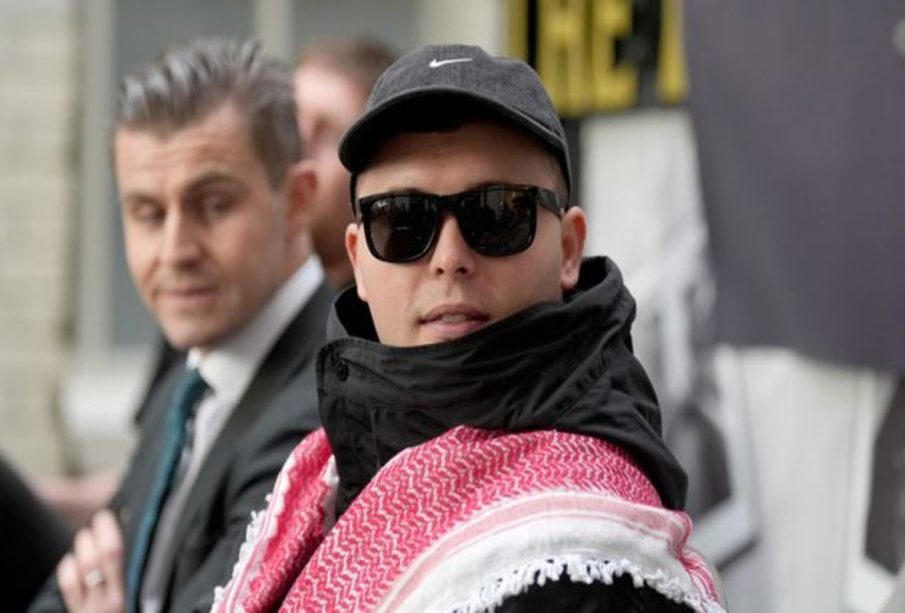
The UK High Court rejected a legal attempt to restore a terrorism charge against Liam O’Hanna, a member of the Irish rap group Kneecap. The ruling marks a major moment in a case that has drawn political and public attention across the United Kingdom and Ireland. It effectively blocks authorities from reviving the charge previously linked to the rapper.
O’Hanna welcomed the decision at a press conference in Belfast on Wednesday. He framed the case as a broader issue involving political speech and international conflict.
According to the rapper, the proceedings never concerned public safety or national security. Instead, they focused on criticism of geopolitical actions and the consequences of speaking openly about them.
The rapper said authorities mischaracterized the accusations from the start. He argued the case illustrates what happens when artists or public figures address sensitive political topics and reach wide audiences through music or activism. O’Hanna suggested that his remarks about the Middle East triggered backlash rather than presenting a genuine threat.
Supporters cheered as he spoke. Kneecap members JJ O Dochartaigh and Naoise O Caireallain, known by their stage names DJ Provai and Moglai Bap, joined O’Hanna at the conference. They stood together as a show of solidarity after the court’s ruling.
During the event, O’Hanna criticized the UK government. He claimed the legal action served political purposes rather than legal ones. He highlighted the High Court’s rejection of the charge as proof that the accusations lacked legal merit.
The rapper addressed government officials directly. He argued the court’s decision contradicted previous government positions. O’Hanna accused ministers of hypocrisy, asserting they tried to label him a security threat while ignoring broader international controversies.
He linked the case to ongoing conflicts abroad. O’Hanna mentioned violence and humanitarian crises in Gaza, Lebanon, and Iran. He maintained that authorities targeted him because of his outspoken views on these conflicts and Western policies.
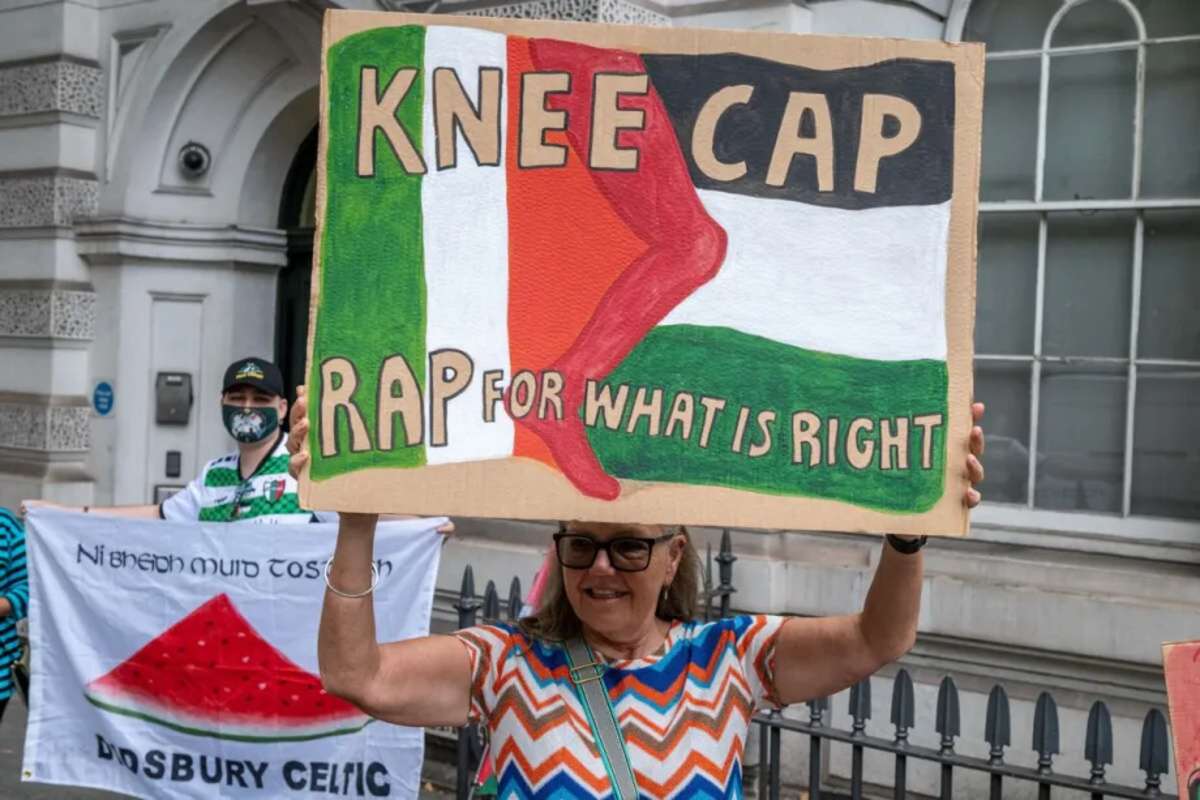
Supporters at the press conference applauded his remarks. They said the case resonates far beyond the courtroom. Kneecap, known for politically charged lyrics and strong advocacy around Irish identity and global issues, frequently blends music with activism, drawing both attention and controversy.
Legal analysts note that the High Court’s ruling does not end the wider political debate surrounding the case. However, it shuts down the latest effort to pursue the accusation. By refusing to restore the terrorism charge, the court reinforced previous conclusions that the case did not meet legal standards.
For Kneecap and their supporters, the decision represents a victory for artistic expression and political speech. Critics argue it highlights ongoing tensions between activism, public commentary, and national security concerns.
The band has confirmed plans to continue producing music and engaging with the public. O’Hanna emphasized that despite the legal battle and media scrutiny, he will keep speaking about issues important to his audience.
The High Court’s refusal to reinstate the terrorism charge closes one chapter in the dispute. Yet the broader debate over politics, music, and free expression remains unresolved.
The ruling may influence how authorities approach cases involving public figures who comment on global events. It also sends a message about the legal protection of artistic and political expression in the United Kingdom.
As Kneecap moves forward, fans expect the group to continue combining music with activism. O’Hanna’s statement suggested the band will maintain its outspoken approach. Their work remains a test of how far artists can challenge political narratives while engaging large audiences.
The decision underscores the tension between law and expression. For now, Kneecap celebrates the outcome as a win for free speech. The conversation about artistic activism, political criticism, and the limits of national security continues.

Leave a reply


 It seems that Mr. Bridgerton is not the only one swept up in a romance#bridgerton #bridgertonseason400:23
 Mr and Mrs Bridgerton #bridgerton #penelope #theprimemag00:07
 That classic sibling energy where "I’m sorry" actually means "I’m going to do it again #zendaya00:19
 The groom is here #robertpattinson #thedrama #edwardcullen #moviepremiere #funnymoment00:36
 #rihanna and #asaprocky looking great in #paris #theprimemag00:20
 #ElizabethOlsen and #AnthonyMackie on the red carpet00:09
 #SelenaGomez stepped out for the Rare Beauty Matte Foundation launch on Thursday00:17
 #cardib performance yesterday in #vegas #Valentines2026 #lustremagazine00:11
 #CardiB #WholesomeChaos #ProtectTheCrow #FunnyMoment #CelebrityMoments00:07
 They never told you about this Golden Globes gaffe with #JenniferLopez and #JeremyRenner00:11
 #bridgerton #netflix #trending #viral #misspossy #bridgertonseason401:17
 He definitely got it🤩🔥#onechallenge #thewoahchallenge #tiktok #dancetrends #hiphop #dancers00:18
 Oh No! 😂 #funny #relatable #trending #memes00:08
 #LeBron has made a major impact off the court his commitment to education and his community01:01
 😂😂 #memes #baby #fun #funny #trending00:08
 The only time #Shaq really went one-on-one with #LeBron #shaquilleoneal #lebronjames00:29
 Shaq did this on live tv… 😂 #shaq #insidethenba #charlesbarkley #shaquilleoneal #nba00:17
 You just know Kendrick’s heart dropped before he laughed 😭 #shaq #ShaquilleO’Neal00:10
 #nickiminaj or #cardib . That’s a tough one for #50cent 😂00:13
 #sofiavergara in #ModernFamily: #Sofía #Sitcom #FamilyComedy #funny #TVSeries01:00
 #SofíaVergara when asked about arrest on #TheEllenDeGeneresShow 😂00:20
 #Steve Harvey and #shaq on an episode of Family Feud #funny #theprimemag00:57
 #CillianMurphy fake laugh became the focus of the conversation on Jimmy Kimmel Live #theprimemag00:15
 Moment #KatyPerry surprised Benjamin Glaze with a kiss during his American Idol 2018 audition00:37
 #SelenaGomez and music producer #BennyBlanco00:13


The Prime is a dynamic publication delivering the latest in entertainment, lifestyle, culture, sports and world news, bringing sharp insight, fresh perspectives and stories that matter to a global audience.
