
US Trade Moves to Strike Back: New Investigation Targets Major Global Partners
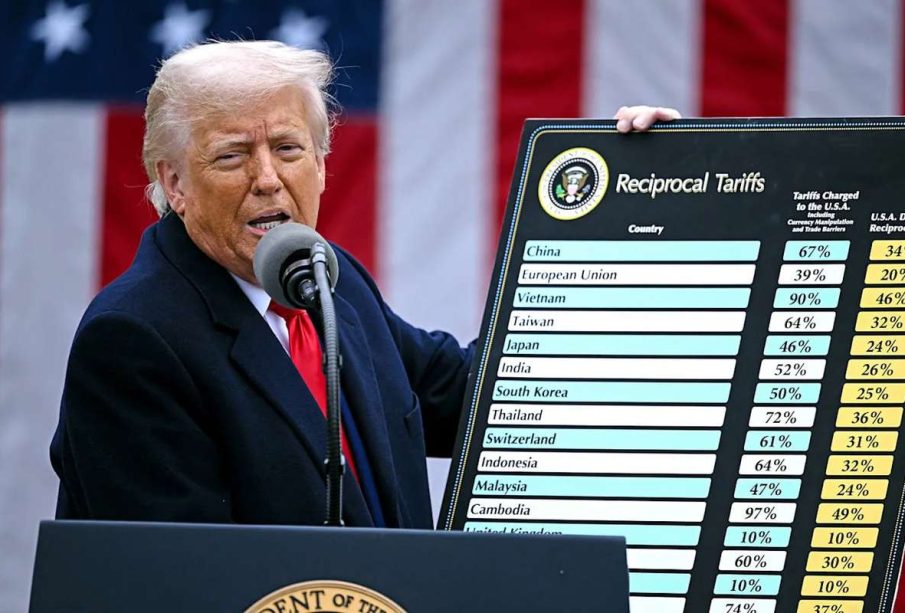
President Donald Trump
The United States has launched a new US trade investigation targeting several of its largest global partners. The move follows last month’s Supreme Court ruling that struck down a key part of President Donald Trump’s earlier tariff strategy. Officials now hope the probe will identify unfair trade practices and support new import taxes on goods entering the American market.
US Trade Representative Jamieson Greer is leading the investigation under Section 301, a law that allows Washington to respond to unfair trade actions by foreign governments. The probe focuses on trade practices involving countries such as China, the European Union, India, Japan, South Korea, and Mexico. Officials believe the review could lead to new tariffs if investigators confirm harmful practices.
Greer announced the probe on Wednesday and said officials expect to complete the review by summer. The timeline aligns with temporary tariffs imposed by Donald Trump in late February. Those tariffs will expire in July unless the government introduces new measures.
“The United States will no longer sacrifice its industrial base to other countries exporting their problems to us,” Greer said while explaining the investigation’s purpose. His comments highlighted concerns that some foreign producers flood international markets with excess goods.
The probe also includes several fast-growing export economies. Investigators will review trade practices involving Vietnam, Thailand, Malaysia, Cambodia, Singapore, Indonesia, Bangladesh, Switzerland, and Norway.
One major trading partner did not appear on the list. The United States excluded Canada from the investigation despite its position as America’s second-largest trading partner.
Trump Administration Signals Possible New Tariffs on China, Other Trading Giants.
The announcement followed a major legal setback for the administration. The Supreme Court of the United States ruled against Trump’s sweeping tariffs that targeted imports from multiple countries last year. The decision forced the administration to rethink its trade strategy and search for new legal tools.
Trump responded quickly after the ruling. He introduced a new 10 percent global tariff on imports. The president also criticized the justices publicly, calling them “fools” for rejecting his earlier policy. Within a day, he announced plans to raise the tariff rate to 15 percent. Officials initially maintained the 10 percent rate but later confirmed the increase would take effect.
Trade analysts say the Section 301 probe offers the administration another path to impose tariffs if necessary. Investigators can identify unfair practices and recommend penalties. Such penalties often take the form of import taxes designed to pressure foreign governments into negotiations.
Experts believe the strategy could restore credibility to Washington’s trade policy. The administration previously relied on sweeping tariffs that affected nearly every trading partner. This new approach targets specific countries and practices instead.
The investigation also arrives at a sensitive moment for global diplomacy. Senior US officials plan to meet Chinese representatives in Paris this weekend. Those discussions may set the stage for a future meeting between Trump and Xi Jinping in Beijing later this month.
Officials expect the talks to address trade tensions, supply chains, and manufacturing concerns. The United States wants trading partners to reduce practices that Washington views as harmful to domestic industries.
Observers say the probe reflects the administration’s broader strategy. Leaders want to protect American factories while pushing trading partners toward new agreements. Tariffs remain one of the strongest tools available to pressure foreign governments.
Businesses around the world are watching the investigation closely. New tariffs could reshape global supply chains and affect product pricing in multiple industries. Companies that rely on imported materials may face higher costs if the US government imposes new duties.
Economists also warn that aggressive tariffs could trigger retaliation from other nations. Governments targeted by the investigation may respond with their own trade barriers. Such actions could escalate tensions and slow international commerce.
Despite those risks, the administration appears determined to move forward. Officials argue that strong action will defend American manufacturing and reduce dependence on foreign production.
The outcome of the investigation could influence global trade negotiations throughout 2026. If the United States introduces new tariffs, trading partners may seek compromises to avoid further economic pressure.
For now, Washington continues its review while preparing for key diplomatic meetings. The probe signals a firm commitment to challenge practices the administration considers unfair. How other nations respond may shape the future of global economic relationships.


Leave a reply


 It seems that Mr. Bridgerton is not the only one swept up in a romance#bridgerton #bridgertonseason400:23
 Mr and Mrs Bridgerton #bridgerton #penelope #theprimemag00:07
 That classic sibling energy where "I’m sorry" actually means "I’m going to do it again #zendaya00:19
 The groom is here #robertpattinson #thedrama #edwardcullen #moviepremiere #funnymoment00:36
 #rihanna and #asaprocky looking great in #paris #theprimemag00:20
 #ElizabethOlsen and #AnthonyMackie on the red carpet00:09
 #SelenaGomez stepped out for the Rare Beauty Matte Foundation launch on Thursday00:17
 #cardib performance yesterday in #vegas #Valentines2026 #lustremagazine00:11
 #CardiB #WholesomeChaos #ProtectTheCrow #FunnyMoment #CelebrityMoments00:07
 They never told you about this Golden Globes gaffe with #JenniferLopez and #JeremyRenner00:11
 #bridgerton #netflix #trending #viral #misspossy #bridgertonseason401:17
 He definitely got it🤩🔥#onechallenge #thewoahchallenge #tiktok #dancetrends #hiphop #dancers00:18
 Oh No! 😂 #funny #relatable #trending #memes00:08
 #LeBron has made a major impact off the court his commitment to education and his community01:01
 😂😂 #memes #baby #fun #funny #trending00:08
 The only time #Shaq really went one-on-one with #LeBron #shaquilleoneal #lebronjames00:29
 Shaq did this on live tv… 😂 #shaq #insidethenba #charlesbarkley #shaquilleoneal #nba00:17
 You just know Kendrick’s heart dropped before he laughed 😭 #shaq #ShaquilleO’Neal00:10
 #nickiminaj or #cardib . That’s a tough one for #50cent 😂00:13
 #sofiavergara in #ModernFamily: #Sofía #Sitcom #FamilyComedy #funny #TVSeries01:00
 #SofíaVergara when asked about arrest on #TheEllenDeGeneresShow 😂00:20
 #Steve Harvey and #shaq on an episode of Family Feud #funny #theprimemag00:57
 #CillianMurphy fake laugh became the focus of the conversation on Jimmy Kimmel Live #theprimemag00:15
 Moment #KatyPerry surprised Benjamin Glaze with a kiss during his American Idol 2018 audition00:37
 #SelenaGomez and music producer #BennyBlanco00:13


The Prime is a dynamic publication delivering the latest in entertainment, lifestyle, culture, sports and world news, bringing sharp insight, fresh perspectives and stories that matter to a global audience.
