
Court Dismisses Trump Defamation Case Against The Wall Street Journal
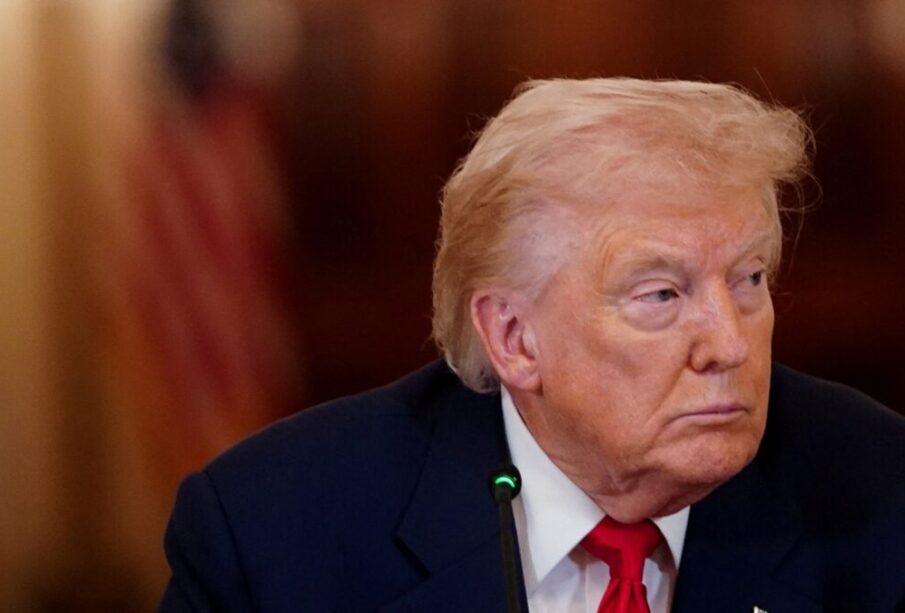
A federal court has dismissed a defamation case Donald Trump filed against The Wall Street Journal and media executive Rupert Murdoch. The lawsuit focused on a report about a letter linked to Trump and published by the newspaper.
The court ruled that the complaint did not meet the legal threshold needed to move forward. As a result, the judge ended the case at this stage, although he allowed the possibility of refiling.
U.S. District Judge Darrin P. Gayles issued the decision. He said Trump did not show actual malice, which defamation law requires for public figures.
Specifically, the standard demands proof that a publisher knew a statement was false or acted with reckless disregard for the truth. Furthermore, the judge stated that the complaint did not present enough evidence to satisfy this burden.
The case centered on a Wall Street Journal article that discussed a letter allegedly connected to Trump. According to the report, the letter appeared in a birthday album given to Jeffrey Epstein in 2003. In addition, the article described typed text placed inside a drawing and a stylized signature. Consequently, the story raised questions about the document’s authenticity and origin.
However, Trump denied writing the letter. He insisted that the document did not come from him. Moreover, his legal team argued that The Wall Street Journal published false information.
They claimed the report damaged his reputation by presenting the letter as genuine without sufficient proof. Therefore, they asked the court to hold the newspaper accountable for defamation.
Nevertheless, the judge pointed to unresolved factual disputes. He noted that the court could not confirm whether the letter was authentic at this stage. In addition, he said the complaint failed to show reckless disregard for the truth. The filing did not include enough detail to prove that the publication knowingly acted improperly or ignored clear warning signs.
Meanwhile, the court reviewed the steps taken by The Wall Street Journal before publishing the article. Journalists contacted Trump directly. They also reached out to officials at the Department of Justice and the Federal Bureau of Investigation.
As a result, the judge concluded that these efforts supported the newspaper’s claim of responsible reporting and weakened allegations of reckless conduct.
Furthermore, the ruling emphasized protections under the First Amendment. The judge explained that the press has the right to report on public figures.
In addition, he noted that critical reporting remains protected even when it causes discomfort or public disagreement. Therefore, defamation law requires a very high standard before a public figure can succeed in such a claim.
Subsequently, congressional committee documents surfaced that appeared to match the letter described in the article. These documents added further attention to the dispute. However, the judge made clear that such material would require closer examination if the case returns to court. At this point, the documents did not resolve the core legal question.
Although the court dismissed the lawsuit, it did not close the matter completely. Instead, it allowed Trump to file an amended complaint. He may present additional evidence if he chooses to continue the case. Consequently, both parties may still return to court depending on future filings.


Leave a reply


 It seems that Mr. Bridgerton is not the only one swept up in a romance#bridgerton #bridgertonseason400:23
 Mr and Mrs Bridgerton #bridgerton #penelope #theprimemag00:07
 That classic sibling energy where "I’m sorry" actually means "I’m going to do it again #zendaya00:19
 The groom is here #robertpattinson #thedrama #edwardcullen #moviepremiere #funnymoment00:36
 #rihanna and #asaprocky looking great in #paris #theprimemag00:20
 #ElizabethOlsen and #AnthonyMackie on the red carpet00:09
 #SelenaGomez stepped out for the Rare Beauty Matte Foundation launch on Thursday00:17
 #cardib performance yesterday in #vegas #Valentines2026 #lustremagazine00:11
 #CardiB #WholesomeChaos #ProtectTheCrow #FunnyMoment #CelebrityMoments00:07
 They never told you about this Golden Globes gaffe with #JenniferLopez and #JeremyRenner00:11
 #bridgerton #netflix #trending #viral #misspossy #bridgertonseason401:17
 He definitely got it🤩🔥#onechallenge #thewoahchallenge #tiktok #dancetrends #hiphop #dancers00:18
 Oh No! 😂 #funny #relatable #trending #memes00:08
 #LeBron has made a major impact off the court his commitment to education and his community01:01
 😂😂 #memes #baby #fun #funny #trending00:08
 The only time #Shaq really went one-on-one with #LeBron #shaquilleoneal #lebronjames00:29
 Shaq did this on live tv… 😂 #shaq #insidethenba #charlesbarkley #shaquilleoneal #nba00:17
 You just know Kendrick’s heart dropped before he laughed 😭 #shaq #ShaquilleO’Neal00:10
 #nickiminaj or #cardib . That’s a tough one for #50cent 😂00:13
 #sofiavergara in #ModernFamily: #Sofía #Sitcom #FamilyComedy #funny #TVSeries01:00
 #SofíaVergara when asked about arrest on #TheEllenDeGeneresShow 😂00:20
 #Steve Harvey and #shaq on an episode of Family Feud #funny #theprimemag00:57
 #CillianMurphy fake laugh became the focus of the conversation on Jimmy Kimmel Live #theprimemag00:15
 Moment #KatyPerry surprised Benjamin Glaze with a kiss during his American Idol 2018 audition00:37
 #SelenaGomez and music producer #BennyBlanco00:13


The Prime is a dynamic publication delivering the latest in entertainment, lifestyle, culture, sports and world news, bringing sharp insight, fresh perspectives and stories that matter to a global audience.

