
Hui Ka Yan Admits Fraud Charges as Evergrande Case Takes New Turn
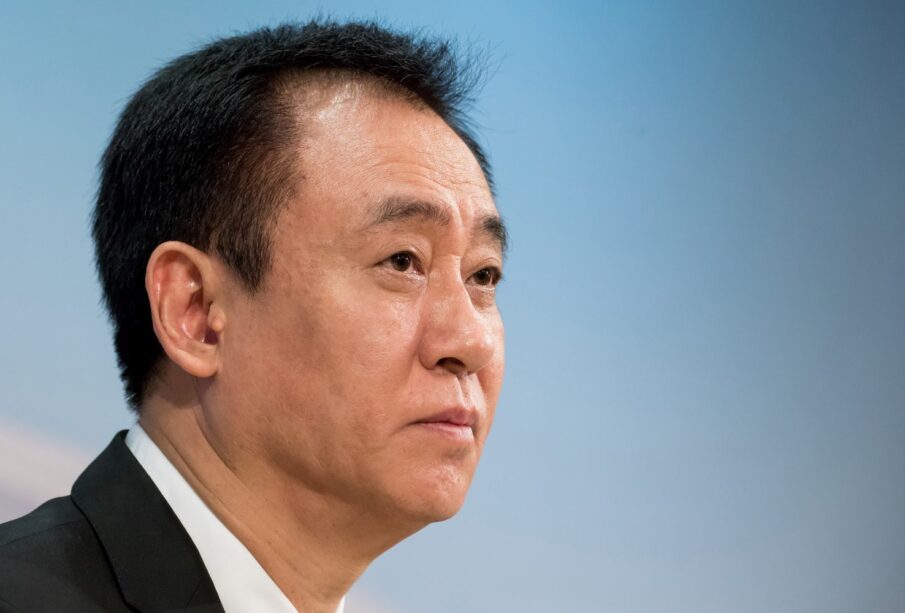
Hui Ka Yan, founder of China Evergrande, has pleaded guilty to multiple financial crimes linked to one of the country’s largest corporate collapses. He appeared in court in Shenzhen on 13 and 14 April, where he admitted to embezzlement of assets and corporate bribery.
State media reports say he also expressed remorse during the hearing. However, the court has not delivered its final ruling and will announce its decision later.
Authorities said Evergrande diverted funds from housing pre-sale agreements away from construction work. Instead, the company used large portions of the money for other internal projects. This action left many housing developments unfinished across several cities in China.
As a result, the case has drawn strong attention to how the company handled investor and buyer funds during its expansion years. The Evergrande fraud case continues to expose financial mismanagement within the firm and highlights the scale of its rise and collapse in China’s property market.
Rise and Fall of a Property Giant
Hui Ka Yan, also known as Xu Jiayin, founded Evergrande in 1996. He started the company after growing up in a rural area in China. He built the business step by step and expanded into real estate development across the country.
Over time, Evergrande grew into one of China’s largest property developers. The company operated in hundreds of cities and managed thousands of projects. At its peak, it reached a market value of more than 50 billion dollars. It also became a symbol of rapid growth in China’s housing sector.
However, Evergrande relied heavily on borrowing to fund its expansion. The company accumulated debts of about 300 billion dollars. This made it one of the most indebted property developers in the world. Later, financial risks increased as borrowing costs rose and property sales slowed.
In 2020, Chinese regulators introduced tighter rules to control borrowing in the property sector. These rules affected companies that depended on heavy debt. Evergrande struggled to meet its obligations and began selling properties at lower prices to generate cash. As a result, its financial condition weakened further.
By 2021, the company collapsed into a full debt crisis. Many projects stopped halfway, and millions of homebuyers faced delays in receiving their homes. The Evergrande fraud investigation later focused on how the company managed its funds and financial reporting.
Economic Impact and Wider Consequences
Evergrande’s collapse affected China’s property sector and reduced confidence among investors and buyers. The sector had played a major role in economic activity for many years, but activity slowed after the company’s failure.
At its peak, Evergrande managed around 1,300 projects across 280 cities. It also expanded into other industries, including electric vehicles, food production, and sports ownership. One of its major investments included the Guangzhou FC football club.
However, financial problems spread across its operations. In 2024, regulators fined Hui Ka Yan 6.5 million dollars and banned him from capital markets for life. They also found that Evergrande overstated its revenue by 78 billion dollars.
Hui Ka Yan once ranked among Asia’s richest individuals with an estimated fortune of 42.5 billion dollars. His wealth later collapsed alongside the company. This fall highlighted the risks linked to rapid expansion supported by heavy borrowing.
Evergrande’s market value eventually dropped by 99 percent. The Hong Kong Stock Exchange delisted its shares in August 2025. This marked the end of its presence in public markets after years of financial decline.


Leave a reply


 It seems that Mr. Bridgerton is not the only one swept up in a romance#bridgerton #bridgertonseason400:23
 Mr and Mrs Bridgerton #bridgerton #penelope #theprimemag00:07
 That classic sibling energy where "I’m sorry" actually means "I’m going to do it again #zendaya00:19
 The groom is here #robertpattinson #thedrama #edwardcullen #moviepremiere #funnymoment00:36
 #rihanna and #asaprocky looking great in #paris #theprimemag00:20
 #ElizabethOlsen and #AnthonyMackie on the red carpet00:09
 #SelenaGomez stepped out for the Rare Beauty Matte Foundation launch on Thursday00:17
 #cardib performance yesterday in #vegas #Valentines2026 #lustremagazine00:11
 #CardiB #WholesomeChaos #ProtectTheCrow #FunnyMoment #CelebrityMoments00:07
 They never told you about this Golden Globes gaffe with #JenniferLopez and #JeremyRenner00:11
 #bridgerton #netflix #trending #viral #misspossy #bridgertonseason401:17
 He definitely got it🤩🔥#onechallenge #thewoahchallenge #tiktok #dancetrends #hiphop #dancers00:18
 Oh No! 😂 #funny #relatable #trending #memes00:08
 #LeBron has made a major impact off the court his commitment to education and his community01:01
 😂😂 #memes #baby #fun #funny #trending00:08
 The only time #Shaq really went one-on-one with #LeBron #shaquilleoneal #lebronjames00:29
 Shaq did this on live tv… 😂 #shaq #insidethenba #charlesbarkley #shaquilleoneal #nba00:17
 You just know Kendrick’s heart dropped before he laughed 😭 #shaq #ShaquilleO’Neal00:10
 #nickiminaj or #cardib . That’s a tough one for #50cent 😂00:13
 #sofiavergara in #ModernFamily: #Sofía #Sitcom #FamilyComedy #funny #TVSeries01:00
 #SofíaVergara when asked about arrest on #TheEllenDeGeneresShow 😂00:20
 #Steve Harvey and #shaq on an episode of Family Feud #funny #theprimemag00:57
 #CillianMurphy fake laugh became the focus of the conversation on Jimmy Kimmel Live #theprimemag00:15
 Moment #KatyPerry surprised Benjamin Glaze with a kiss during his American Idol 2018 audition00:37
 #SelenaGomez and music producer #BennyBlanco00:13


The Prime is a dynamic publication delivering the latest in entertainment, lifestyle, culture, sports and world news, bringing sharp insight, fresh perspectives and stories that matter to a global audience.
