
The Common Sleep Habit That Could Harm Your Heart
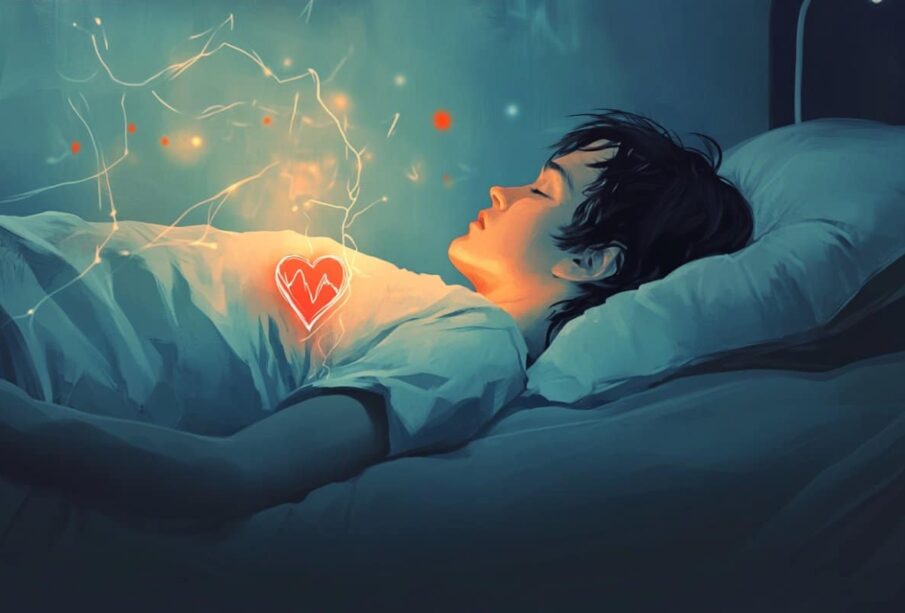
Sleep is widely recognized as one of the most essential biological needs for human health. Yet, the way sleep is scheduled is often ignored. In many cases, rest is taken at different hours each day due to work pressure, social activities, or lifestyle choices. Over time, a common sleeping habit of irregular sleep timing has been observed among many adults across different age groups.
This pattern may appear harmless at first. However, it has been linked to long term strain on cardiovascular health, especially when it is repeatedly maintained over months or years. The heart, which depends on rhythm and consistency, can be affected when the body’s rest cycle is constantly disrupted. Because of this, sleep timing is now being studied more closely in relation to heart health and overall wellness.
In many cases, the importance of sleep consistency is only recognized when symptoms begin to appear. By that stage, changes in blood pressure, stress levels, and energy regulation may already have been influenced. For this reason, attention is being given to how sleep routines are structured and how stability can be restored.
Understanding Irregular Sleep Patterns and the Body Clock
The human body operates through an internal timing system known as the circadian rhythm. This system is responsible for regulating sleep, wakefulness, hormone release, and energy levels throughout the day. When sleep is taken at consistent hours, this system is kept balanced.
However, when rest is shifted frequently between late nights and early mornings, disruption is created in this internal cycle. A common sleeping habit of changing bedtime frequently has been observed to interfere with this natural rhythm. As a result, the body is often placed in a state of confusion, where it is no longer clear when deep rest should occur.
During normal sleep cycles, the body is expected to enter stages of deep restoration. These stages are important for physical repair and cardiovascular recovery. When sleep timing is inconsistent, these stages may be shortened or delayed. Because of this, full recovery may not always be achieved during rest periods.
Hormonal regulation is also affected. Cortisol, which is a stress related hormone, is expected to decrease at night. When sleep patterns are irregular, this reduction may not occur properly. As a result, the body may remain partially alert even during rest, preventing complete relaxation.
Over time, this imbalance can influence how different organs function, especially the heart, which depends heavily on regulated rest cycles.
Read More: How to Sleep Better in 2026: 15 Science-Backed Tips for Deep, Restful Sleep
How Heart Function Is Affected by Sleep Disruption
The heart is designed to operate in cycles of activity and rest. During sleep, heart rate is expected to slow down, allowing recovery to take place. Blood pressure is also expected to drop naturally during this period.
When a common sleeping habit of irregular rest is maintained, this natural cycle may be disrupted. Instead of entering a stable recovery phase, the heart may continue to function under uneven conditions. This prevents full relaxation of the cardiovascular system.
Inconsistent sleep has been associated with increased strain on the autonomic nervous system, which controls heart rate and blood pressure. When this system is overstimulated, the heart may be required to work harder even during rest periods. Over time, this additional workload may contribute to reduced cardiovascular efficiency.
It has also been observed that sleep inconsistency may reduce heart rate variability. This refers to the ability of the heart to adjust smoothly between stress and relaxation. When this flexibility is reduced, the heart may become less responsive to physical and emotional demands.
Although immediate symptoms may not always be noticed, gradual changes may be taking place internally. These changes are often slow and may only become visible after long term disruption has been maintained.
Blood Pressure, Circulation, and Internal Stress Response
Blood pressure follows a natural daily rhythm. It rises during waking hours when activity is higher and falls during sleep when the body is at rest. This cycle is essential for protecting blood vessels and maintaining cardiovascular balance.
When a common sleeping habit of irregular sleep timing is maintained, this rhythm may be disturbed. Blood pressure may fail to drop sufficiently during sleep, causing the heart to remain under pressure even during rest periods.
When this pattern continues, the blood vessels may be prevented from fully relaxing. This can reduce circulation efficiency and increase strain on the cardiovascular system. Over time, the heart may be required to pump against higher resistance than normal.
Hormonal activity also plays an important role in this process. Hormones that regulate inflammation and blood pressure are expected to function optimally during consistent sleep. When sleep is disrupted, their performance may be weakened, reducing the body’s natural protective mechanisms.
In addition, stress responses may remain partially activated. When the body is not fully relaxed during sleep, recovery processes are affected. This means that even after waking, fatigue may still be experienced due to incomplete restoration.
Physical endurance during daily activities may also be reduced. This is because circulation efficiency may not be fully restored during the night, placing additional strain on the heart during the day.
Read More: How Sleep Optimization Improves Life Quality
Early Warning Signs of Sleep Related Heart Strain
When sleep patterns are not stable, the body often sends subtle signals before more serious effects are experienced. These early indicators are important for identifying imbalance before long term strain develops.
One of the most common signs is persistent tiredness even after long hours of sleep. This may occur when deep sleep stages are not consistently reached. In such cases, rest may be present in duration but not in quality.
Energy fluctuations during the day may also be observed. At certain times, alertness may be experienced, while at other times, sudden fatigue may appear. These changes are often linked to disrupted sleep cycles.
A common sleeping habit of inconsistent sleep timing may also be associated with increased heart awareness during rest. In some cases, the heartbeat may feel faster or more noticeable when the body is expected to be calm.
Mood changes may also become more frequent. Irritability, reduced focus, and mild anxiety may be experienced when sleep quality is affected. These changes are often linked to nervous system imbalance caused by irregular rest.
In some individuals, mild chest discomfort may be noticed during periods of stress. While this does not always indicate serious disease, it may suggest that the cardiovascular system is under increased strain and should be monitored carefully.
These signals should not be ignored, as they may indicate that internal regulation is not being fully maintained.
Building a Stable Sleep Rhythm for Heart Protection
A consistent sleep pattern is often recommended as one of the most effective ways to support heart health. Stability in sleep timing allows the body to follow a predictable rhythm, which supports both physical and cardiovascular recovery.
A common sleeping habit of irregular timing can be gradually replaced by a fixed sleep and wake schedule. When this is maintained daily, including weekends, the internal body clock is slowly realigned. As a result, sleep quality is often improved over time.
A calm pre sleep routine may also be introduced. This can include reduced exposure to bright light, limited screen use, and a quiet environment before bedtime. These conditions signal the body that rest is approaching.
Adequate sleep duration is also important. While long sleep periods may seem helpful, consistency is considered more beneficial than occasional extended rest. Predictable sleep timing allows the heart to enter proper recovery cycles more effectively.
Morning exposure to natural light is often recommended. This helps reinforce the body’s internal clock and supports alertness during the day. Physical movement during daytime hours may also contribute to better nighttime sleep quality.
When stability is maintained, blood pressure regulation is improved, circulation becomes more efficient, and cardiovascular stress is reduced. Over time, the heart is allowed to function under more balanced conditions.
Gradual adjustments are usually more effective than sudden changes. By shifting bedtime in small steps, the body is given time to adapt without additional stress.
Read More: How to Get Better Sleep Naturally: Proven Tips for Deeper, Restful Nights
Conclusion
Sleep is not only a period of rest but also a critical phase of repair for the entire body, especially the heart. When sleep timing is inconsistent, internal balance may be affected in ways that are not immediately visible.
A common sleeping habit of irregular sleep timing has been shown to influence blood pressure, circulation, stress response, and heart efficiency over time. Although the effects may develop gradually, they can become significant when patterns are maintained long term.
By restoring consistency in sleep routines, the body’s natural rhythm can be supported more effectively. This allows the heart to recover properly, maintain stable function, and respond efficiently to daily demands.
When sleep is treated as a structured and essential process, long term cardiovascular health is better protected, and overall well being is improved.




Leave a reply


 It seems that Mr. Bridgerton is not the only one swept up in a romance#bridgerton #bridgertonseason400:23
 Mr and Mrs Bridgerton #bridgerton #penelope #theprimemag00:07
 That classic sibling energy where "I’m sorry" actually means "I’m going to do it again #zendaya00:19
 The groom is here #robertpattinson #thedrama #edwardcullen #moviepremiere #funnymoment00:36
 #rihanna and #asaprocky looking great in #paris #theprimemag00:20
 #ElizabethOlsen and #AnthonyMackie on the red carpet00:09
 #SelenaGomez stepped out for the Rare Beauty Matte Foundation launch on Thursday00:17
 #cardib performance yesterday in #vegas #Valentines2026 #lustremagazine00:11
 #CardiB #WholesomeChaos #ProtectTheCrow #FunnyMoment #CelebrityMoments00:07
 They never told you about this Golden Globes gaffe with #JenniferLopez and #JeremyRenner00:11
 #bridgerton #netflix #trending #viral #misspossy #bridgertonseason401:17
 He definitely got it🤩🔥#onechallenge #thewoahchallenge #tiktok #dancetrends #hiphop #dancers00:18
 Oh No! 😂 #funny #relatable #trending #memes00:08
 #LeBron has made a major impact off the court his commitment to education and his community01:01
 😂😂 #memes #baby #fun #funny #trending00:08
 The only time #Shaq really went one-on-one with #LeBron #shaquilleoneal #lebronjames00:29
 Shaq did this on live tv… 😂 #shaq #insidethenba #charlesbarkley #shaquilleoneal #nba00:17
 You just know Kendrick’s heart dropped before he laughed 😭 #shaq #ShaquilleO’Neal00:10
 #nickiminaj or #cardib . That’s a tough one for #50cent 😂00:13
 #sofiavergara in #ModernFamily: #Sofía #Sitcom #FamilyComedy #funny #TVSeries01:00
 #SofíaVergara when asked about arrest on #TheEllenDeGeneresShow 😂00:20
 #Steve Harvey and #shaq on an episode of Family Feud #funny #theprimemag00:57
 #CillianMurphy fake laugh became the focus of the conversation on Jimmy Kimmel Live #theprimemag00:15
 Moment #KatyPerry surprised Benjamin Glaze with a kiss during his American Idol 2018 audition00:37
 #SelenaGomez and music producer #BennyBlanco00:13


The Prime is a dynamic publication delivering the latest in entertainment, lifestyle, culture, sports and world news, bringing sharp insight, fresh perspectives and stories that matter to a global audience.
