
UK Confirms Biobank Data Was Listed for Sale Online
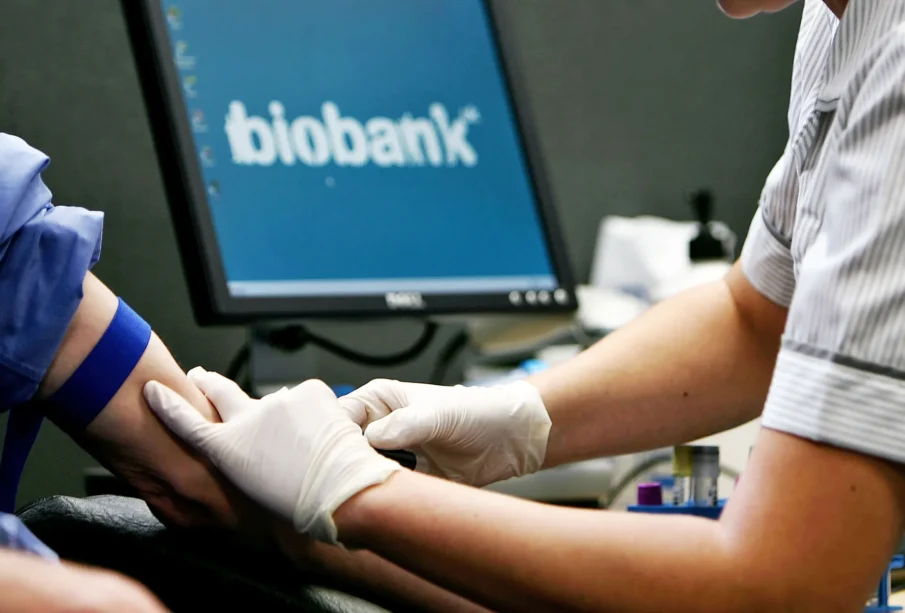
The UK government has confirmed that data from the UK Biobank appeared for sale on a Chinese website. The database contains records from about 500,000 participants.
Officials discovered the listing on the e-commerce platform Alibaba. Subsequently, Technology Minister Ian Murray briefed Members of Parliament and explained how the situation unfolded.
In response, the charity managing the database reported the issue earlier in the week. Although the exposed files did not include names, addresses, or contact details, they still carried sensitive background information.
For instance, the data included gender, age, birth details, lifestyle habits, and biological measurements. Therefore, even without direct identifiers, the information still required strict protection.
Concerns Over Research Access and Misuse
Meanwhile, the UK Biobank project remains one of the country’s most significant research efforts. It has collected health data from volunteers for over 20 years. Participants joined between 2006 and 2010, and they were aged 40 to 69 at recruitment.
They provided DNA samples, medical records, and full body scans. As a result, researchers have used this resource to study conditions such as dementia, cancer, and Parkinson’s disease.
However, authorities confirmed that a cyber attack did not cause the incident. Instead, an approved research institution carried out a legitimate download. Afterwards, someone uploaded the data in violation of strict rules governing its use. Once officials detected the listing, they acted immediately. Consequently, they worked with both UK and Chinese authorities to remove the files from Alibaba.
Following this, UK Biobank launched a full investigation. Its Chief Executive, Rory Collins, reassured participants that the exposed files did not contain personal identifiers. Nevertheless, he acknowledged that the situation may still raise concern among volunteers. At the same time, he emphasised the importance of maintaining trust in large research projects.
In addition, Collins disclosed that three research institutions had access to the dataset linked to the incident. As a result, authorities suspended access for those organisations and the individuals involved. Furthermore, UK Biobank introduced stricter safeguards. For example, it now limits the volume of data that users can download. In addition, it monitors file transfers on a daily basis to prevent further misuse.
Similarly, Chief scientist Naomi Allen placed responsibility on what she described as rogue researchers. She stated that their actions risk damaging confidence in scientific collaboration. Moreover, she issued an apology to participants whose data was involved. At the same time, she stressed that most researchers follow ethical standards and respect data rules.
Meanwhile, reactions from participants have varied. For example, Polly Toynbee, a volunteer and columnist, expressed reassurance about the project. She explained that contributors understand the value of the research. In addition, she noted that anonymised data reduces personal risk while still supporting medical progress.
On the other hand, political responses have been mixed. Victoria Collins described the incident as a serious failure and called for accountability. Conversely, Richard Tice criticised the involvement of Chinese researchers and described the case as a major data theft concern.
However, Minister Ian Murray rejected that interpretation. Instead, he stressed that international collaboration has long supported the Biobank and has generally operated safely.
Furthermore, experts have highlighted wider implications. Elena Simperl emphasised the need for strong data systems in large research projects. Likewise, she warned that weak safeguards can create serious risks. In addition, cybersecurity specialist Graeme Stewart noted that even a slight decline in trust could reduce participation levels. Consequently, this could affect the quality of future research outcomes.
At the same time, legal experts raised further concerns. Will Richmond Coggan explained that highly detailed datasets may still allow individuals to be identified when combined with other information. Therefore, he warned that full anonymity may not always be guaranteed.
Finally, the UK data watchdog, the Information Commissioner’s Office, confirmed that it is making enquiries into the incident. A spokesperson reiterated that medical data requires strict legal protection.
As investigations continue, authorities are working to reassure participants. In parallel, they are strengthening safeguards around one of the world’s most valuable health research resources.


Leave a reply


 That didn’t take long #nba #nbabasketball #basketball #shaq #theprimemag00:30
 It seems that Mr. Bridgerton is not the only one swept up in a romance#bridgerton #bridgertonseason400:23
 Mr and Mrs Bridgerton #bridgerton #penelope #theprimemag00:07
 That classic sibling energy where "I’m sorry" actually means "I’m going to do it again #zendaya00:19
 The groom is here #robertpattinson #thedrama #edwardcullen #moviepremiere #funnymoment00:36
 #rihanna and #asaprocky looking great in #paris #theprimemag00:20
 #ElizabethOlsen and #AnthonyMackie on the red carpet00:09
 #SelenaGomez stepped out for the Rare Beauty Matte Foundation launch on Thursday00:17
 #cardib performance yesterday in #vegas #Valentines2026 #lustremagazine00:11
 #CardiB #WholesomeChaos #ProtectTheCrow #FunnyMoment #CelebrityMoments00:07
 They never told you about this Golden Globes gaffe with #JenniferLopez and #JeremyRenner00:11
 #bridgerton #netflix #trending #viral #misspossy #bridgertonseason401:17
 He definitely got it🤩🔥#onechallenge #thewoahchallenge #tiktok #dancetrends #hiphop #dancers00:18
 Oh No! 😂 #funny #relatable #trending #memes00:08
 #LeBron has made a major impact off the court his commitment to education and his community01:01
 😂😂 #memes #baby #fun #funny #trending00:08
 The only time #Shaq really went one-on-one with #LeBron #shaquilleoneal #lebronjames00:29
 Shaq did this on live tv… 😂 #shaq #insidethenba #charlesbarkley #shaquilleoneal #nba00:17
 You just know Kendrick’s heart dropped before he laughed 😭 #shaq #ShaquilleO’Neal00:10
 #nickiminaj or #cardib . That’s a tough one for #50cent 😂00:13
 #sofiavergara in #ModernFamily: #Sofía #Sitcom #FamilyComedy #funny #TVSeries01:00
 #SofíaVergara when asked about arrest on #TheEllenDeGeneresShow 😂00:20
 #Steve Harvey and #shaq on an episode of Family Feud #funny #theprimemag00:57
 #CillianMurphy fake laugh became the focus of the conversation on Jimmy Kimmel Live #theprimemag00:15
 Moment #KatyPerry surprised Benjamin Glaze with a kiss during his American Idol 2018 audition00:37


The Prime is a dynamic publication delivering the latest in entertainment, lifestyle, culture, sports and world news, bringing sharp insight, fresh perspectives and stories that matter to a global audience.


